Why Most Enterprise Lead Generation Strategies Fail to Scale
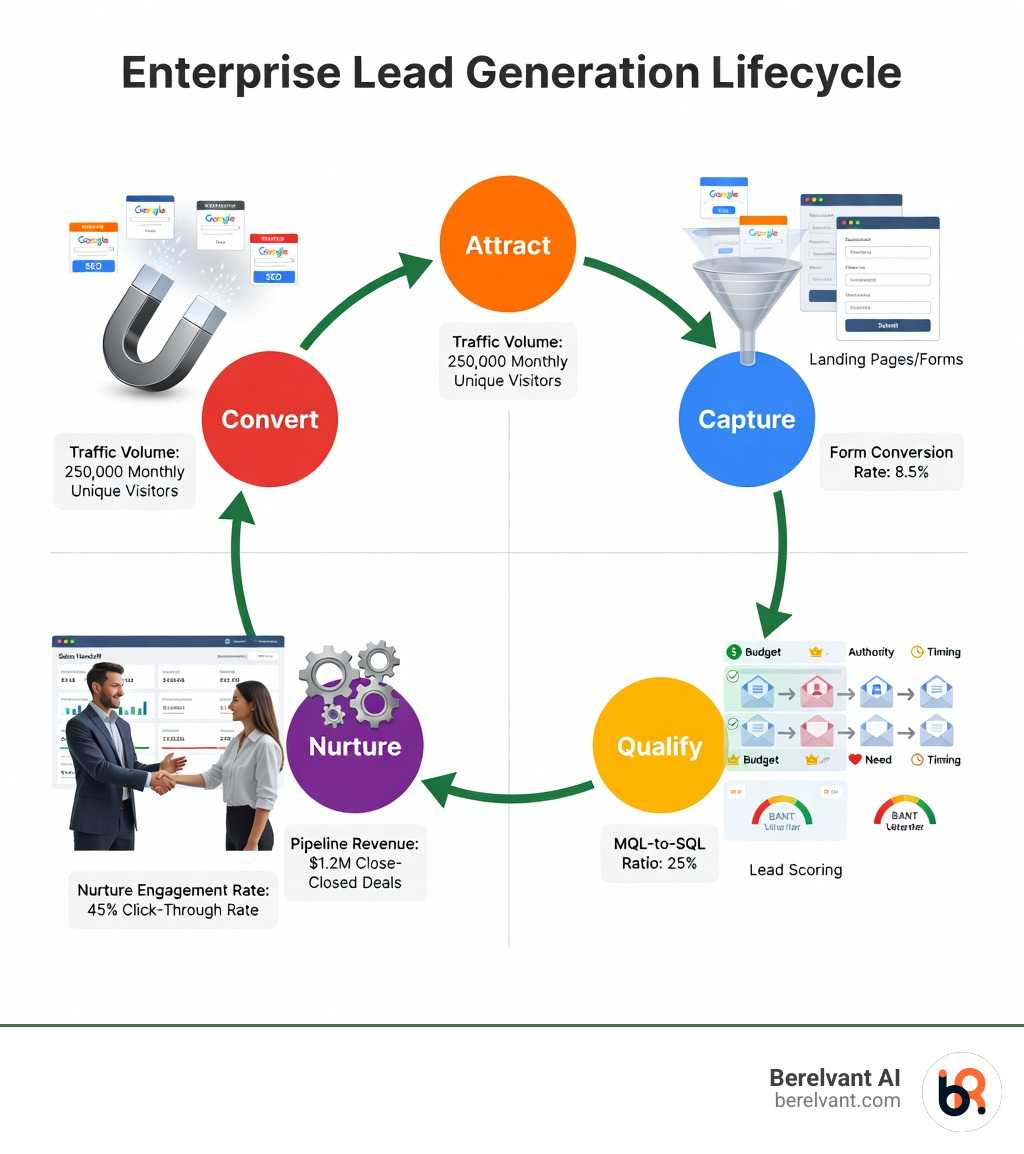
Lead generation strategies are the systems, channels, and processes organizations use to attract, capture, qualify, and convert high-intent prospects into sales pipeline.
For VP and Director-level leaders managing multi-region growth, here are the most effective approaches:
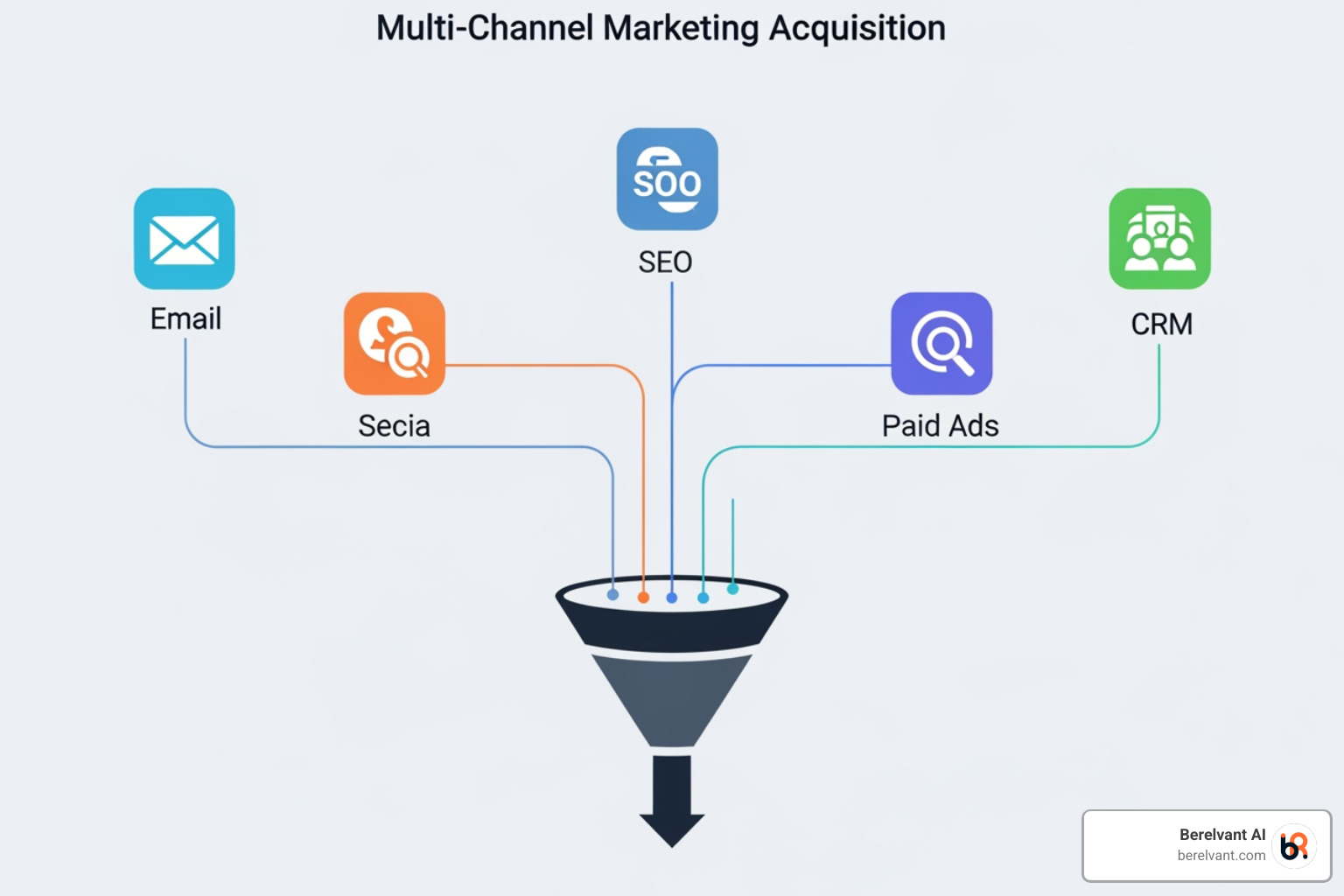
- Inbound infrastructure – SEO-optimized content, high-conversion landing pages, and gated assets that capture demand at scale
- Outbound precision – Personalized multi-channel sequences using cold email, LinkedIn outreach, and multi-threading across accounts
- LinkedIn B2B dominance – Lead Gen Forms, Sponsored Content, and Message Ads targeting decision-makers by role and industry
- AI-powered qualification – Predictive lead scoring, CRM integration, and automated nurture sequences that prioritize the highest-intent prospects
- Performance measurement – Tracking CAC, pipeline velocity, and conversion rates by channel to optimize spend and execution
The numbers tell a hard story. 61% of marketers say generating traffic and leads is their single biggest challenge. And yet 80% of marketers report their lead generation efforts are only slightly or somewhat effective. For enterprise organizations running multi-market campaigns across fragmented teams, that gap between effort and outcome compounds fast.
The core problem is rarely a lack of tactics. It is a lack of system. Most organizations run disconnected channels with no unified qualification logic, inconsistent creative, and attribution that breaks down the moment a lead crosses a regional or channel boundary. The result is wasted budget, slow pipeline, and a sales team chasing leads that were never going to close.
I’m Renzo Proano, founder of Berelvant AI, and I have spent my career building performance marketing systems and AI-driven acquisition engines that have managed over $300 million in ad spend across financial services, SaaS, GovTech, and e-commerce — applying enterprise lead generation strategies to markets across North America, LATAM, and beyond. In this guide, I will show you exactly how to build a lead generation system that is measurable, scalable, and built for the operational complexity your organization actually faces.
Key Lead generation strategies vocabulary:
The Architecture of Modern Lead Generation Strategies
At the enterprise level, we must move away from viewing lead generation as a series of “campaigns” and instead view it as a unified acquisition engine. This requires system-level thinking where every touchpoint—from a technical whitepaper to a LinkedIn Message Ad—is architected to drive measurable revenue.
In complex B2B environments, the stakes are high and the timelines are long. Research indicates that over 30% of B2B sales take one to three months to close, and in enterprise SaaS or regulated industries, this can easily stretch to 18 months. Without a robust architecture, leads fall through the cracks during these extended cycles.
Defining High-Intent Lead Generation Strategies
The goal of a sophisticated system isn’t just “more leads”—it’s the identification of high-intent prospects. We categorize these into specific buckets to ensure the right team handles the right lead:
- Marketing Qualified Leads (MQLs): These prospects have engaged with our marketing assets, such as downloading a report or attending a webinar, but aren’t yet ready for a sales call.
- Sales Qualified Leads (SQLs): These are active leads who have moved past the research phase and are ready for direct sales engagement, often signaled by a demo request or pricing page interaction.
- Product Qualified Leads (PQLs): Common in SaaS, these are users who have experienced value through a free trial or freemium version and are primed for an enterprise upgrade.
To capture these effectively, we utilize lead form assets that allow prospects to share details directly within the platforms they already trust, reducing friction and increasing the quality of the data captured.
Mapping the Enterprise Funnel: TOFU to BOFU
Understanding the buyer’s journey is critical because 48% of companies say leads require a long sales cycle before they are ready to purchase. We map our lead generation strategies across three distinct phases:
- Top of the Funnel (TOFU – Awareness): Here, we focus on educational content that addresses unmet needs or industry problems. The goal is to build brand authority and capture initial interest.
- Middle of the Funnel (MOFU – Consideration): This is where lead nurturing happens. We provide comparison guides, webinars, and case studies to help prospects evaluate our solution against their specific challenges.
- Bottom of the Funnel (BOFU – Decision): The focus shifts to conversion. High-intent signals like visiting a pricing page or requesting a trial trigger immediate sales follow-up.
Inbound Infrastructure: Capturing Demand at Scale
Inbound marketing isn’t just about blogging; it’s about building a technical infrastructure that captures existing demand. This starts with a deep understanding of search intent. We don’t just target high-volume keywords; we target high-intent keywords that signal a buyer is looking for a solution.
By building content clusters around these pillars, we establish topical authority that search engines reward. However, organic search is only one piece of the puzzle. To truly dominate a market, organic efforts must be bolstered by PPC management that places your brand at the top of the SERP exactly when a prospect is searching for a solution.
Optimizing High-Conversion Lead Generation Strategies
Traffic is a vanity metric if it doesn’t convert. To ensure our inbound infrastructure performs, we focus on three conversion levers:
- Landing Page Ecosystems: Instead of a generic homepage, we build dedicated landing pages for specific industries and personas. These pages are fast, mobile-optimized, and frictionless.
- Social Proof: With 95% of consumers reading reviews before buying, we integrate testimonials, case studies, and partner logos directly into the conversion path.
- Interactive Content: Static pages are becoming less effective. 81 percent of marketers agree interactive content is effective at grabbing attention. Tools like ROI calculators, quizzes, and assessment tools provide value while capturing rich lead data.
Leveraging LinkedIn for B2B Market Dominance
For enterprise growth across the Americas, LinkedIn is non-negotiable. It allows us to segment audiences with surgical precision. One of our most effective tools is LinkedIn Lead Gen Forms. These forms pre-populate with a user’s profile data, drastically cutting the effort needed to convert, especially on mobile devices where 40% of consumers will turn to a competitor after a poor experience.
We combine these forms with Sponsored Content to stay top-of-mind in the feed and Message Ads to deliver personalized, high-value offers directly to a decision-maker’s inbox.
Outbound Excellence: Precision Targeting and Multi-Threading
While inbound captures demand, outbound creates it. In the enterprise space, “spray and pray” is dead. Modern outbound excellence requires precision targeting and a “multi-threading” approach—engaging multiple stakeholders within a single target account.
We architect 10-day multi-channel sequences that mix email, LinkedIn touchpoints, and personalized video to break through the noise.
Scaling Personalized Sequences across the Americas
Operating across the Americas presents unique challenges in language and culture. A sequence that works in Westport, CT, may fail in Mexico City if it isn’t properly localized. As a local digital marketing company with a global reach, we manage multilingual outreach that respects local nuances while maintaining a unified strategic goal.
We use tools like Apollo to identify ideal buyer profiles and then deploy sequences that feel personal, not automated. This involves referencing specific industry challenges or recent company news to prove we’ve done our homework.
Creative Infrastructure for High-Impact Outreach
The “creative” in outbound is often overlooked. We leverage a creative infrastructure that allows us to send Loom video notes, personalized voice notes, and even custom website audits as part of our outreach.
Another powerful tool in our arsenal is LinkedIn’s Document Ads. By allowing prospects to read a case study or technical spec sheet directly in their feed before asking for their information, we build the trust necessary for a high-value conversion.
The AI and Automation Layer: Multiplying Campaign Impact
AI is the “speed and scale” layer of our acquisition engine. It isn’t just about generating text; it’s about removing bottlenecks in the creative and operational process. Our AI digital marketing agency ultimate guide details how we use AI to accelerate delivery and multiply the impact of every campaign.
From automating the segmentation of thousands of leads to using AI-driven tools for real-time landing page optimization, we ensure that our systems are constantly learning and improving.
Data-Driven Qualification and Lead Scoring
The cost of a bad lead is high. In fact, 67% of lost sales result from poor qualification. To prevent this, we implement rigorous lead scoring based on the BANT (Budget, Authority, Need, Timeline) framework and predictive scoring models.
By integrating these scores directly into the CRM, we ensure the sales team only spends time on prospects who match our Ideal Customer Profile (ICP) and have shown significant intent signals.
Compliance and Security in Regulated Environments
For our clients in Fairfield, CT, and across the Americas, compliance is a top-tier priority. Whether dealing with the General Data Protection Regulation (GDPR) for international leads or the CCPA for Californian prospects, our systems are built with data privacy at the core. We ensure that every lead captured is handled with the highest security standards, protecting both our clients and their prospects.
Measuring Performance: Metrics that Matter to the C-Suite
We don’t report on clicks; we report on revenue. For VP and Director-level leaders, the metrics that matter are ROI, Customer Acquisition Cost (CAC), and Lifetime Value (LTV).
Advanced Analytics and Attribution Modeling
To optimize spend, you need to know exactly which touchpoint led to the sale. We use real-time reporting and native analytics to track the full buying journey. By utilizing purpose-built tools for B2B measurement, we can provide the C-suite with a clear view of pipeline velocity and channel-specific performance.
Frequently Asked Questions about Lead Generation
How do you differentiate between MQLs and SQLs in a complex sales cycle?
Differentiating between the two requires a shared definition between marketing and sales. An MQL is someone who has engaged with content (e.g., downloaded an ebook), while an SQL is someone who has met specific intent criteria (e.g., requested a demo or fits the BANT criteria) and is ready for a direct sales conversation.
What role does AI play in scaling lead generation across multiple countries?
AI acts as the translation and localization bridge. It allows us to take a high-performing English campaign and rapidly adapt the creative, messaging, and targeting for Spanish or Portuguese-speaking markets without losing the strategic intent or “voice” of the brand.
How can enterprise organizations maintain compliance in regulated industries?
Compliance is maintained by using enterprise-grade automation tools that have built-in privacy controls. This includes automated data purging, clear opt-in/opt-out mechanisms, and ensuring all third-party data providers are fully compliant with regional laws like GDPR and CCPA.
Conclusion
Building a successful lead generation engine in today’s enterprise landscape requires more than just a few clever lead generation strategies. It requires a unified engine that integrates performance media, automation, and AI into a single, measurable system. At Berelvant, we specialize in managing these end-to-end acquisition systems for companies operating across the Americas, solving the complex challenges of multi-country execution and regulated environments.
Ready to transform your lead generation from a cost center into a revenue driver? Book a Meeting with us today and let’s build your growth engine together.