Why Marketing Automation Systems Integration Powers Enterprise Revenue Growth
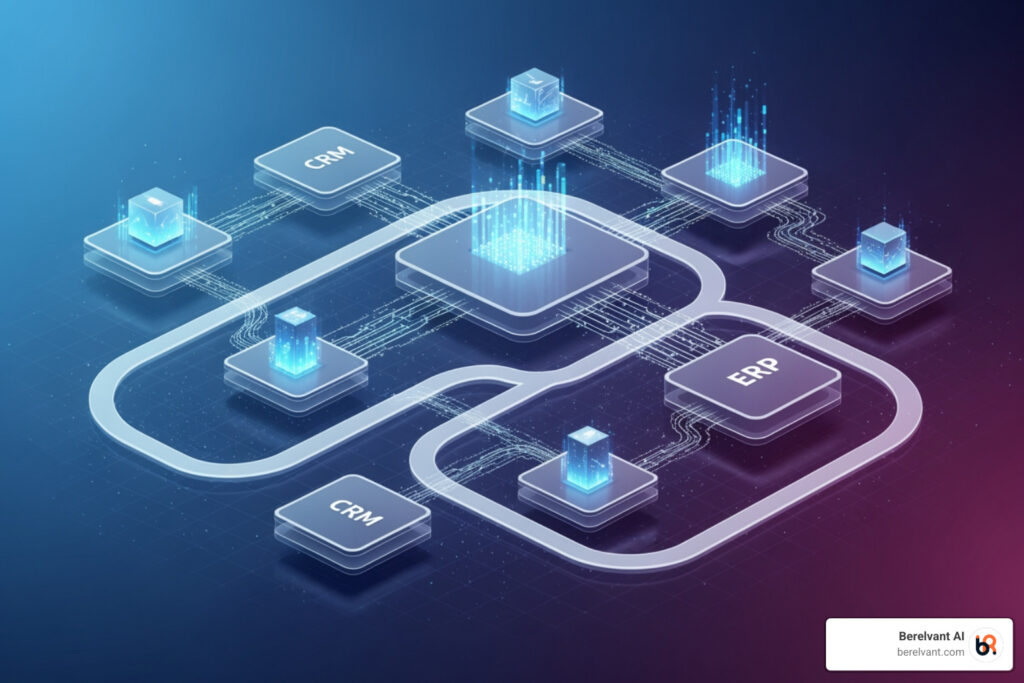
Marketing automation systems integration connects your marketing automation platform with core business systems—CRM, ERP, analytics, and customer service tools—to create a unified data environment that enables real-time synchronization, eliminates silos, and drives coordinated campaigns across every customer touchpoint.
Key components of effective marketing automation systems integration:
- Single Source of Truth (SSoT) – Establish clear data ownership between your CRM (customer/sales data) and marketing automation platform (engagement data).
- Bidirectional Data Sync – Enable real-time data flow between systems to ensure marketing and sales operate from identical information.
- API-Driven Architecture – Use native connectors, middleware, or iPaaS platforms to connect disparate systems.
- Automated Workflow Triggers – Configure lead scoring, routing, and nurture sequences based on unified customer data.
- Compliance and Security Controls – Implement encryption, role-based access, and audit trails across integrated systems.
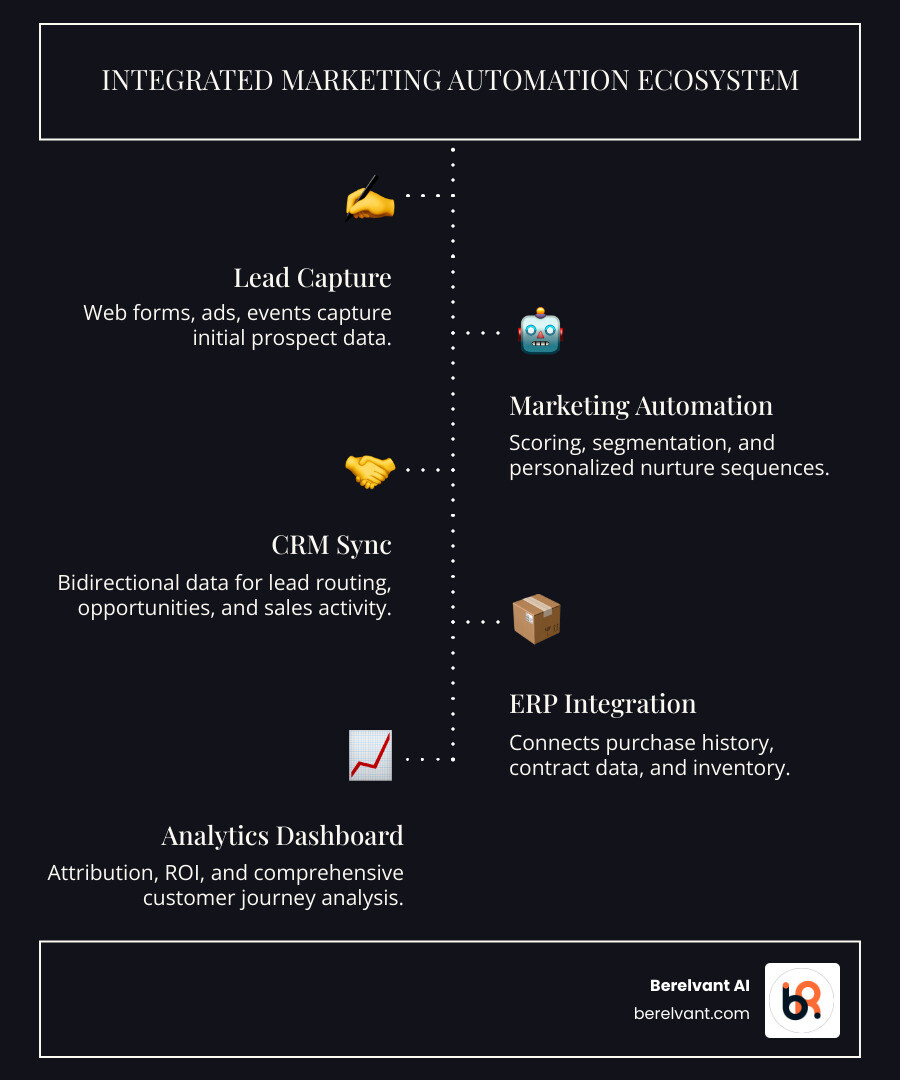
In a siloed environment, a whitepaper download is just a “New Lead” in the CRM. In an integrated system, that action instantly updates lead scoring, triggers a personalized nurture sequence, adjusts the CRM opportunity stage, and feeds behavioral data into your analytics dashboard—all without manual intervention.
The business case is clear. Salesforce reports that alignment between sales and marketing improves win rates by 38% and revenue growth by 24%. Yet, many enterprises operate with fragmented systems, leading to manual errors, delays, and campaigns disconnected from revenue. This fragmentation is costly; IBM estimates that bad data costs the U.S. economy $3 trillion annually. For enterprises managing complex customer journeys, the drag from disconnected systems directly impacts acquisition, conversion, and customer lifetime value.
The path to unified campaigns starts with integrated infrastructure. When marketing automation connects seamlessly with CRM, ERP, and analytics, your teams gain real-time visibility into the customer journey, automate manual tasks, and measure every marketing dollar against revenue.
I’m Renzo Proano, and I’ve architected marketing automation systems integration frameworks for enterprise clients managing over $300 million in digital spend across regulated industries. At Berelvant AI, we design integration strategies that unify marketing, sales, and operations data into a single revenue engine—enabling multilingual execution, compliance-ready workflows, and attribution systems that connect campaign activity directly to revenue outcomes.
The Strategic Imperative of Integrated Marketing Systems
In today’s enterprise landscape, standalone marketing tools are obsolete. Marketing automation systems integration is a strategic imperative for predictable revenue growth. Disconnected systems don’t just create operational headaches; they actively erode revenue potential by preventing your CRM and marketing automation platforms from communicating effectively.

Our focus is on changing fragmented data into an actionable, unified engine for growth. The tangible benefits for mid-market and enterprise organizations are profound:
- Revenue Growth: A complete, real-time view of customer interactions enables highly targeted campaigns, leading to higher conversion rates and increased customer lifetime value.
- Sales and Marketing Alignment: When both teams operate from the same up-to-date data, they can coordinate efforts seamlessly. This synergy is why aligned teams see improved win rates and revenue growth.
- Operational Efficiency: Integration automates manual tasks, freeing sales, marketing, and customer success teams to focus on high-value work. It also reduces costly human errors associated with manual data synchronization.
- Data-Driven Decision Making: A centralized data flow provides real-time insights into campaign performance and customer behavior, enabling agile optimization and smarter strategies. Our AI Campaign Management solutions rely on this integrated data for intelligent optimization.
| Metric | Siloed Systems | Integrated Systems |
|---|---|---|
| Lead Response Time | Slow, manual handoffs | Instant, automated routing and follow-up |
| Data Accuracy | Prone to human error, inconsistencies | Real-time synchronization, reduced errors |
| Campaign ROI | Difficult to track attribution | Clear, measurable, full-funnel attribution |
| Customer Churn | Reactive, limited insight into risk factors | Proactive, predictive, personalized retention efforts |
| Sales & Marketing View | Fragmented, often conflicting | Unified, collaborative, single source of truth |
| Operational Cost | High due to manual tasks & rework | Reduced through automation and efficiency |
Core Principles of Marketing Automation Systems Integration
A successful integration strategy is built on four fundamental principles:
Single Source of Truth (SSoT): This is paramount. Define which system is the authoritative source for specific data points to prevent conflicts. Typically, your CRM (e.g., Salesforce) is the SSoT for customer and sales data, while your marketing automation platform (e.g., HubSpot, Pardot) is the SSoT for marketing engagement data.
Bidirectional Data Sync: Data must flow seamlessly in both directions. It’s not enough for marketing to feed sales; sales activities must also enrich the marketing platform to ensure both teams work with the most current information.
Real-Time Data Flow: In enterprise sales, delayed data is bad data. Integrations must prioritize real-time or near real-time synchronization to capitalize on buyer intent and deliver timely, personalized experiences.
Scalable Architecture: Your integration architecture must scale with your business. We design flexible solutions using robust APIs, middleware, and iPaaS platforms to accommodate growth without requiring a complete overhaul.
Breaking Down Cross-Functional Silos
Marketing automation systems integration bridges the gap between siloed departments like marketing, sales, and customer service. By unifying their respective platforms, we create a shared understanding of the customer journey. This requires close collaboration between Marketing Operations (MOPs), Sales Operations (SOPs), and Revenue Operations (RevOps) to align the entire revenue engine. An integrated environment ensures marketing understands pipeline velocity, sales has full visibility into engagement history, and customer service can provide more informed support. This makes customer-facing employees more productive by automating manual tasks and allowing them to focus on high-impact work.
Architecting Your Unified Customer Data Engine
The goal of integration is to architect a unified customer data engine that provides a true 360-degree view of every customer. This engine becomes the central intelligence hub for all marketing, sales, and service initiatives.

At Berelvant AI, we integrate various data sources to build this comprehensive profile, including your CRM, Enterprise Resource Planning (ERP), Business Intelligence (BI) tools, data warehouses, and Customer Data Platforms (CDP). When these systems are seamlessly integrated, you move beyond fragmented data to a holistic understanding of your customer’s journey.
Integrating with Core Sales and Operations Systems (CRM & ERP)
The integration of marketing automation with CRM and ERP systems forms the backbone of the enterprise revenue engine.
CRM Integration: This is the most critical connection, ensuring marketing and sales operate from a synchronized playbook. Key functions include:
- Lead Management: Automated lead-to-account matching and handoffs to the correct sales rep based on territory rules, ensuring rapid follow-up. Our AI Calling Agent Automation can further streamline this with intelligent outreach.
- Data Synchronization: Syncing opportunity stages and sales activities to allow for targeted nurture campaigns based on sales progress and to inform lead scoring.
ERP Integration: Connecting to your ERP open ups transactional data that significantly improves personalization and retention. Key use cases include:
- Purchase & Inventory Data: Using past purchases to personalize recommendations and triggering campaigns based on product availability.
- Contract & Financial Data: Automating renewal reminders for subscription models and segmenting customers based on revenue contribution.
This level of integration ensures your marketing efforts are always relevant and grounded in actual business activity.
Achieving a Unified Customer View for Advanced Personalization
A unified 360-degree customer view empowers enterprises to deliver hyper-personalized experiences at scale. By consolidating behavioral, transactional, demographic, and interaction history, we construct a rich, dynamic customer profile.
This comprehensive data set allows for:
- Cross-Channel Personalization: Deliver consistent, custom messages across all channels based on individual preferences and journey stage.
- Multilingual Content Delivery: For companies operating across the Americas, this view is critical for segmenting audiences by language and delivering culturally relevant content automatically.
- Predictive Segmentation: Use AI to analyze unified data, predict future behaviors like churn risk, and proactively segment customers for targeted interventions.
- Real-time Triggers: Instantly trigger personalized emails, SMS, or automated outreach based on actions like an abandoned cart or a visit to a specific product page.
This level of personalization significantly boosts engagement, conversion rates, and customer loyalty.
Executing Your Marketing Automation Systems Integration Strategy
Successful marketing automation systems integration is 90% strategy and 10% technology. A structured approach is vital to steer enterprise complexities and ensure cross-departmental alignment.
- Strategic Planning: Before any technical work, we define business objectives, identify pain points from data silos, and establish desired outcomes with a cross-functional task force (Marketing Ops, Sales Ops, IT).
- Data Governance: A robust framework is essential. This includes defining data ownership, standardizing fields, and performing a pre-integration data audit to cleanse, deduplicate, and enrich records. Integrating messy data only amplifies existing problems.
- Phased Rollout: We advocate for implementing integrations in stages, starting with foundational connections (e.g., CRM and email). This minimizes risk and allows for testing and validation before full deployment.
- User Adoption: Technology is only as good as its adoption, with poor adoption contributing to high CRM failure rates. We prioritize change management and training focused on the benefits for each user’s daily tasks. Our AI Marketing Strategies often incorporate user feedback loops to refine automated workflows.
The Role of APIs, Middleware, and iPaaS in Enterprise Integration
The technical foundation of integration relies on how systems communicate.
- Application Programming Interfaces (APIs): APIs are the bedrock, allowing different applications to communicate directly. Most modern platforms like Oracle Marketing offer robust APIs for custom integrations.
- Middleware Solutions: Middleware acts as a “translator” between disparate applications, especially useful for integrating legacy systems without modern APIs.
- Integration Platform as a Service (iPaaS): These cloud platforms accelerate integration with pre-built connectors, visual workflow designers, and management tools, offering agility and scalability.
- Native Connectors: Many platforms offer out-of-the-box connectors for common integrations (e.g., marketing automation to CRM), providing a simpler path for standard use cases.
- Custom Development: For highly specialized requirements not met by other tools, custom API development offers maximum flexibility and control.
Our approach is often a hybrid model, leveraging the right tool for each specific integration need.
Key Challenges in Marketing Automation Systems Integration
Proactively addressing common challenges is key to a successful outcome.
- Data Hygiene: Integrating messy, incomplete, or inconsistent data will propagate and amplify those issues. A pre-integration data cleansing project is non-negotiable.
- Inconsistent Data Definitions: Departments must agree on common definitions for terms like “lead” or “MQL” to prevent miscommunication and data distrust.
- API Limitations: APIs can have rate limits or may not expose all necessary data fields, requiring creative workarounds or middleware.
- System Complexity: Managing integrations across dozens of enterprise systems requires meticulous planning and robust architecture.
- Change Management & User Training: Resistance to new processes is common. Effective change management, clear communication, and hands-on training are crucial for user adoption and preventing a revert to old habits.
Navigating Security, Privacy, and Compliance
For enterprises in regulated industries or operating across multiple countries, security and compliance are paramount.
- Data Privacy Regulations: Integrations must comply with regulations like GDPR and CCPA, managing consent, data access, and deletion requests across all systems.
- Data Encryption: All data must be encrypted, both in transit and at rest, to protect sensitive customer information.
- Access Control: Role-Based Access Control (RBAC) and a zero-trust security model ensure users only access necessary data and every request is verified.
- Audit Trails: Detailed logs of all system interactions and data changes are crucial for accountability, troubleshooting, and demonstrating regulatory compliance.
We embed these considerations into the integration strategy from the outset to build a powerful, resilient, and compliant revenue engine.
Measuring ROI and Governing Your Integrated Ecosystem
The success of any enterprise-level marketing automation systems integration is measured by its impact on the bottom line. We establish clear KPIs and a robust governance framework to continuously measure ROI and optimize performance.
Key Performance Indicators (KPIs) to measure:
- Lead-to-Opportunity Conversion Rate: How effectively marketing-generated leads convert into qualified sales opportunities.
- Sales Cycle Length: The time it takes for a lead to move from initial contact to a closed deal. Integration often shortens this by providing sales with better context and faster follow-up.
- Customer Lifetime Value (CLV): By enabling hyper-personalization and improved customer experience, integration can significantly increase CLV.
- Marketing Attributed Revenue: A clear understanding of which marketing activities contribute directly to revenue, allowing for precise budget allocation.
- Cost Per Acquisition (CPA): Optimized workflows and better targeting can reduce the cost of acquiring new customers.
- Data Quality Scorecards: Regular monitoring of data accuracy, completeness, and consistency across integrated systems.
- Operational Efficiency Metrics: Track reductions in manual data entry time, error rates, and response times.
Ongoing Governance: Integration is not a one-time project; it’s an ongoing process. We establish a governance model that includes:
- Regular Audits: Annually, conduct a full audit of integration settings, data mapping, and security protocols.
- Error Log Reviews: Quarterly, review sync error logs and data quality reports to identify and address issues promptly.
- Feedback Loops: Maintain open communication with end-users (marketing, sales, service) to gather feedback and identify opportunities for continuous optimization.
- Performance Reporting: Generate regular reports on the defined KPIs to demonstrate ROI and inform strategic adjustments.
This continuous measurement and governance ensure that your integrated ecosystem remains aligned with business objectives, delivers maximum value, and adapts to evolving market dynamics.
Frequently Asked Questions about Marketing Automation Integration
Which system should be the single source of truth (SSoT)?
As a best practice, your CRM (e.g., Salesforce) should be the Single Source of Truth (SSoT) for core customer and sales data (accounts, contacts, opportunities). Your marketing automation platform (e.g., HubSpot, Pardot) should be the master record for marketing engagement data (email opens, website visits, form submissions). This clear separation ensures data authority, with bidirectional sync keeping both systems updated. For example, a contact detail update in the CRM should always override the marketing system to maintain accuracy.
How do you manage data hygiene and duplicates across integrated systems?
Managing data quality is critical. Our approach involves:
- Pre-Integration Cleansing: We conduct a comprehensive data audit to standardize, deduplicate, and enrich data before synchronization begins.
- Unique Identifiers: Sync rules are configured to use a unique identifier (like an email address) to prevent creating duplicate records.
- Custom Deduplication Rules: We define custom rules for merging duplicates that match your specific business processes, going beyond default settings.
- Ongoing Governance: Post-launch, we establish a regular process for operations teams to review and merge any new duplicates that arise, using automated tools to flag them.
What are the most critical KPIs to measure the success of an integration project?
We focus on a blend of efficiency, effectiveness, and revenue-centric KPIs:
- Lead-to-Opportunity Conversion Rate: Measures lead quality and sales/marketing alignment.
- Sales Cycle Length: A reduction indicates greater sales efficiency due to better lead context and faster follow-up.
- Marketing Attributed Revenue & ROI: Provides a clear picture of marketing’s contribution to the bottom line.
- Customer Lifetime Value (CLV): An increase reflects better customer loyalty from a unified, personalized experience.
- Operational Efficiency Gains: Quantifies reductions in manual data entry, error rates, and response times.
- Data Accuracy Score: Tracks the overall quality and consistency of data, which underpins the reliability of all other KPIs.
Conclusion
The journey toward unified campaigns and accelerated revenue growth for enterprise organizations hinges on robust marketing automation systems integration. By carefully connecting your marketing automation platforms with CRM, ERP, and other critical business systems, you transform fragmented data into a cohesive, intelligent revenue engine. This strategic approach eliminates data silos, fosters unparalleled sales and marketing alignment, and empowers your teams to deliver hyper-personalized customer experiences at scale.
At Berelvant AI, we specialize in architecting these complex integrations, particularly for companies operating across the Americas and navigating regulated, compliance-heavy environments. Our expertise in creative infrastructure, AI automation systems, and multilingual execution ensures that your integrated ecosystem not only drives operational excellence but also delivers measurable, scalable growth.
Don’t let disconnected systems hold back your enterprise. Let us help you open up the full potential of your marketing technology stack. Book a Meeting with us to discuss your specific integration challenges and explore how we can build a flawless, unified system for your organization. Together, we can develop your enterprise AI marketing strategies with a unified data foundation that powers your next phase of growth.