
Why AI Customer Service Voice Agents Are Changing Enterprise Operations
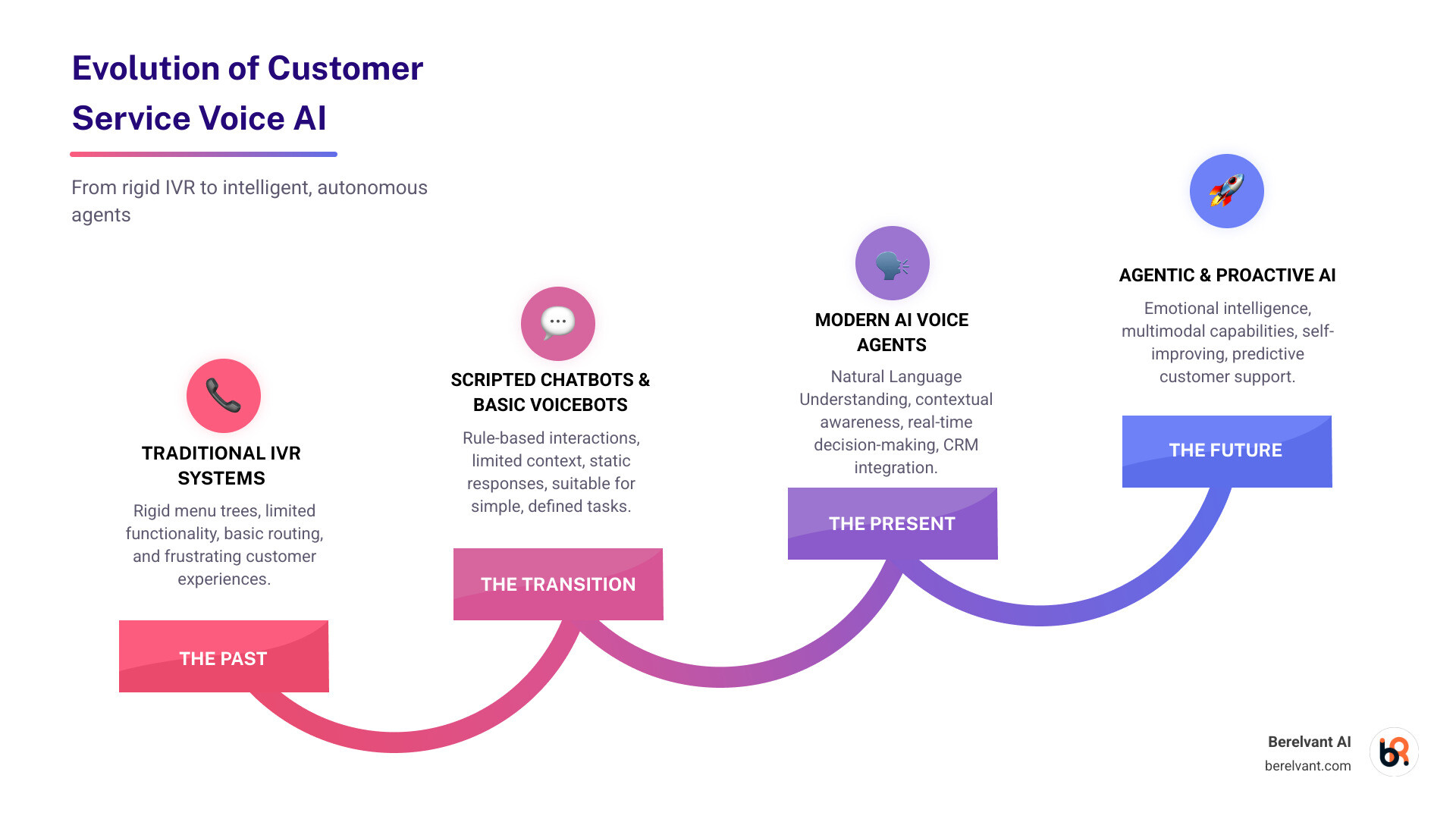
An AI customer service voice agent is an AI-powered system for real-time, voice-based customer interactions, using speech recognition, natural language processing, and conversational AI. Unlike traditional IVR or text chatbots, these agents understand context, adapt to customer needs, and execute complex workflows autonomously.
What AI Voice Agents Do:
- Listen and understand natural speech with sub-500ms latency
- Recognize intent across multiple languages and dialects
- Take action by integrating with CRMs, knowledge bases, and backend systems
- Escalate intelligently to human agents when needed, with full context transfer
- Operate 24/7 across phone, web, and mobile channels
Key Benefits for Enterprises:
- Reduce cost per interaction by over 60%
- Achieve 65-75% call containment rates
- Cut resolution times in half
- Scale support without adding headcount
- Maintain compliance with SOC 2, HIPAA, and GDPR standards
The shift is measurable. CARS24 cut resolution times in half while boosting customer satisfaction. Zoom increased self-service rates from under 30% to 75% in just two months. These are structural, not incremental, changes to how customer operations scale.
Crucially, voice AI isn’t just a cost-cutting tool. When deployed correctly, it becomes a revenue driver. Agents qualify leads, book appointments, collect actionable data, and free your human team to focus on high-value interactions. The technology has matured beyond scripted responses to reason through complex scenarios, adapt tone, and integrate directly into your workflows.
The challenge isn’t whether to deploy voice AI, but how to architect it for speed, compliance, and cross-market execution without sacrificing quality or control.
I’m Renzo Proano, and I’ve spent the last decade building AI-driven growth systems for enterprise brands across financial services, SaaS, and regulated markets. I design and deploy AI customer service voice agents that integrate with CRM platforms, telephony systems, and multilingual workflows to support acquisition, retention, and operational efficiency at scale.
From Cost Center to Growth Engine: The Strategic Imperative of Voice AI
For enterprise leaders, customer service is shifting from a cost center to a strategic growth engine. Sophisticated AI customer service voice agents now drive revenue, improve customer satisfaction (CSAT), and deliver significant operational efficiency.
This shift is market-driven: the chatbot sector was predicted to reach $142 billion by 2024, a 4,971% increase from 2019. This reflects consumer demand, with nearly 40% of internet users preferring chatbots for certain tasks. This preference extends to voice, where speed, consistency, and 24/7 availability are paramount.
At Berelvant AI, we leverage AI as a “speed and scale layer” to accelerate delivery and multiply campaign impact. This is vital in complex, compliance-heavy environments and for multicultural audiences across the Americas, where multilingual and cross-market operations are non-negotiable. An AI customer service voice agent provides a robust, scalable solution for millions of interactions with consistent quality, freeing human teams for high-value engagements that differentiate a brand.
Key Business Outcomes and ROI
The benefits of deploying an AI customer service voice agent are quantifiable and impactful for the bottom line. For VP and Director-level leaders, understanding these outcomes is key to building a compelling business case.
- Reduced Cost per Interaction: AI voice agents cut interaction costs by over 60% by automating routine inquiries and optimizing call handling. The healthcare, banking, and retail sectors were estimated to save $11 billion annually by 2023 through AI automation.
- Increased Self-Service Rates: Empowering customers to self-serve improves efficiency. Zoom Virtual Agent increased self-service chat rates from under 30% to 75% in two months, offloading human agents to focus on complex, empathetic interactions.
- Halved Resolution Times & Improved First-Call Resolution (FCR): AI agents access information instantly, often cutting resolution times in half. Some customers report resolving up to 90% of issues on the first call, a critical metric for customer satisfaction and operational efficiency.
- Open uping Incremental Revenue: Beyond cost savings, AI agents can generate millions in incremental revenue through improved lead qualification, faster appointment setting, and proactive engagement. One client saw a 3x profitability per lead and a +25% call success rate compared to human agents after implementing an AI solution.
- Boosted Customer Satisfaction (CSAT): By providing instant, consistent, and personalized 24/7 support, AI voice agents significantly improve the customer experience, leading to higher satisfaction scores and stronger loyalty.

These metrics underscore the strategic imperative of integrating voice AI. It’s about changing your customer service from a reactive cost center into a proactive growth driver.
Key Use Cases for an AI Customer Service Voice Agent
The versatility of an AI customer service voice agent extends across numerous business functions, offering significant value to enterprises in diverse markets.
- Inbound Support Automation: A common and impactful use case, voice agents handle FAQs, order status, password resets, and basic troubleshooting, routing complex cases to human agents. This ensures 24/7 availability and reduces wait times.
- Outbound Lead Qualification: AI agents proactively engage and qualify leads by gathering essential information (budget, timeline, needs) before handoff to sales. This automates the sales pipeline, improving conversion rates and team efficiency. For more insights, explore our guide on AI Calling Agent Automation.
- Appointment Scheduling: From booking findy calls to scheduling service appointments, voice agents integrate directly with calendars, offer available slots, and send confirmations. This is invaluable for sales, healthcare, and service-based industries.
- Multilingual Customer Service: For enterprises operating across the Americas, an AI customer service voice agent can converse fluently in multiple languages, dynamically switching within a single conversation to ensure consistent service quality.
- Complex Issue Triage: Before escalating, an AI agent gathers comprehensive details, performs initial diagnostics, and accesses knowledge base articles. This provides the human agent with full context for faster, more effective resolutions.
- Data Collection and Surveys: Voice agents can conduct customer surveys, gather feedback, and collect critical data at scale, providing valuable insights for product development and service improvement.
By automating these diverse use cases, an AI customer service voice agent becomes an indispensable tool for achieving operational excellence and driving growth.
The Core Architecture of an Enterprise-Grade AI Customer Service Voice Agent
For enterprise leaders, understanding the core technology of an AI customer service voice agent is crucial. These are not simple scripts but sophisticated systems built on advanced AI components for human-like conversation and intelligent action.
At its heart, an AI customer service voice agent relies on a seamless interplay of several technological components:
- Speech-to-Text (STT): Converting spoken words into written text.
- Natural Language Understanding (NLU): Interpreting the meaning, intent, and context of the transcribed text.
- Dialogue Management: Orchestrating the conversation flow and deciding the next best action.
- Natural Language Generation (NLG): Formulating a coherent and contextually appropriate textual response.
- Text-to-Speech (TTS): Synthesizing the generated text into natural-sounding speech.
This complex chain allows the voice agent to listen, comprehend, think, and respond in real-time, creating a truly conversational experience.

Speech-to-Speech vs. Chained Architecture
When architecting an AI customer service voice agent, a fundamental decision lies between two primary approaches: Speech-to-Speech (S2S) and Chained architecture. Each has distinct advantages for different enterprise needs.
| Feature | Speech-to-Speech (Realtime) | Chained Architecture |
|---|---|---|
| Latency | Ultra-low latency (sub-500ms), highly interactive | Higher latency, sequential processing |
| Control | Less explicit control over intermediate steps, more “black box” | High control and transparency over each processing step |
| Cost | Can be higher due to real-time multimodal processing | Potentially lower for simpler interactions, scales with LLM usage |
| Use Case Suitability | Highly interactive, unstructured conversations, language tutoring, empathetic customer service, sales calls | Structured workflows, customer support, sales triage, existing LLM applications, scenarios needing detailed transcripts |
| Scalability | Designed for high concurrency and real-time interaction | Scales well for high-volume, predictable interactions |
Speech-to-Speech (S2S) Architecture: This approach processes audio directly, using models like gpt-4o-realtime-preview. It understands words, emotion, and intonation for natural, fluid conversations. S2S is ideal for interactive, low-latency engagements like complex support or sales, where vocal cues are important. The AI responds almost immediately, creating a real-time conversational feel.
Chained Architecture: This approach converts audio to text (STT), processes it with an LLM, and converts the response back to speech (TTS). It offers greater control and transparency, making it ideal for structured workflows requiring robust function calling and predictable responses. It’s preferred for integrating with existing text-based LLM apps or when full transcripts are needed for analysis.
For enterprise applications, the choice depends on the specific requirements for responsiveness, conversational complexity, and integration. We can help you learn how to build voice agents that align with your strategic goals.
Core AI Components and Processing
Let’s dig deeper into the core AI components that power these advanced voice agents:
- Speech-to-Text (STT): The first step is accurately transcribing speech to text. Leading models like Whisper by OpenAI offer high accuracy across languages and in noisy environments, which is foundational for the agent’s understanding.
- Natural Language Processing (NLP) & Natural Language Understanding (NLU): After STT, NLP/NLU engines analyze text to extract meaning, entities, and user intent. NLU grasps the purpose behind a query, not just keywords, allowing the AI customer service voice agent to differentiate requests like “I want to change my flight” versus “What’s the status of my flight?”
- Dialogue Management: This is the conversational “brain,” managing flow, maintaining context, and deciding the next action based on business logic. It determines whether to ask a clarifying question, provide information, or initiate a task.
- Function Calling: Modern voice agents are doers, not just conversationalists. Through function calling, the AI customer service voice agent interacts with external systems—fetching CRM data, checking inventory, or booking appointments via APIs. This transforms the interface into an action-oriented tool.
- Text-to-Speech (TTS): The final step converts the agent’s text response into natural-sounding speech. Advanced TTS from providers like ElevenLabs incorporates natural intonation and custom brand voices for a human-like, empathetic experience. The goal is a low-latency response that sounds natural.
Together, these components create a powerful, intelligent, and responsive AI customer service voice agent capable of handling a vast array of customer interactions at scale.
Systematizing Deployment: Integrating Voice AI into Your Operational Fabric
Deploying an AI customer service voice agent requires seamless integration into your existing operational fabric—CRMs, telephony systems, knowledge bases, and complex cross-market workflows. Our expertise is in architecting these integrations for maximum impact and minimal disruption.
Designing an Effective AI Customer Service Voice Agent Persona
The success of an AI customer service voice agent hinges on its ability to connect with customers in a natural, helpful, and brand-aligned manner. This requires careful design of its persona, tone, and conversational flow.
- Persona Development: Your AI agent needs a defined personality (e.g., calm, efficient, empathetic) aligned with your brand values. For instance, a lead qualification agent might be “calm, helpful, and friendly.” This involves defining attributes like identity, task, demeanor, tone, and pacing.
- Tone and Demeanor: The agent’s tone should be consistent, context-appropriate, and human-like, avoiding jargon. This is achieved through sophisticated prompt engineering to instruct the underlying language model. The
[Voice Agent Metaprompter](https://chatgpt.com/g/g-678865c9fb5c81918fa28699735dd08e-voice-agent-metaprompt-gpt)is a valuable tool for this. - Scripting and Conversational Flows: While dynamic, core conversational flows must be designed, including intros, key questions, and scenario pathways. Using JSON within prompts can encode these flows for consistency.
- Objection Handling: An effective AI customer service voice agent must be programmed to anticipate common concerns and respond politely. For example, if a customer says “I’m just looking,” the agent might respond, “Totally fine—lots of people start there. We’ve found it helps to have a quick chat so you know what’s out there and what’s realistic.” This maintains engagement without being aggressive.
By carefully designing the agent’s persona and conversational strategy, we ensure every customer interaction is positive, productive, and reinforces your brand’s commitment to service.
Handling Escalations and Human Handoff
Even the most advanced AI customer service voice agent will encounter situations requiring human empathy or complex problem-solving. Intelligent escalation and seamless human handoff are critical. The goal is not to replace humans but to empower them by handling routine tasks.
- Agent Handoff Logic: We design clear triggers for when an agent should escalate a call, based on query complexity, detected customer sentiment (e.g., frustration), or specific keywords. The agent is trained to recognize its limits and hand off the call appropriately.
- Escalation Paths: Defined pathways ensure that when an escalation occurs, the customer is routed to the most appropriate human agent or department, minimizing transfer times.
- Context Transfer: A seamless handoff requires transferring the full conversation history and customer data to the human agent. This eliminates customer repetition and provides the agent with immediate context for a faster resolution.
- Human-in-the-Loop: For highly complex cases, a human-in-the-loop approach allows human agents to monitor AI interactions in real-time and intervene when necessary, providing a safety net and a training opportunity for the AI.
- Agent-Assist: In some scenarios, the AI customer service voice agent works alongside human agents as an intelligent co-pilot, providing real-time information, suggesting responses, or summarizing interactions to boost efficiency.
This hybrid approach ensures customers receive the best possible support, balancing AI’s speed and scale with the irreplaceable empathy of human agents. We can showcase how this works with a Demo AI 1 for your specific needs.
Measuring What Matters: Performance, ROI, and Continuous Optimization
For enterprise leaders, the value of an AI customer service voice agent is measured by its tangible impact on business metrics. We establish clear performance indicators and use robust analytics to track ROI and drive continuous improvement.
- Performance Metrics: Key metrics include:
- Call Containment Rate: The percentage of calls fully resolved by the AI without human intervention. High containment rates directly translate to cost savings.
- Self-Service Rate: The proportion of customer issues successfully handled through self-service channels, including voice agents.
- First Call Resolution (FCR): The percentage of customer issues resolved on the first interaction, whether with an AI or human.
- Average Handle Time (AHT): AI agents often significantly reduce AHT for routine inquiries.
- Customer Satisfaction (CSAT) & Net Promoter Score (NPS): The agent’s efficiency and effectiveness contribute to higher CSAT. Some platforms generate AI CSAT scores via conversational analysis.
- Conversion Rates: For sales-focused agents, tracking lead qualification and conversion rates is paramount.
- Analytics Dashboards: Comprehensive analytics dashboards provide real-time insights into agent performance, call volume, intent recognition accuracy, escalation rates, and customer sentiment. These are critical for identifying trends and demonstrating value.
- Cost per Interaction: By tracking this metric, we can quantify the financial benefits of automation and show a clear return on investment.
Effective measurement allows us to demonstrate how an AI customer service voice agent directly contributes to our clients’ AI Campaign Management strategies, optimizing spend and maximizing outcomes.
Challenges, Limitations, and Continuous Improvement
While AI customer service voice agents are advancing, leaders must understand their limitations and the need for continuous improvement. An AI solution is not a “set-it-and-forget-it” tool; it requires ongoing optimization to maintain peak performance and adapt to evolving customer needs.
- Accuracy Limitations: While highly accurate for structured inquiries (80-90% when properly trained), AI agents can still misinterpret nuanced language, sarcasm, or highly emotional speech. Background noise can also impact STT accuracy.
- Handling Emotional Nuance: Truly understanding and responding with human-level empathy remains a challenge. Complex emotional situations or highly sensitive topics often still necessitate human intervention.
- Edge Case Management: AI agents excel at common scenarios but can be tripped up by unexpected “edge cases.” Robust dialogue management and fallback mechanisms are essential, alongside a clear human handoff strategy.
- Data Privacy and Compliance: For regulated industries, implementing an AI customer service voice agent requires strict adherence to compliance standards such as SOC 2, HIPAA, and GDPR. This includes secure data handling, encryption, and zero-retention modes for sensitive data.
- Iterative Training: AI models are not static. They require continuous training, monitoring, and refinement based on real-world interactions. This iterative process—analyzing failed handoffs, misinterpreted intents, and customer feedback—is vital for improving agent performance over time.
Recognizing these challenges allows us to build resilient AI customer service voice agent solutions that are continuously optimized, delivering consistent value while knowing when to leverage the irreplaceable human touch.
The Future of Conversational AI: Trends and Next-Generation Capabilities
Conversational AI is evolving rapidly, and tomorrow’s AI customer service voice agent will be more sophisticated, intuitive, and integrated. For enterprise visionaries, understanding these trends is key to staying ahead.
- Agentic AI Frameworks: We are moving towards “agentic AI” where the voice agent reasons, adapts, and takes actions autonomously, not just following a script. This means the agent can proactively anticipate needs and evolve its own strategies to resolve conversations, as seen in platforms like Zoom Virtual Agent.
- Proactive Engagement: Future agents will move beyond reacting to inbound calls to proactively engaging customers based on predictive analytics. This could involve appointment reminders, personalized promotions, or proactive support based on product usage.
- Emotional Understanding (EQ + IQ): The next generation of conversational agents, powered by models like Gemini, is gaining a deeper ability to understand emotions. This means the AI customer service voice agent can adapt its tone and response based on detected customer sentiment, combining emotional intelligence (EQ) with artificial intelligence (IQ).
- Multimodal Capabilities: The future of AI agents is inherently multimodal, seamlessly integrating voice with chat, SMS, and video. An AI customer service voice agent could interpret streaming video in real-time, understanding visual cues alongside verbal ones for richer interactions.
- Real-time Transcription and Analysis: Advances in real-time STT will enable instant, highly accurate transcription and analysis during live calls. This improves agent responsiveness and allows for immediate sentiment analysis, keyword spotting, and compliance monitoring, as seen in demos like the Realtime API Agents Demo.
These advancements promise an even more dynamic, intelligent, and human-centric approach to customer service, further cementing the AI customer service voice agent as a cornerstone of enterprise operations.
Conclusion
The shift of customer service from a cost center to a strategic growth engine is happening now, driven by the AI customer service voice agent. For enterprises, adopting this technology is no longer optional but a critical step toward securing a competitive advantage in a demanding digital market.
At Berelvant AI, we know deploying these systems requires a strategic vision that unifies performance media, multilingual creative, automation, and analytics. Our expertise is building end-to-end acquisition systems for companies across the Americas, solving challenges in regulated and multicultural environments. The AI customer service voice agent is a key component, acting as the speed and scale layer that multiplies the impact of every campaign.
The future of customer engagement is conversational, intelligent, and deeply integrated. It’s about delivering seamless, personalized experiences at scale, driving operational efficiency, and opening new revenue streams. To fully leverage the power of conversational AI and build a unified growth engine for your enterprise, explore our AI Marketing Strategies. The future is calling, and with a well-architected AI customer service voice agent, your enterprise will be ready to answer.