
Why AI Digital Marketing Has Become Infrastructure, Not Innovation
AI digital marketing is the use of artificial intelligence technologies—including machine learning, predictive analytics, and generative AI—to automate, optimize, and personalize marketing execution across acquisition channels. It enables organizations to move from reactive campaign management to predictive, data-driven systems that scale across markets, languages, and customer segments.
Key components of AI digital marketing include:
- Predictive analytics – Forecasting customer behavior, churn risk, and lifetime value
- Hyper-personalization – Delivering dynamic content based on real-time behavioral signals
- Automated creative generation – Producing multilingual ad variants and optimized messaging at scale
- Conversational AI – Deploying chatbots and voice agents for engagement and conversion
- Advanced audience intelligence – Mining structured and unstructured data for segmentation and targeting
- AI-powered media buying – Optimizing bidding, budget allocation, and cross-channel attribution in real time
AI adoption in marketing is accelerating rapidly. Many marketers now report they use AI in their daily workflows and “couldn’t live without it.” However, research shows a significant gap between individual enthusiasm and organizational readiness. The challenge is not whether to adopt AI, but how to architect systems that deliver predictable outcomes at enterprise scale.
This matters because speed and precision are now table stakes. Organizations managing acquisition across multiple regions, working under regulatory constraints, or dealing with fragmented teams cannot afford slow execution or inconsistent attribution. AI removes operational friction, increases creative velocity, and delivers compliance-ready campaigns with clear measurement.
I’m Renzo Proano, and I’ve managed over $300 million in digital ad spend across financial services, SaaS, GovTech, and e-commerce, building AI-driven growth systems that integrate performance media, creative automation, and advanced analytics. In this guide, I’ll show you how to architect an AI digital marketing system that scales across the Americas, meets regulatory requirements, and delivers measurable ROI.
Architecting the AI-Ready Marketing Organization
For enterprise-level organizations, becoming AI-ready is less about adopting a new tool and more about a fundamental shift in operational architecture. This involves strategic alignment, robust data infrastructure, a scalable technology stack, and ironclad compliance frameworks. The 2024 State of AI in Marketing report paints a picture of a marketing industry in transition, highlighting a significant gap between individual enthusiasm for AI and organizational readiness. Our goal is to bridge this gap, changing enthusiasm into systemic capability.
We recognize that aligning resources across the entire organization to understand your AI readiness is essential. Priority marketing use cases must blend viability, feasibility, and trustworthiness—all at once. This requires cross-functional collaboration that ensures AI integration is not just a technological upgrade, but a strategic improvement to our core business operations.
Assessing Enterprise Viability
Before integrating AI, we must rigorously assess its viability. This means looking beyond surface-level benefits to understand the true value proposition for our enterprise. The core questions we ask are: Can AI digital marketing truly add value to our marketing organization? Does it present opportunities to save costs and/or drive growth? Does it enable more personalized experiences for our customers?
The benefits are compelling: AI accelerates revenue growth and opens up greater value from existing marketing technologies. It provides more actionable insights from data, enabling us to move from broad demographics to precise, actionable consumer behavior analysis. AI’s predictive power allows us to anticipate customer preferences based on behavior, customizing marketing to individual needs and crafting experiences that make customers feel seen and valued. This leads to increased efficiency, innovation, and stronger customer relationships, ultimately boosting our ROI and brand loyalty. We aim for personalization at scale, which can boost loyalty programs, custom experiences, and targeted campaigns across the diverse markets of the Americas.
Evaluating Operational Feasibility
Once viability is established, we turn to operational feasibility. This is where many enterprises face challenges. We must ask: How complex is it to implement AI digital marketing within our existing infrastructure? Do we possess the necessary capabilities and resources—people, processes, data, and technology—to effectively deploy and scale AI?
The rapid evolution of AI marketing tools means seamless integration with existing marketing workflows is critical. These tools often integrate with Large Language Models (LLMs) and our current systems using Model Context Protocol (MCP) to automate internal workflows. Our focus is on solutions that complement and improve our existing tech stack, integrating with leading platforms and marketplaces without requiring a complete overhaul. This approach ensures scalability across multiple countries and diverse audiences, which is paramount for our operations across the Americas. Developing robust AI Marketing Strategies is key to overcoming challenges related to a lack of education, training, and skilled talent.
Establishing System Trustworthiness
Trust is the bedrock of any successful enterprise operation, especially in regulated industries. When implementing AI digital marketing, we must address: How will the trust of our employees and customers be impacted by GenAI? Have we established ethical safeguards to ensure compliance with legal and regulatory policies?
Ethical considerations, particularly regarding data privacy and algorithmic bias, are non-negotiable. AI’s aggressive data collection practices, while powerful for insights, also pose privacy risks. We ensure strict adherence to regulations like GDPR and CCPA, maintaining transparency in data practices and implementing robust user consent management. This is crucial for protecting our brand reputation and avoiding the pitfalls of data misuse. Algorithmic biases are another significant concern; AI systems can unintentionally learn and perpetuate biases, leading to skewed marketing strategies and potential brand damage. We mitigate this by auditing AI models, ensuring representative training data, and implementing anti-discrimination policies. Human oversight is prioritized for all AI-generated content and decisions, ensuring accuracy, ethical alignment, and brand safety.
Core Capabilities for Enterprise-Scale AI Digital Marketing
For enterprises operating across diverse markets, AI digital marketing is about building a unified engine that provides real-time insights into customer behavior across the entire sales process. This speeds up execution, removes bottlenecks, and multiplies the impact of every campaign. The 2024 State of Marketing AI Report highlights that while AI adoption is accelerating, the focus must shift to leveraging AI for core strategic capabilities.
Predictive Analytics for Strategic Forecasting
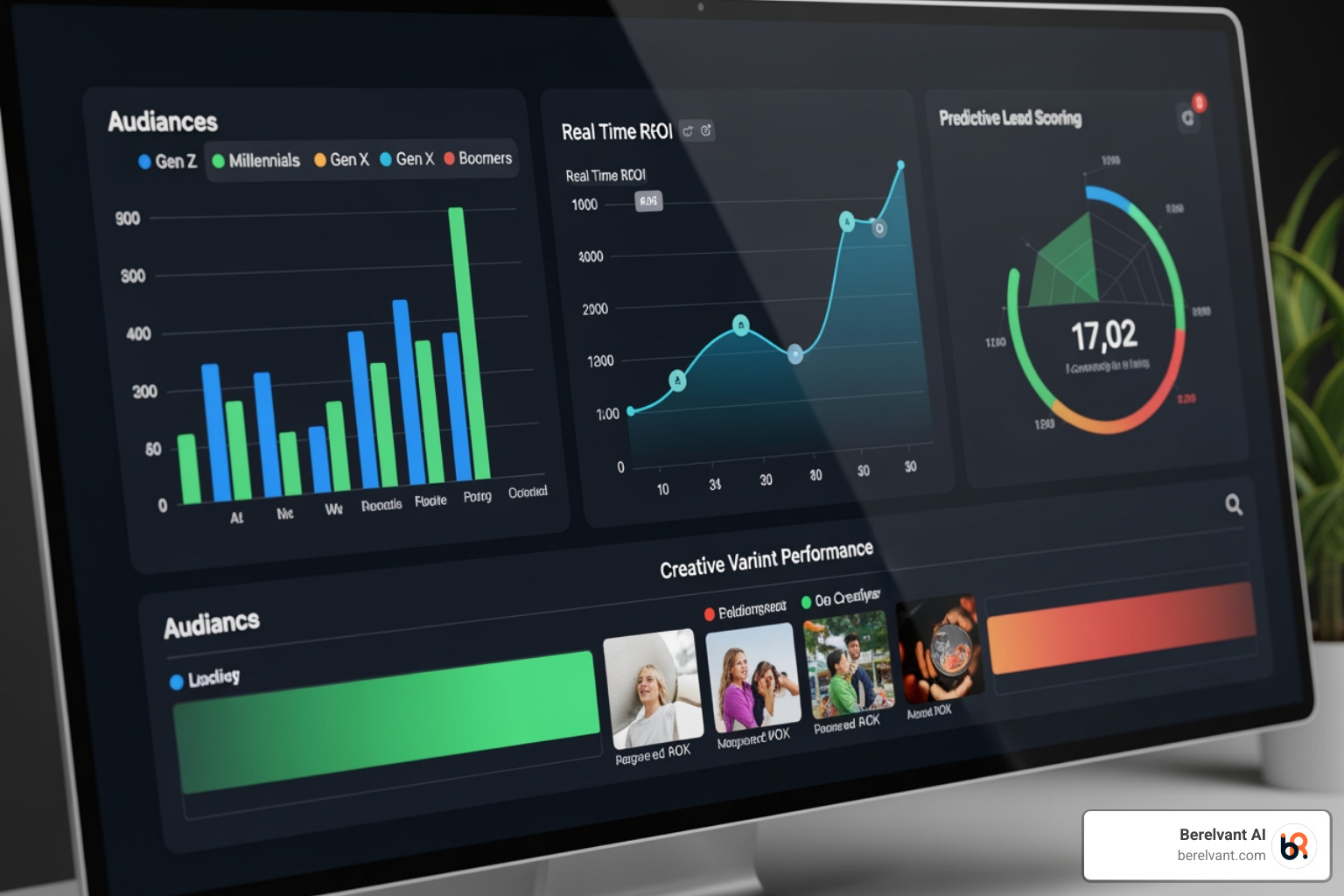
Predictive analytics is a game-changer for refining strategies and improving campaign performance at scale. AI’s predictive power allows us to anticipate customer preferences based on behavior, moving from reactive tactics to proactive strategy. This means we can:
- Forecast demand by integrating historical sales data, market trends, and consumer buying patterns to anticipate needs and optimize inventory across regions.
- Predict customer churn and identify at-risk segments, enabling proactive retention strategies.
- Model Customer Lifetime Value (CLV) to prioritize high-value customers and allocate resources effectively.
- Analyze market trends to identify emerging opportunities and adjust messages in real time across the Americas.
- Implement sophisticated lead scoring to prioritize potential customers based on engagement, demographics, and behavior.
These insights inform strategic resource allocation, risk mitigation, and long-term growth planning, ensuring our large-scale campaigns are always optimized for maximum impact.
Hyper-Personalization and Customer Journey Orchestration
Hyper-personalization, enabled by AI, allows us to deliver custom experiences at an unprecedented scale. It’s about moving beyond basic segmentation to individual-level relevance, anticipating customer needs and actions across every touchpoint. This is how we achieve it:
- Dynamic Content Personalization: AI analyzes browsing history, past purchases, and unstructured data like social media posts to deliver content that resonates with individual preferences. Generative AI can create hyper-customized content for different segments on the fly, ensuring messages are culturally and contextually appropriate across diverse audiences.
- Real-time Behavioral Targeting: AI algorithms analyze customer interactions in real time, predicting consumer behavior and personalizing content, recommendations, and offers.
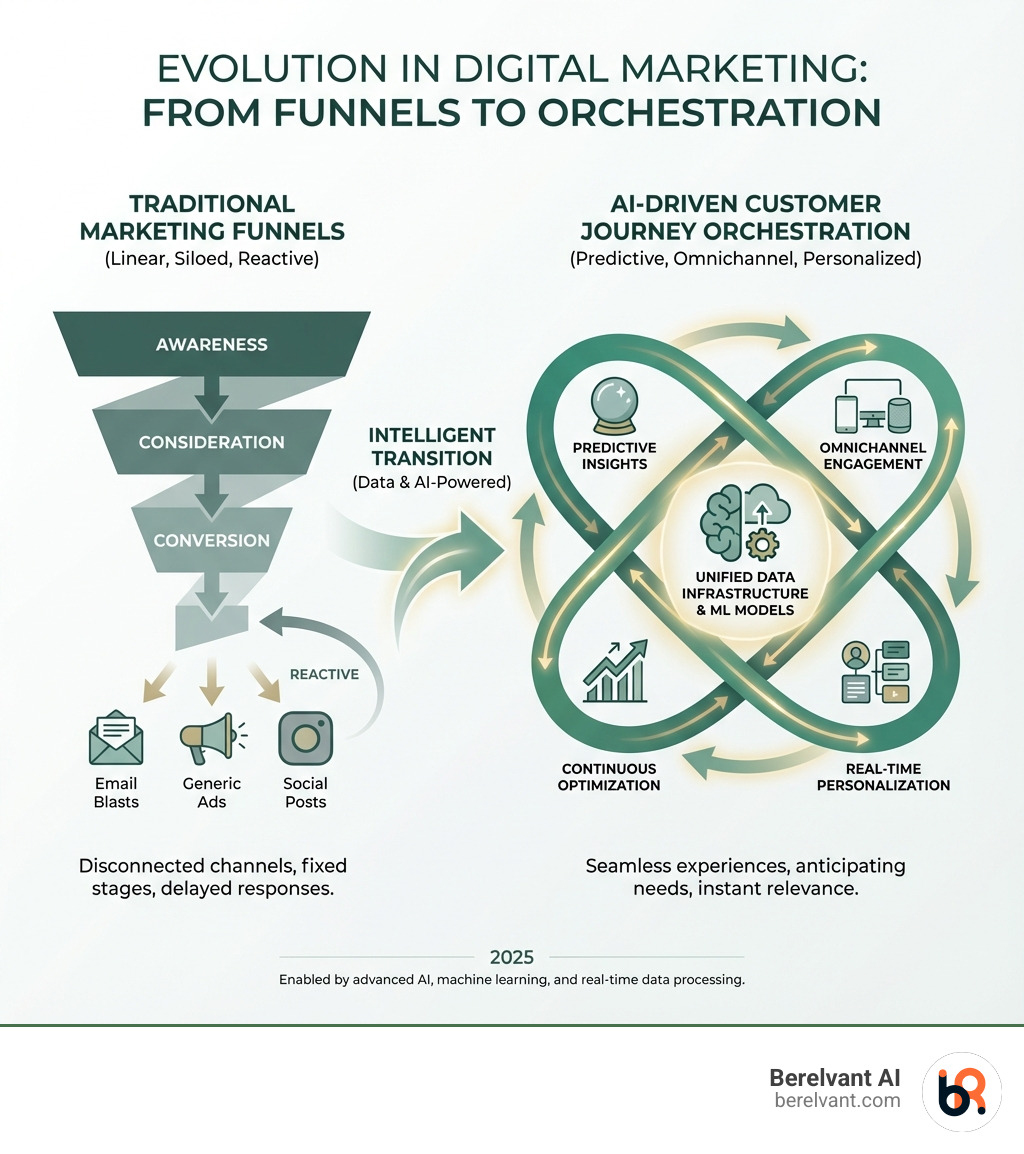
- Omnichannel Experience: We leverage Customer Data Platforms (CDPs) to unify fragmented data sources, creating a single, comprehensive view of the customer. This powers continuous, contextual communication across all channels—web, app, email, social, and in-person—ensuring a seamless journey regardless of the touchpoint.
- Next-Best-Action Models: AI recommends the optimal next step for each customer, whether it’s a product recommendation, a support interaction, or a specific content piece, driving engagement and conversion. Our AI Campaign Management systems are designed to orchestrate these complex interactions efficiently.
Automated Creative and Content Infrastructure
The demand for content across diverse platforms and languages is immense. AI digital marketing transforms our content creation processes, from copywriting to video production, enabling speed and scale without compromising brand voice or quality.
- Generative AI for Ad Variants: AI can rapidly produce countless ad copy variants, headlines, and calls-to-action custom to specific audiences and campaign goals. This allows for extensive A/B testing and dynamic creative optimization (DCO) to continuously improve performance.
- Multilingual Content Generation: For operations across the Americas, AI is indispensable for generating high-quality, culturally nuanced content in multiple languages. This removes significant bottlenecks in creative localization, ensuring our messages resonate with multicultural audiences.
- Dynamic Creative Optimization (DCO): AI analyzes real-time performance data to automatically adjust and serve the most effective creative elements to individual users, maximizing engagement and conversion rates.
- Brand Voice Consistency: We train AI models on our brand guidelines and existing high-performing content to ensure all AI-generated output maintains a consistent, on-brand voice and tone. This is crucial for maintaining brand integrity across vast content libraries and diverse markets.
Deploying AI Across the Acquisition System
Deploying AI digital marketing effectively means integrating it across the entire end-to-end acquisition system, from initial engagement to final purchase. This powers our performance media strategies and ensures robust analytics integration. Our goal is to create a unified, intelligent acquisition engine that accelerates delivery, removes bottlenecks, and multiplies the impact of every campaign.
Advanced Data Analytics & Audience Intelligence
To gain deeper customer insights, we leverage AI for advanced data analytics, moving beyond traditional data processing to uncover hidden patterns and predict behavior.
- Unstructured Data Analysis: AI can collect, process, and analyze not just structured data like purchase histories, but also unstructured data such as images, videos, and social media posts. This provides comprehensive insights into consumer preferences, brand perception, and shopping trends.
- Social Listening & Sentiment Analysis: AI monitors brand mentions across news sites, social media, blogs, and forums, performing sophisticated sentiment analysis to understand public perception and identify emerging trends.
- Competitor Intelligence: AI automates competitor intelligence reports, allowing us to quickly analyze vast amounts of market data to stay ahead of rival brands and refine our strategies for better targeting.
- Granular Audience Segmentation: By rapidly analyzing diverse datasets, AI helps us refine audience segmentation, identifying precise and actionable groups beyond broad demographics. This enables hyper-targeted campaigns that resonate deeply with specific customer needs across various markets.
AI-Powered Media Buying and Optimization for AI Digital Marketing
AI digital marketing is revolutionizing media buying, shifting from manual adjustments to real-time, data-driven optimization. This ensures our media spend is highly accountable to brand and business outcomes.
- Real-time Bidding (RTB): AI algorithms manage RTB processes, optimizing bids in milliseconds based on audience segments, historical performance, and predictive models to secure the most valuable ad placements.
- Budget Pacing & Allocation: AI dynamically adjusts budget allocation across campaigns and channels in real time, ensuring optimal spend to achieve KPIs and maximize ROI. We optimize across walled gardens through an agile total access approach, using custom data, technology, and inventory stacks.
- Cross-channel Attribution: AI provides sophisticated cross-channel attribution, giving us clear insights into how different touchpoints contribute to conversions across the customer journey.
- Ad Fraud Detection: AI identifies and mitigates ad fraud, protecting our media investments and ensuring campaign integrity.
- Performance Max: We use AI-powered advertising tools like Google’s Performance Max to streamline campaign management and maximize results across Google’s inventory. For specific automation needs, our AI Calling Agent Automation can further improve lead qualification and engagement efforts.
Conversational AI for Engagement and Conversion
AI-powered chatbots and virtual assistants are fundamentally changing customer engagement and support, providing scalable, personalized interactions 24/7.
- AI-Powered Chatbots: These advanced chatbots engage users in fluid, natural conversations, handling customer queries, providing immediate responses, and guiding users towards conversion. They are crucial for supporting customers across multiple time zones in the Americas.
- Virtual Sales Assistants: AI-powered virtual assistants qualify leads, recommend products, and even complete transactions in real time, augmenting our sales teams and improving conversion rates.
- Lead Qualification & Nurturing: AI chatbots automate lead qualification, gathering essential information and nurturing prospects through personalized interactions, freeing up human sales teams for high-value engagements.
- 24/7 Customer Support: For enterprises with global customer bases, AI provides continuous support, ensuring customer satisfaction and issue resolution around the clock, regardless of geography.
Navigating Governance, Ethics, and Human-AI Collaboration
As an enterprise growth partner, we understand that leveraging AI digital marketing effectively requires meticulous attention to governance, ethics, and the crucial role of human oversight. The potential for risk, impact on brand reputation, and the complexities of data privacy and algorithmic bias demand a robust framework for responsible AI deployment.
Data Privacy and Regulatory Compliance
The ethical considerations surrounding AI in marketing, particularly regarding data privacy, are paramount. As we harness AI tools for enhancing efficiency and user experiences, maintaining strict adherence to current regulations is essential.
- GDPR and CCPA: We steer stringent data privacy regulations like GDPR and CCPA, which impose strict checks on data collection and usage. Our systems are designed to ensure compliance, especially when operating across multiple countries with varying legal frameworks.
- Data Collection Transparency: We prioritize transparency regarding how user data is collected, processed, and used by AI systems. This reinforces customer trust and minimizes perceived dangers of AI in advertising.
- User Consent Management: Robust user consent management systems are implemented to ensure individuals have clear control over their data, aligning with legal requirements and ethical best practices.
- Secure Data Handling: All data processed by our AI systems is handled with the highest security protocols, safeguarding against misuse and breaches.
Mitigating Algorithmic Bias in AI Digital Marketing
Algorithmic biases pose a significant concern. These AI systems can unintentionally learn and perpetuate biases from their training data, leading to skewed marketing strategies and potentially discriminatory outcomes, especially when targeting multicultural audiences.
- Auditing AI Models: We regularly audit our AI models to identify and rectify any inherent biases. This involves scrutinizing the data sets used for training and evaluating the fairness metrics of the algorithms.
- Representative Training Data: We ensure that AI models are trained on diverse and representative data sets to prevent the perpetuation of stereotypes or unfair targeting. This is critical for ethical marketing across the diverse demographics of the Americas.
- Anti-discrimination Policies: We embed anti-discrimination policies into our AI development and deployment processes, aligning with legal mandates and our commitment to equitable marketing.
- Continuous Monitoring: AI systems are continuously monitored for signs of emergent bias in their outputs, allowing for prompt intervention and recalibration.
The Human-in-the-Loop Operating Model
The role of human-AI collaboration in modern marketing workflows is not just about efficiency; it’s about strategic excellence and ethical governance. AI is not replacing marketers; rather, marketers who know how to leverage AI will replace those who don’t.
- Strategic Oversight: Humans provide strategic direction and oversight, defining campaign goals, market positioning, and brand messaging that AI then helps to execute at scale.
- Creative Direction & Final Approval Workflows: While AI generates creative variants, human creatives provide the initial direction and final approval. This human-in-the-loop model ensures brand voice consistency, cultural sensitivity, and ethical alignment, preventing issues like the AI scandal seen with certain publications.
- Exception Handling: Humans are indispensable for handling complex exceptions, nuanced customer interactions, and situations requiring emotional intelligence that AI cannot yet replicate.
- AI as a Co-pilot: We view AI as a powerful co-pilot, augmenting human capabilities, automating repetitive tasks, and providing data-driven insights, allowing our marketing teams to focus on strategy, innovation, and relationship building.
- Upskilling Marketing Teams: We invest in upskilling our marketing teams, enabling them to develop their AI expertise, understand how AI works, and apply it responsibly to stay competitive in the evolving digital landscape.
Frequently Asked Questions about AI in Enterprise Marketing
How does AI impact marketing team structure and talent requirements?
AI digital marketing fundamentally reshapes marketing team structures and talent requirements. The focus shifts from manual, repetitive execution to strategic oversight, data interpretation, and creative direction. We see an increased need for specialized roles such as:
- AI Strategists: To define how AI integrates with overall business objectives and marketing goals.
- Data Scientists & Analysts: To manage, clean, and interpret the vast datasets that feed AI models, ensuring actionable insights.
- Prompt Engineers: To effectively communicate with generative AI models, optimizing outputs for specific creative and content needs.
- AI Ethics & Compliance Officers: Particularly in regulated industries, to ensure AI deployments adhere to legal and ethical standards.
The emphasis moves towards analytical and critical thinking skills, fostering a culture of continuous learning. Collaboration between creative, data, and media teams becomes critical, as AI acts as the connective tissue. Marketers must develop their AI expertise to stay competitive, understanding that the job will be taken by a person who knows how to use AI, not by AI itself.
What is the realistic ROI of implementing AI in marketing systems?
The realistic ROI of implementing AI digital marketing in enterprise systems is substantial, though it requires an initial investment in data infrastructure, talent, and strategic integration. Returns are primarily measured through:
- Increased Operational Efficiency: AI automates repetitive tasks across content creation, ad optimization, and customer service, significantly reducing operational costs and freeing up human resources for higher-value activities. We achieve reductions in time spent on routine tasks like content marketing, email, social media, and CRM.
- Reduced Cost-Per-Acquisition (CPA): AI-powered media buying and hyper-personalization lead to more precise targeting and optimized ad spend, driving down acquisition costs.
- Higher Customer Lifetime Value (CLV): Through predictive analytics and hyper-personalization, AI fosters stronger customer relationships, anticipates needs, and reduces churn, increasing CLV.
- Accelerated Speed-to-Market: Automated creative generation and dynamic campaign deployment allow for rapid testing and scaling of initiatives across diverse markets.
- Improved Revenue Growth: By gaining more actionable insights from data and opening up greater value from marketing technologies, AI directly contributes to accelerating revenue growth.
Gains are realized through the scalability and optimization precision that AI brings, changing marketing from a cost center into a powerful growth engine.
How do we ensure brand safety and consistency with AI-generated content across multiple markets?
Ensuring brand safety and consistency with AI-generated content, especially across multilingual and multicultural markets, is a critical challenge for enterprises. Our approach centers on a robust human-in-the-loop operating model and stringent governance:
- Robust Human-in-the-Loop Review Process: All AI-generated content undergoes a mandatory human review and approval process before deployment. This is our primary safeguard against factual inaccuracies, off-brand messaging, and cultural insensitivity.
- Training AI on Brand-Specific Guidelines: We train our generative AI models on extensive libraries of approved brand content, style guides, tone-of-voice documents, and multilingual glossaries. This embeds our brand identity directly into the AI’s understanding, promoting consistency.
- Strict Quality Control and Approval Workflows: We implement multi-stage approval workflows that involve legal, brand, and regional marketing teams. This ensures compliance in regulated industries and cultural relevance for specific markets across the Americas.
- Prioritizing Human Oversight for High-Stakes Content: For critical campaigns, legal disclaimers, or highly sensitive messaging, human oversight remains paramount. AI acts as a powerful assistant for drafting and iteration, but the final strategic and creative decisions rest with our expert teams.
- Transparency and Disclosure: Where appropriate and legally required, we advocate for transparency regarding the use of AI in content creation, reinforcing trust with our audience.
This layered approach allows us to harness AI’s speed and scale for content generation while maintaining uncompromising brand integrity and safety.
Conclusion: AI as the Engine for Scalable Growth
In the rapidly evolving landscape of digital marketing, AI digital marketing is no longer a futuristic concept—it is the foundational layer for enterprise growth. It provides the speed, scale, and precision required to steer complex markets, diverse regulatory environments, and multicultural audiences across the Americas. We’ve seen how AI transforms every facet of our operations, from architecting AI-ready organizations and building core capabilities in predictive analytics and hyper-personalization, to deploying AI across our acquisition systems for optimized media buying and engaging conversational experiences.
The future belongs to organizations that accept this paradigm shift, building unified acquisition systems powered by intelligent human-AI collaboration. This means moving beyond fragmented tools to integrated platforms that remove bottlenecks, multiply campaign impact, and deliver measurable revenue growth. We believe in using AI to empower our teams, refine our strategies, and deepen our connections with customers.
At Berelvant AI, we partner with enterprises to build and manage these sophisticated AI digital marketing systems. Our expertise in performance media, multilingual creative, automation, and analytics creates a unified engine designed to solve complex challenges, ensuring compliance, accelerating delivery, and optimizing for tangible business outcomes.
It’s time to transform your marketing from reactive tactics to predictive acquisition systems. Develop your AI Marketing Strategies with an enterprise partner who understands the nuances of enterprise growth.