
Why CRM Automation Is a Strategic Imperative
CRM automation services transform fragmented customer data and manual processes into a unified, intelligent growth engine that operates across marketing, sales, and service. For enterprise and mid-market organizations managing multiple regions and complex customer journeys, automation eliminates operational drag, accelerates revenue velocity, and delivers the data integrity required for strategic decision-making.
What CRM Automation Services Deliver:
- Operational Efficiency – Eliminate manual data entry, reduce errors, and free teams to focus on high-value activities
- Revenue Acceleration – Shorten sales cycles by 22% through automated workflows and timely, relevant customer engagement
- Scalable Execution – Deploy consistent processes across markets, languages, and teams without expanding headcount
- Data Integrity – Maintain accurate, centralized customer records that support real-time decision-making
- Strategic Intelligence – Leverage AI-driven insights for predictive lead scoring, forecasting, and personalized engagement
Your teams spend too much time on repetitive work. Sales reps dedicate only 30% of their time to actual selling. More than 40% of workers spend at least a quarter of their work week on manual, repetitive tasks like data entry. This isn’t just an efficiency problem—it’s a revenue problem.
Traditional CRM systems function as data repositories. They store information, but they don’t act on it. They require constant manual intervention to update records, assign leads, send follow-ups, and maintain data accuracy. This creates friction at every stage of the customer journey.
Automation transforms your CRM from a passive database into an active growth system. It triggers workflows based on customer behavior, routes leads to the right rep instantly, scores opportunities using real-time engagement data, and personalizes outreach across channels—all without human intervention. The result is faster deal cycles, higher conversion rates, and teams that focus on strategy instead of administration.
For enterprise organizations operating across multiple markets, this becomes even more critical. When you’re managing multilingual campaigns, navigating regulatory requirements, and coordinating distributed teams, manual processes break down. You need systems that execute consistently, maintain compliance, and provide unified visibility across all customer touchpoints.
The business case is clear. When implemented correctly, CRM automation can increase lead conversion by 300% while increasing purchase value by 40%. It reduces sales cycle length by 22%. It saves each user up to 200 hours per year. These aren’t marginal improvements—they’re transformative outcomes that compound over time.
The companies that win in the next decade will be those that treat their CRM not as a tool, but as a strategic asset. They’ll build automation into every customer interaction, leverage AI to predict and personalize at scale, and create operational systems that move faster than their competition.
I’m Renzo Proano, founder of Berelvant AI, where I’ve managed over $300 million in digital ad spend and built AI-driven growth systems for enterprise clients across financial services, SaaS, and e-commerce. I’ve architected CRM automation services that integrate performance marketing, AI infrastructure, and compliance-ready workflows for brands operating in regulated and multi-market environments.
The Strategic Imperative of CRM Automation
For enterprise and mid-market organizations, the shift from traditional CRM to automated CRM is not merely an upgrade—it’s a strategic imperative. We’ve seen how CRM automation services can dismantle the operational drag created by manual processes, releaseing significant revenue velocity and ensuring the data integrity crucial for informed decision-making.
Consider the stark reality: sales representatives often spend only 30% of their time actually selling. The remaining 70% is consumed by administrative tasks that, while necessary, are repetitive and prone to error. A significant portion of the workforce—over 40%—spends at least a quarter of their week on exactly these kinds of manual, repetitive tasks. This isn’t just an inconvenience; it’s a direct drain on productivity and profitability.
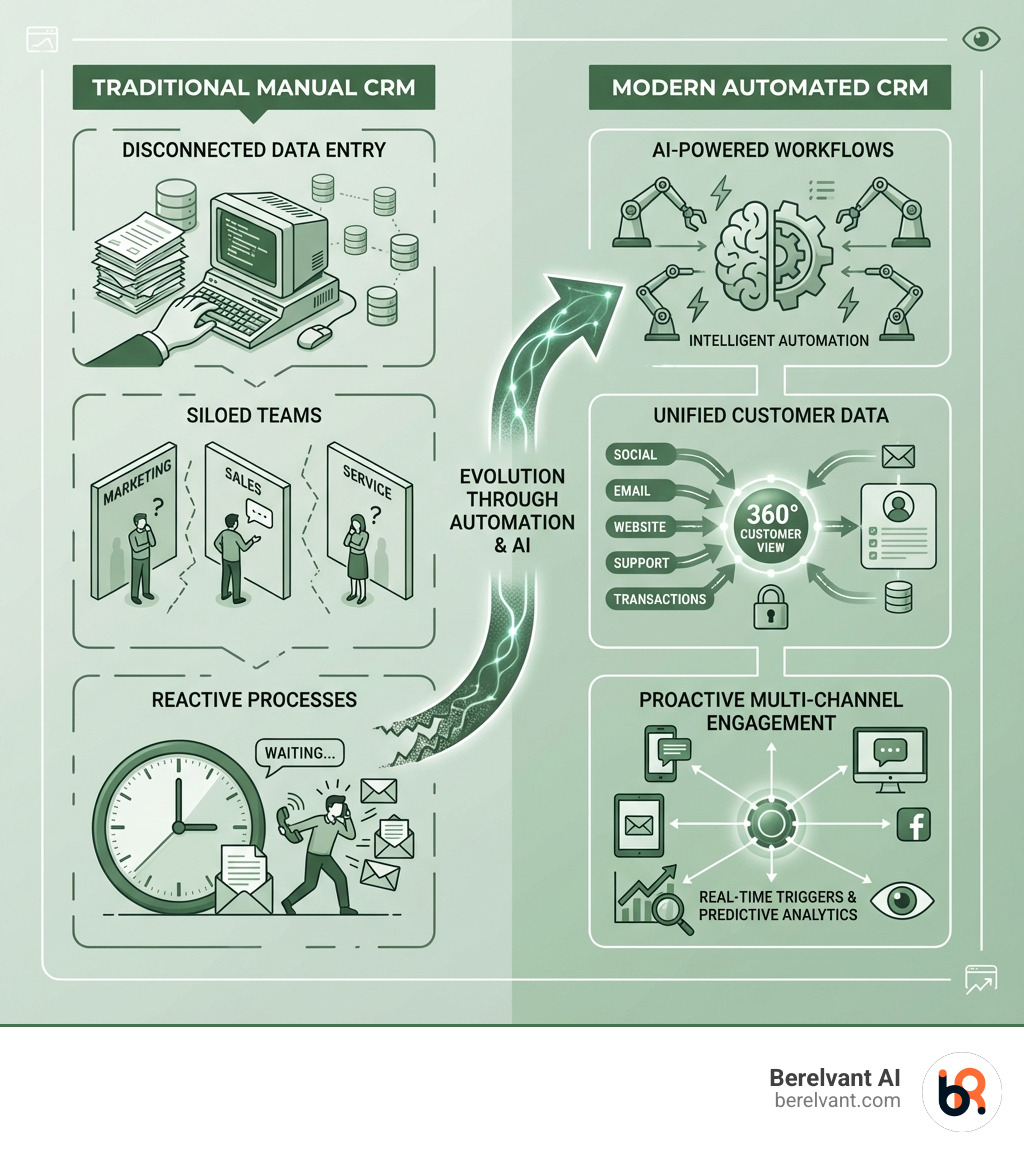
Traditional CRM systems, while foundational, largely function as passive data repositories. They carefully record customer interactions and data, but they require constant human intervention to trigger subsequent actions. This leads to a reactive operational model, where opportunities can be missed, and customer experiences can feel disjointed.
By contrast, an automated CRM transforms into an active “system of action.” It proactively guides customer journeys, automates crucial follow-ups, and streamlines complex workflows. This shift empowers sales teams to focus on high-value engagements and strategic relationship building, significantly compressing the sales cycle. We’ve observed that when integrated effectively, automation platforms can save each user up to 200 hours per year, time that can be reinvested into growth initiatives.
Differentiating Automated vs. Traditional CRM
The distinction between automated and traditional CRM is fundamental to understanding its enterprise impact.
A traditional CRM primarily serves as a data repository. It’s a centralized database where customer information, communication history, and sales activities are logged. Its processes are largely manual: data entry, lead assignment, follow-up scheduling, and reporting all require human initiation. This makes it inherently reactive; actions are taken in response to events, often with a delay. While essential for organizing customer data, its efficiency is capped by human capacity and potential for oversight.
An automated CRM, on the other hand, functions as a dynamic “system of action.” It leverages sophisticated workflows and triggers to automate processes across marketing, sales, and customer service. This enables proactive workflows that anticipate needs, respond to customer behaviors in real-time, and orchestrate complex, multi-step sequences without manual intervention. It is designed for scalability, ensuring consistent execution across diverse teams, geographies, and customer segments, making it indispensable for enterprise-level operations.
Core Business Benefits for the Enterprise
Implementing enterprise-grade CRM automation services open ups a cascade of benefits that directly impact the bottom line and strategic positioning:
- Increased Revenue Velocity: By shortening sales cycles and improving lead conversion rates (up to 300% in some cases), automation accelerates the pace at which leads become customers and customers expand their value. Automated lead scoring and routing ensure that high-potential opportunities receive immediate attention, while automated nurturing keeps prospects engaged.
- Improved Operational Efficiency: We eliminate the drudgery of manual data entry and repetitive administrative tasks. This frees up sales, marketing, and service teams to focus on strategic thinking, complex problem-solving, and personalized customer interactions. This efficiency translates directly into cost savings and optimized resource allocation.
- Improved Data Accuracy and Governance: Automation minimizes human error in data entry and updates, ensuring that your CRM contains the most accurate, up-to-date customer information. This is critical for compliance in regulated industries and for generating reliable insights for strategic planning.
- Scalable Cross-Market Execution: For organizations operating across the Americas, automation provides the framework for consistent service delivery and campaign execution across multiple countries and languages. Localized workflows, automated content delivery, and unified reporting streamline complex global operations.
- Higher Customer Lifetime Value (CLTV): By enabling highly personalized and timely customer engagement, automation fosters stronger relationships. Proactive service, custom marketing, and seamless support lead to increased customer satisfaction, loyalty, and ultimately, higher CLTV.
- Reduced Talent Churn: Repetitive, low-value tasks are a significant contributor to employee dissatisfaction. By automating these, we empower teams to engage in more meaningful, high-impact work, reducing frustration and improving job satisfaction. This helps retain top talent, particularly in sales roles where complex sales cycles can be a reason for discontent.
Core Capabilities of Enterprise CRM Automation Services
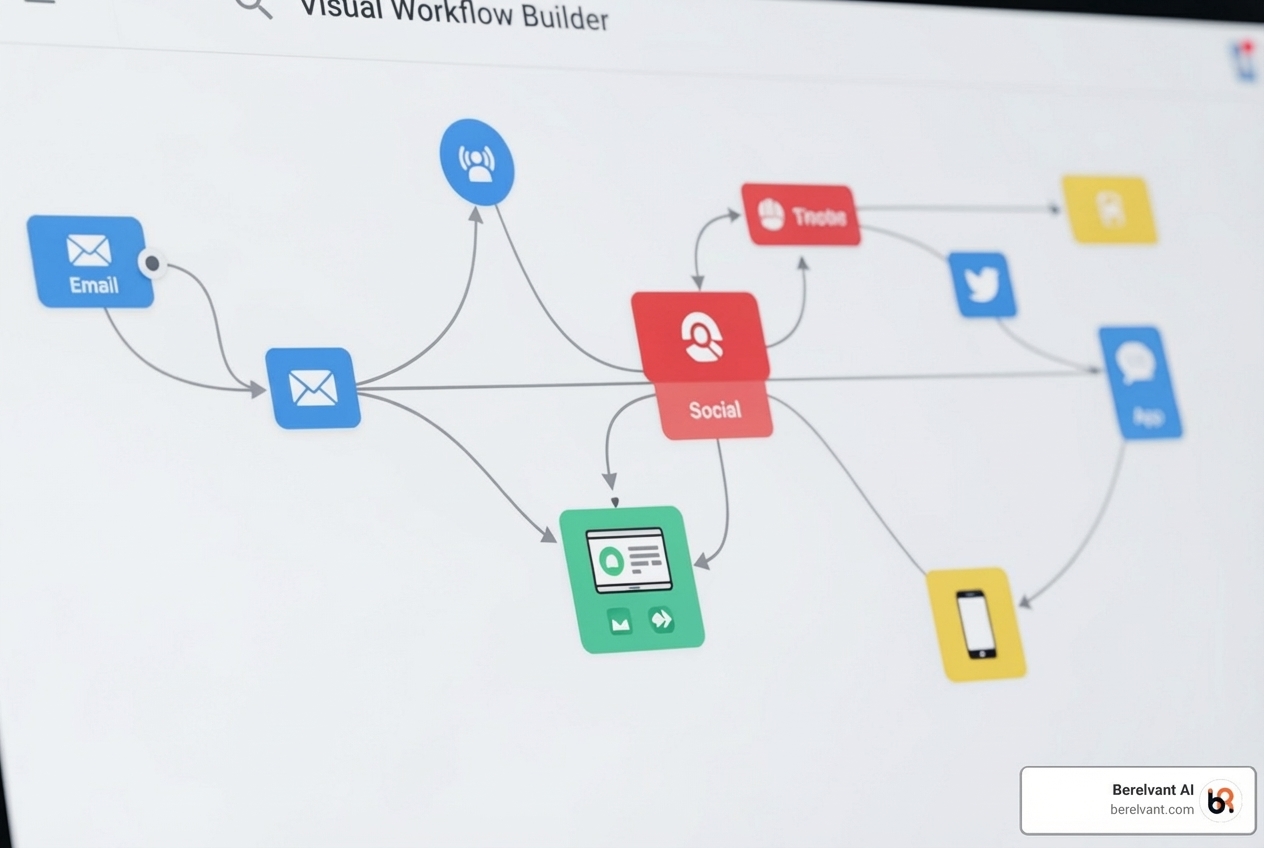
Effective CRM automation services are built upon a robust architecture designed for complexity, integration, and scale. For enterprise clients, this means more than just simple email triggers; it involves a sophisticated ecosystem of capabilities that orchestrate every customer touchpoint. We focus on architecting solutions where system components—from workflow builders to analytics engines—are seamlessly integrated.
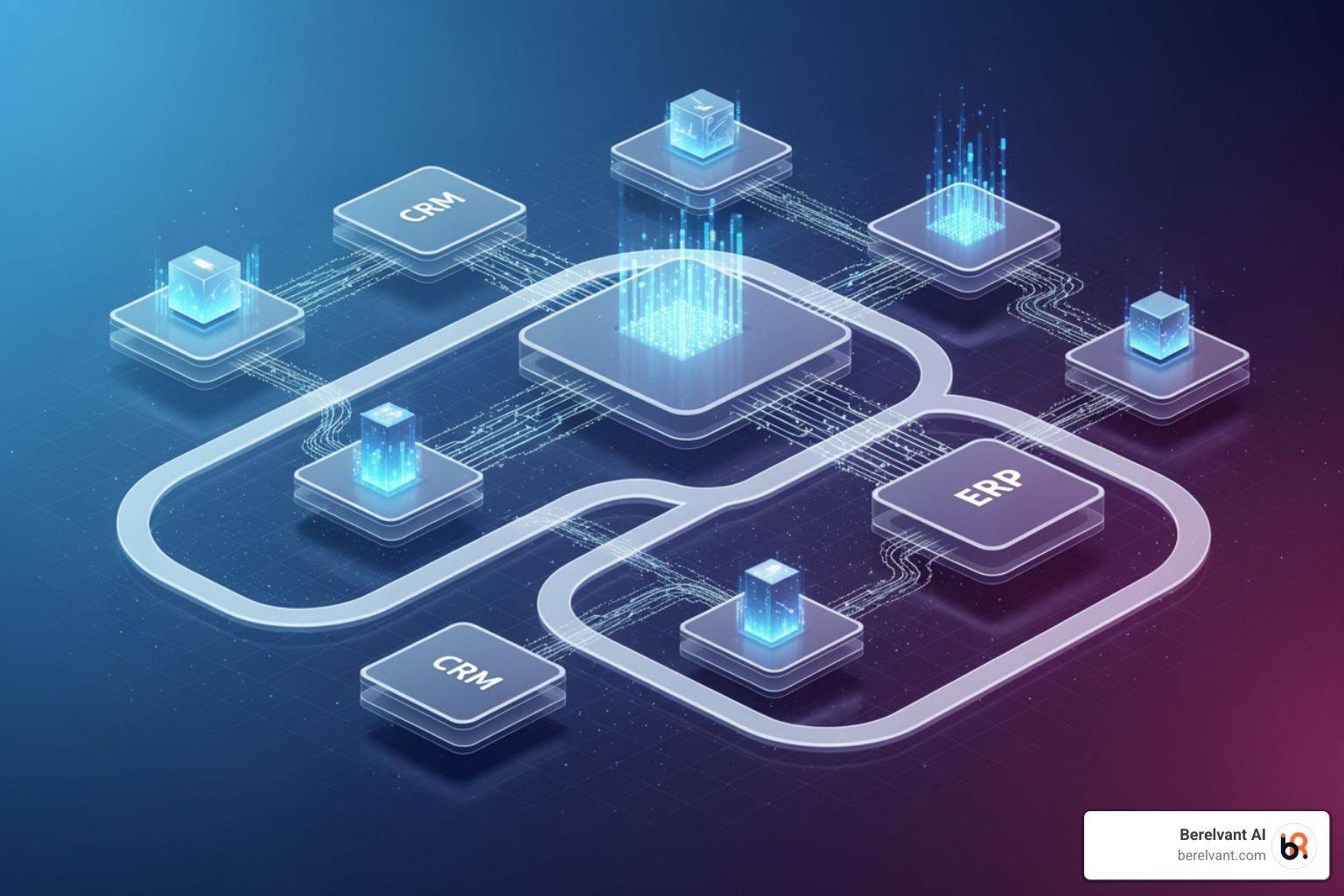
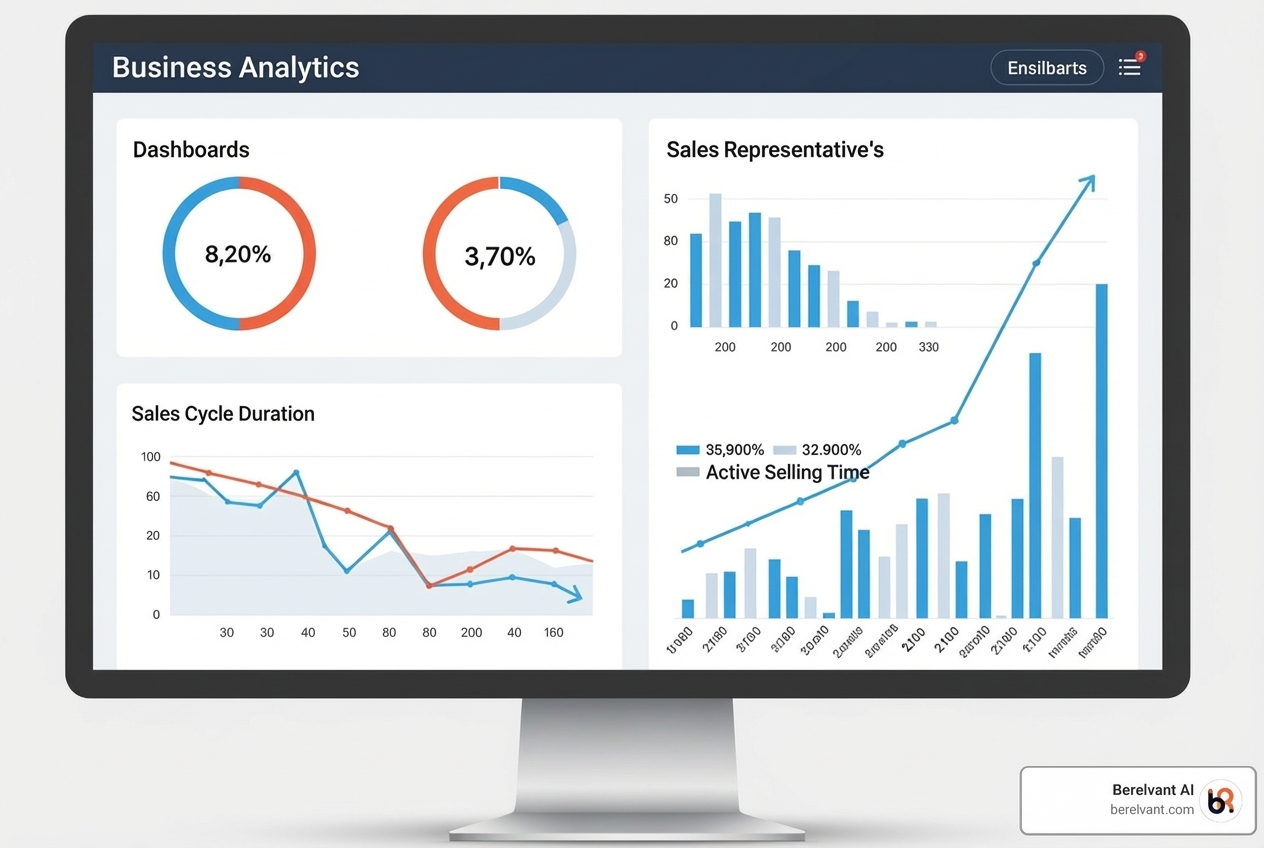
At the heart of this capability are advanced workflow builders that allow for the creation of intricate, multi-step processes. These are complemented by powerful Integration APIs that ensure seamless data flow between your CRM and other critical enterprise systems, such as ERP, marketing platforms, and customer service tools. Comprehensive data management features ensure data quality, deduplication, and adherence to governance policies, while sophisticated analytics and reporting provide real-time insights into performance across all automated processes.
Automating the Marketing and Acquisition Funnel
The marketing and acquisition funnel, especially for multi-market and multilingual operations, benefits immensely from CRM automation services. Our approach focuses on building end-to-end acquisition systems that drive measurable revenue growth.
- Lead Nurturing Sequences: We architect automated, multi-channel lead nurturing sequences that deliver timely and relevant content based on prospect behavior. This ensures continuous engagement, moving leads efficiently through the funnel without manual oversight.
- Multi-channel Campaign Orchestration: Automation orchestrates complex campaigns across email, SMS, social media, and paid media. This ensures a cohesive brand message and customer experience, adapting to the nuances of multicultural audiences.
- Dynamic Content Personalization: Leveraging customer data, automation dynamically personalizes content, from email subject lines to website calls-to-action. This drives higher engagement and conversion rates by tailoring messages to individual preferences and stages in the buyer journey.
- Predictive Lead Scoring: AI-powered algorithms analyze historical data and real-time engagement to assign scores to leads, identifying those most likely to convert. This prioritizes sales efforts, ensuring resources are focused on the highest-potential opportunities.
- A/B Testing Automation: Automation facilitates continuous A/B testing of campaign elements—from ad creatives to landing page designs—optimizing performance without manual setup, allowing for rapid iteration and improvement.
For a deeper dive into how we build these effective acquisition systems, explore our insights on More on building effective acquisition systems.
Automating the Sales Engine with CRM Automation Services
The sales engine, often bogged down by administrative overhead, is revitalized by strategic CRM automation services. By automating repetitive tasks, we empower sales professionals to focus on relationship building and deal closing, directly impacting revenue.
Core sales functions ripe for automation include:
- Lead Routing and Assignment: Automatically assign leads to the most appropriate sales rep based on predefined criteria such as geography (e.g., specific territories within Connecticut), industry, or lead score, ensuring rapid follow-up.
- Automated Task Creation: Generate follow-up tasks, meeting reminders, and internal notifications automatically when specific triggers occur (e.g., a lead interacts with a pricing page, a deal stage changes).
- Quote-to-Cash Process: Streamline the entire process from generating quotes to processing orders and payments. This reduces errors and accelerates revenue realization, particularly crucial for complex B2B sales.
- Sales Forecasting: Leverage automated data collection and AI-driven analytics to generate more accurate sales forecasts, providing leadership with critical insights for resource planning and strategic decision-making.
- Pipeline Management: Automate updates to deal stages, flag at-risk opportunities, and trigger notifications to sales managers, ensuring the pipeline remains healthy and visible.
The essential CRM functions that deal and sales teams should prioritize for automation are:
- Data Entry: Eliminating manual input for contact details, activity logs, and meeting notes, saving hundreds of hours per year.
- Relationship Intelligence Mapping: Automatically uncovering warm introductions and mapping relationship paths within your network to accelerate deal closures.
- Data Enrichment: Continuously updating and enhancing customer profiles with external data sources, ensuring reps always have the most comprehensive view.
- Follow-up Sequences: Orchestrating personalized email and communication sequences based on prospect engagement, ensuring consistent outreach.
- Pipeline Stage Updates: Automatically moving deals through stages based on predefined actions or customer interactions, maintaining an accurate sales pipeline.
By automating these functions, we transform sales operations, allowing your teams to spend less time on administration and more time on closing deals.
Enhancing Customer Lifecycle Management with CRM Automation Services
Customer service and retention are critical for enterprise growth, and CRM automation services play a pivotal role in optimizing the entire customer lifecycle. We enable businesses to deliver proactive, personalized support that builds lasting loyalty.
- Automated Onboarding: Streamline the post-sale customer journey with automated welcome sequences, resource provisioning, and training schedules, ensuring a smooth transition and faster time-to-value for your customers.
- Proactive Service Alerts: Set up automated alerts that notify support teams or customers about potential issues (e.g., license expiration, usage thresholds, service outages) before they escalate, changing reactive support into proactive care.
- Ticket Routing and Escalation: Intelligently route incoming support tickets to the most qualified agent based on issue type, customer segment, or language preference. Automated escalation rules ensure critical issues receive immediate attention.
- Self-Service Portals: Empower customers with AI-powered self-service portals that provide instant access to knowledge bases, FAQs, and troubleshooting guides. This reduces call volumes and improves customer satisfaction. Our experience shows that AI-powered chatbots can significantly improve these portals by suggesting relevant articles and even resolving basic queries, with over 60% of customers preferring self-service tools for basic problems.
- Customer Health Scoring: Implement automated systems that calculate a “health score” for each customer based on usage patterns, support interactions, and engagement levels. This helps identify at-risk customers early, allowing for targeted intervention and churn prevention.
Architecting and Implementing a Unified CRM System
Deploying a unified CRM system, especially for enterprise clients with complex requirements, demands a meticulous approach. Our implementation strategy focuses on minimizing disruption while maximizing long-term impact. This involves careful stakeholder alignment from the outset, ensuring all departmental needs—from sales in Fairfield, CT to marketing in other regions—are addressed. We advocate for a phased rollout to allow for iterative improvements and user feedback, rather than a disruptive big-bang approach. Robust change management strategies are crucial to ensure high user adoption and to mitigate resistance.
Critical technical considerations include precise data migration planning to ensure data integrity and historical accuracy. Furthermore, in regulated industries, strict adherence to compliance and governance standards is non-negotiable, requiring built-in controls and audit trails.
Key Considerations for Selection and Deployment
When selecting and deploying CRM automation services, enterprises must look beyond basic feature lists to truly understand how a solution will integrate and perform within their existing ecosystem.
- System Scalability: The chosen platform must be capable of growing with your organization, handling increasing data volumes, user counts, and transactional loads across all your markets.
- Integration Capabilities: Seamless integration with existing enterprise systems (ERP, finance, marketing platforms) is paramount. Look for robust APIs and pre-built connectors to avoid data silos and manual transfers.
- Customization vs. Configuration: Understand the balance. While extensive customization can tailor a system perfectly, it can also lead to higher maintenance costs and upgrade challenges. Configuration options for workflows and fields are often more sustainable.
- Mobile and Offline Access: For sales teams on the go, or field service technicians, mobile-first design and offline capabilities are essential to maintain productivity and data accuracy regardless of location.
- Total Cost of Ownership (TCO): Beyond licensing fees, consider implementation costs, training, ongoing maintenance, and potential integration expenses. A higher initial cost might yield lower TCO if it reduces future manual effort and integration headaches.
- Vendor Support and Partnership Model: Evaluate the vendor’s support structure, expertise, and willingness to act as a strategic partner, especially for complex or regulated environments.
Overcoming Common Implementation Challenges
Even with careful planning, implementing CRM automation services can present challenges. We proactively address these to ensure successful deployment and adoption.
- Data Silos: One of the most persistent problems, data silos occur when information is fragmented across disparate systems. Our approach focuses on unifying data through robust integrations, creating a single source of truth for customer information.
- Poor User Adoption: If users find the system difficult or irrelevant to their daily tasks, adoption will suffer. We combat this through user-centric design, comprehensive training programs, and demonstrating clear benefits to individual roles.
- Integration Complexity: Connecting the CRM with existing legacy systems can be technically challenging. We leverage our expertise in architecting complex integrations, ensuring seamless data flow and process synchronization.
- Lack of a Standardized Process: Without clear, standardized processes, automation can exacerbate inefficiencies. We work with clients to define optimized workflows before automating them, ensuring consistency and effectiveness.
- Security and Compliance Risks in Regulated Industries: For sectors like financial services, compliance with regulations is critical. We ensure that automated workflows and data handling adhere to strict security protocols, access controls, and auditing requirements, protecting sensitive customer information.
The AI Multiplier: Accelerating Growth with Intelligent CRM
The true potential of CRM automation services is releaseed when integrated with Artificial Intelligence. AI acts as the speed and scale layer, accelerating delivery, removing bottlenecks, and multiplying the impact of every campaign and customer interaction. We leverage advanced AI capabilities, including Machine Learning (ML), Predictive Analytics, and Generative AI, to transform your CRM from an efficient system into an intelligent growth engine.
AI-driven insights are no longer a futuristic concept; they’re a present-day necessity. Industry reports indicate that AI is used to track deal progress by 33% of sellers, showcasing its growing importance in real-time decision-making.
How AI Improves CRM Automation Capabilities
AI fundamentally lifts the capabilities of CRM automation services, moving beyond rule-based triggers to intelligent, adaptive systems:
- Predictive Lead and Opportunity Scoring: AI algorithms analyze vast datasets—including historical conversions, engagement patterns, and demographic information—to accurately predict which leads are most likely to convert and which opportunities have the highest probability of closing. This ensures sales teams prioritize their efforts optimally.
- AI-driven Forecasting: Beyond traditional sales forecasting, AI can analyze market trends, competitor activity, and even sentiment analysis from customer interactions to provide highly accurate and dynamic revenue predictions, enabling proactive strategic adjustments.
- Natural Language Processing (NLP) for Data Entry: NLP can automatically extract key information from unstructured text (emails, chat transcripts, call notes) and populate CRM fields, drastically reducing manual data entry and improving data quality.
- Automated Content Personalization: Generative AI tools can create highly personalized marketing and sales content—from email drafts to product descriptions—custom to individual customer profiles and stages in their journey, at an unprecedented scale.
- AI Calling Agent Automation: For high-volume outreach or initial qualification, AI calling agents can handle routine calls, gather information, qualify leads, and even schedule appointments, freeing human agents for more complex interactions. Find more about our approach to AI Calling Agent Automation.
- Generative AI for Sales and Service Communication: AI can draft intelligent responses for customer service inquiries, suggest personalized sales pitches, and summarize complex interactions, dramatically improving response times and consistency.
Real-World Examples of AI-Powered CRM Success
We’ve seen the transformative power of AI-powered CRM automation services across various industries:
- Case Study: Financial Services: In a highly regulated environment, financial advisors were spending significant time—three to four hours per meeting—gathering client information from up to 26 disparate systems. By implementing an AI-driven CRM that unified these data sources and provided predictive insights, advisors received automated alerts for priority client calls and had meeting agendas pre-populated with relevant data. This dramatically [shortened sales cycles] and allowed advisors to focus on deeper client relationships.
- Case Study: B2B SaaS: An insurance brokerage firm leveraged AI in its CRM to analyze prospect behavior and market data. This enabled highly personalized marketing campaigns and streamlined renewal processes, with the AI flagging at-risk accounts. This led to significant operational savings, with one firm saving approximately 44,000 hours and $6.9 million by optimizing marketing and renewals.
- Case Study: E-commerce: A book publisher used AI-powered chatbots and generative AI for customer service, particularly during seasonal peaks. The chatbots handled common customer issues, reducing the need for seasonal hiring and speeding up onboarding for temporary agents. This resulted in substantial annual savings (e.g., $230,000 a year for one publisher) and improved customer satisfaction through faster, more accurate responses.
These examples underscore how AI integration leads to tangible benefits: [Improved Customer Experience] through faster resolution and personalization, [Increased Productivity] by offloading repetitive tasks, and ultimately, accelerated growth. Our expertise in AI Campaign Management further details how these intelligent systems are built and managed.
Frequently Asked Questions about Enterprise CRM Automation
How does CRM automation support multi-country and multilingual operations?
For enterprise clients operating across the Americas, CRM automation services are invaluable for managing multi-country and multilingual operations. A centralized CRM system acts as the backbone, providing a unified view of all customer interactions regardless of location or language. Automation then enables:
- Localized Workflows: Tailoring sales and service processes to comply with local regulations and cultural nuances in different countries.
- Multilingual Content Automation: Automatically delivering marketing messages, service responses, and sales collateral in the customer’s preferred language, often using generative AI.
- Currency and Compliance Management: Handling multiple currencies, tax regulations, and legal compliance requirements (e.g., GDPR, CCPA) through automated checks and configurable settings.
- Unified Reporting Across Markets: Consolidating data from all regions into comprehensive dashboards, providing leadership with a holistic view of performance and customer trends across diverse markets.
What are the primary security considerations for an automated CRM platform?
Security is paramount for any enterprise-level CRM automation services, especially when dealing with sensitive customer data and operating in regulated industries. Key considerations include:
- Data Encryption: Ensuring all data, both at rest and in transit, is encrypted using industry-standard protocols to protect against unauthorized access.
- Access Controls: Implementing robust role-based access controls to limit who can view, modify, or export sensitive customer information based on their job function.
- Compliance Certifications: Verifying that the platform adheres to relevant industry and regulatory compliance standards such as SOC 2, ISO 27001, and region-specific data privacy laws (e.g., GDPR).
- Regular Security Audits: Conducting periodic penetration testing and security audits by independent third parties to identify and address vulnerabilities.
- Secure API Endpoints: Ensuring that all integration points with other systems are secure, authenticated, and monitored to prevent data breaches through connected applications.
How do you measure the ROI of CRM automation services?
Measuring the Return on Investment (ROI) of CRM automation services requires tracking both quantitative and qualitative metrics across the customer lifecycle. Key performance indicators (KPIs) we typically focus on include:
- Sales Cycle Length Reduction: The average time it takes for a lead to convert into a paying customer. Automation can significantly shorten this.
- Increase in Lead Conversion Rate: The percentage of leads that progress to qualified opportunities and ultimately become customers.
- Rep Productivity Gains: Measured by the increase in the number of calls made, emails sent, or deals closed per representative, without an increase in working hours, due to reduced administrative burden.
- Reduction in Customer Churn: Lowering the rate at which customers discontinue their service, often achieved through proactive service and personalized engagement.
- Decrease in Customer Service Costs: Reducing the cost per customer interaction through increased self-service options, efficient ticket routing, and AI-powered support.
These metrics, when tracked consistently, provide a clear picture of the financial and operational benefits derived from your automation investment.
Conclusion
The journey to operational excellence and accelerated growth for enterprise and mid-market organizations hinges on a paradigm shift: treating your CRM not just as a database, but as a unified growth engine. CRM automation services provide the critical infrastructure to achieve this, changing manual inefficiencies into streamlined, intelligent workflows that span marketing, sales, and customer service.
By embracing system-level thinking, leveraging advanced automation, and integrating AI as a powerful multiplier, businesses can open up unprecedented operational efficiency, accelerate revenue velocity, and deliver a consistently superior customer experience. This strategic investment in automation is not merely about competitive advantage today; it’s about future-proofing your operations in an increasingly dynamic global marketplace.
At Berelvant AI, we specialize in architecting and managing these end-to-end acquisition systems, integrating performance media, multilingual creative, automation, and analytics into one unified engine that drives measurable revenue growth. We thrive on solving complex challenges in regulated industries, compliance-heavy environments, and across multi-country, multicultural audiences.
Ready to transform your operations and open up your full growth potential? Develop your AI Marketing Strategy with us.