
Why AI in Online Marketing Matters for Enterprise Growth
AI in online marketing is reshaping how enterprise organizations acquire customers, optimize spend, and scale execution across markets. It enables predictive analytics, real-time personalization, automated content generation, and compliance-ready campaign management at speeds human teams cannot match.
Quick Answer: What AI in Online Marketing Does
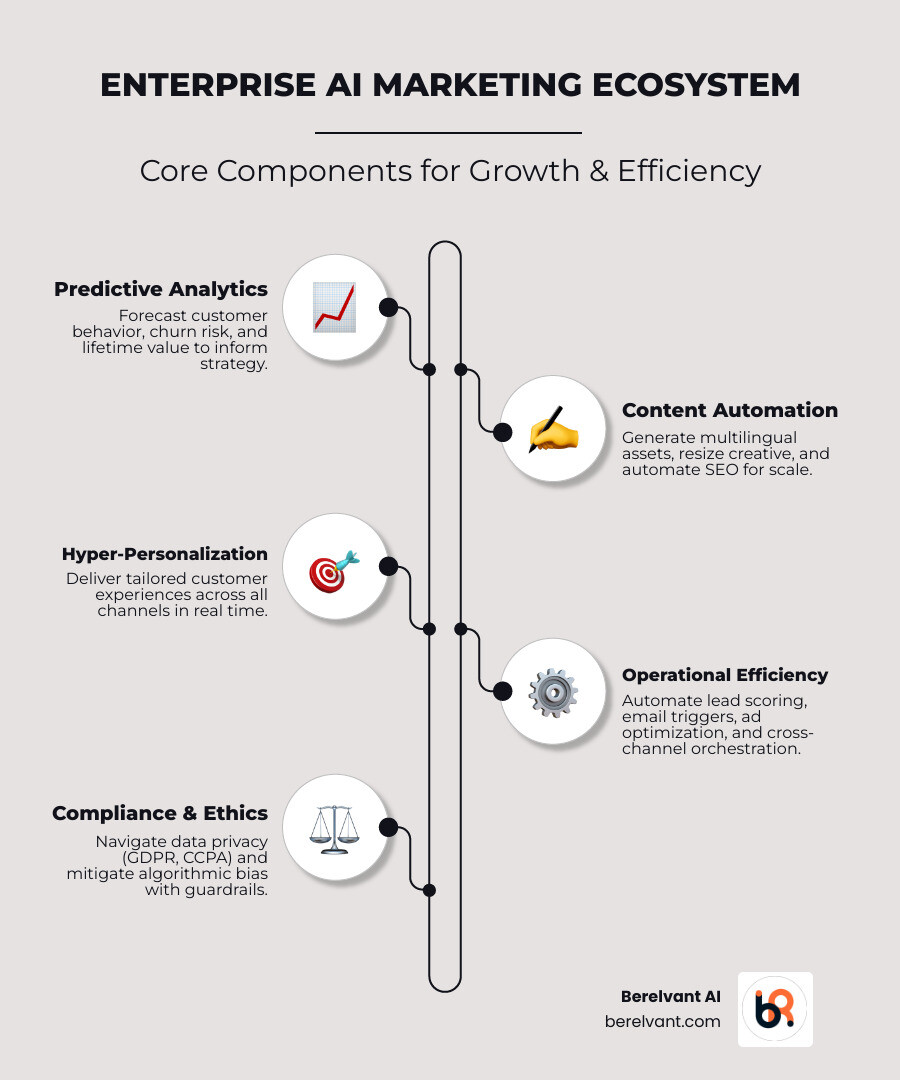
- Predictive Analytics: Forecast customer behavior, churn risk, and lifetime value
- Content at Scale: Generate multilingual assets, resize creative, and automate SEO
- Hyper-Personalization: Deliver custom experiences across channels in real time
- Operational Efficiency: Automate lead scoring, email triggers, and ad optimization
- Compliance & Ethics: Steer GDPR, CCPA, and bias mitigation with structured guardrails
The worldwide AI market is projected to surpass $1.5 trillion by 2030. In a recent Fortune/Deloitte survey, 79% of CEOs believe generative AI will increase efficiencies, while 52% see it as a direct path to growth opportunities. Yet most organizations struggle to move beyond pilot projects and fractured tools. The gap between AI enthusiasm and operational readiness remains wide.
This is not about replacing marketers. It is about building systems that remove friction, accelerate execution, and deliver measurable outcomes. AI does not just process data faster — it enables strategic shifts that were previously impossible: predicting purchase intent from billions of search queries, generating compliance-ready creative in 47 languages, or adjusting ad spend in real time based on cross-channel attribution models.
For VP and Director-level leaders managing growth in regulated or multi-market environments, AI in online marketing is no longer optional. It is the infrastructure that determines whether you scale efficiently or burn budget fighting internal bottlenecks.
I am Renzo Proano, founder of Berelvant AI. I have managed over $300 million in digital ad spend and built AI-driven acquisition systems for brands across financial services, SaaS, GovTech, and e-commerce, including work with Microsoft, Cartier, and StoneX. My focus is replacing slow, manual workflows with AI automation that scales execution without expanding headcount — especially in environments where compliance, multilingual content, and AI in online marketing precision are non-negotiable. This guide breaks down how enterprise teams deploy AI to drive predictable, compounding growth.
AI in online marketing vocab to learn:
The Evolution of AI in Online Marketing: From Machine Learning to GPTs
To truly leverage AI in online marketing for enterprise growth, we must first understand its journey. AI is not a sudden phenomenon; it has been powering digital marketing technologies for decades in the form of machine learning. Early AI tools like content recommendation algorithms and email marketing software laid the groundwork, allowing for new opportunities in data gathering and analysis.
The emergence of cloud computing, natural language processing (NLP), and deep learning paved the way for an emerging era of AI implementation. We have moved beyond simple automation to sophisticated systems that can understand, generate, and adapt. AI is radically changing the way brands and consumers interact, becoming the most influential technology for business.
The most significant leap in recent years has been the rise of Generative Pre-trained Transformers (GPTs). What makes them so powerful?
- Generative Capability: Unlike previous AI, GPTs can create original content, from text to images and video, based on vast amounts of data. This allows for unparalleled creative scalability.
- Pre-training: These models undergo extensive pre-training on massive datasets, enabling them to develop a deep understanding of language, context, and nuances. This pre-training advantage means they arrive with a sophisticated grasp of communication, ready to be fine-tuned for specific marketing tasks.
- Transformer Architecture: This innovative architecture efficiently handles sequential data, allowing GPTs to process and understand long-range dependencies in language. This means they can maintain context across entire documents or conversations, crucial for nuanced marketing interactions.
This evolution signifies a shift from AI as a tool for efficiency to AI as a strategic partner for innovation and competitive advantage. For enterprises, GPTs open up capabilities that transcend manual interactions, enabling us to achieve unprecedented levels of personalization, content velocity, and market responsiveness.

Core Applications of AI in Online Marketing for Enterprise Growth
For enterprise leaders, AI in online marketing is not just about isolated tools; it is about building an interconnected system that drives strategic outcomes. Our focus is on applications that deliver measurable revenue growth and operational efficiency across complex, multi-market operations.
Predictive Analytics and Forecasting
We leverage AI to move beyond reactive marketing to proactive, data-driven strategies. AI for data analysis allows for processing at speeds and quantities that lead to more accurate business insights, as highlighted by The Alan Turing Institute. This means:
- Lead Scoring: AI helps us prioritize potential customers based on the likelihood they will make a sale. By analyzing billions of data points — from website interactions to demographic information — AI can identify high-quality leads, allowing sales teams to focus their efforts where they will be most effective.
- Dynamic Pricing: AI models can analyze market demand, competitor pricing, and customer sensitivity in real-time to adjust prices dynamically, maximizing revenue.
- Demand Forecasting: Utilizing historical sales data, market trends, and consumer patterns, AI accurately anticipates future demand. This is critical for optimizing inventory, supply chains, and promotional planning, especially in diverse geographical markets.
- Churn Prediction: AI identifies at-risk customers by analyzing omnichannel events and declining engagement. This allows us to proactively deploy retention strategies, such as loyalty offers or personalized communications, before a customer is lost.
These capabilities ensure our marketing strategies are informed by deep, real-time insights, enabling us to make faster, more confident decisions that directly impact the bottom line. You can explore more about these strategic applications in AI Marketing Strategies and AI Digital Marketing.
Scaling Content and Multilingual Creative with AI in Online Marketing
The demand for high-quality, personalized content across diverse channels and languages is immense for enterprise organizations operating across the Americas. Manually creating and localizing thousands of assets is a bottleneck. AI provides the speed and scale layer we need.
- Asset Resizing and Formatting: AI can automatically format, trim, and resize existing creative assets for different channels and platforms. This ensures brand consistency and optimal performance without manual rework.
- Automated Tagging: AI is adept at handling visual content, recognizing people, places, objects, and other details in images and videos. This facilitates automated tagging and enhanced search functionality, making asset libraries easily searchable and reusable.
- Video Dubbing and Localization: For multilingual campaigns, AI can generate captions, dub videos, and even learn from existing creative libraries to produce entirely new ads in multiple languages, dramatically reducing localization costs and time-to-market.
- Creative Infrastructure: Tools like Jasper AI, Synthesia, and DALL-E allow us to generate early drafts of marketing copy, create customizable, brand-specific images, and produce product videos without camera time. This accelerates creative development and allows for rapid A/B testing of different creative elements. The French retailer Carrefour, for example, built an AI creative studio with Google Cloud to generate draft marketing campaigns in minutes.
This means we can deploy highly relevant, culturally nuanced content across our diverse target markets in Connecticut and beyond, at a velocity previously unimaginable. More insights can be found in our guide on Generative AI Marketing and research on AI-powered content creation.
Hyper-Personalization and Data-Driven Customer Journeys
In today’s competitive landscape, customers expect meaningful, timely interactions that reflect their preferences and needs. AI in online marketing enables us to deliver true hyper-personalization at scale, tailoring every touchpoint in the customer journey.
- Unstructured Data Analysis: AI can collect, process, and analyze not just structured information like names and purchase histories, but also unstructured data such as images, videos, and social media posts. This allows us to gain deeper insights into consumer preferences, brand perception, and shopping trends. AI-powered text analytics tools, for instance, can assess reviews and social media comments to provide key insights into customer preferences.
- Sentiment Analysis and Behavioral Patterns: By monitoring online conversations and consumer behavior, AI can identify sentiments and patterns, allowing us to adjust messaging and offers in real-time. This helps us anticipate customer actions and shape personalized, predictive journeys.
- Real-time Optimization: AI allows us to move beyond static segments. Advanced algorithms can leverage patterns in customer and market data to segment and target relevant audiences, identifying high-quality leads. This nuanced AI for segmentation enables us to address individuals’ specific needs with hyper-targeted campaigns.
- Personalized Experiments: AI is used to run personalized experiments for product suggestions, specific pricing strategies, and optimized incentives. This ensures that every customer feels seen and valued, fostering engagement and loyalty on a personal level.
By making sense of fragmented customer behavior and surfacing next-best actions, AI helps us transcend the limits of manual interactions, delivering custom experiences that drive conversion and loyalty.
Operationalizing the AI Tech Stack: Tools and Automation
The real power of AI in online marketing for enterprises lies in its operationalization — integrating sophisticated AI capabilities into our existing workflows and systems. This creates a unified engine for growth.
- LLM Integration via MCP: Modern AI marketing tools are software platforms that integrate with Large Language Models (LLMs) like ChatGPT, Claude, Gemini, or Grok, and your existing marketing workflows. This is often achieved using a Model Context Protocol (MCP), which allows these powerful language models to understand and operate within your company-specific data and processes. This gives your existing workflows a layer of intelligence we have never seen before.
- Workflow Automation: We use AI-powered automation to connect disparate systems and streamline complex tasks. Tools like Zapier serve as the foundational connectivity for the tech stack, enabling us to build connections and marketing automations between thousands of different systems. This saves time, promotes efficiency, reduces repetitive tasks, and makes significant cost savings. The leadership at Shopify, for instance, has mandated the integration of AI tools across all operational levels to maintain competitive velocity, as noted in recent industry reports.
- AI-Powered Platforms: We integrate best-in-class AI tools for specific functions:
- ChatGPT, Copilot, Gemini: For content generation, lead generation, personalized email campaigns, social media campaigns, brainstorming, and strategy formulation.
- HubSpot: Attracts leads, manages social media, personalizes marketing content, and tracks progress.
- Optmyzr: For pay-per-click management, optimizing ad spend and targeting.
- Synthesia: Creates video content, personalizes campaigns, and generates training materials.
- Albert.ai: Personalizes and optimizes ad content at scale across social media and paid search platforms, leveraging data-powered creativity.
- Brand24: For media monitoring and sentiment analysis across the internet.
- Influencity: For assessing and managing influencer marketing campaigns.
By leveraging these sophisticated tools, we accelerate delivery, remove bottlenecks, and multiply the impact of every campaign. This is crucial for effective AI Campaign Management and even AI Calling Agent Automation.
Achieving Personalization at Scale through AI in Online Marketing
True personalization at scale for enterprise clients in diverse markets like Connecticut demands a robust integration of AI with core business systems. Our goal is to deliver the right message to the right person at the right time, every time.
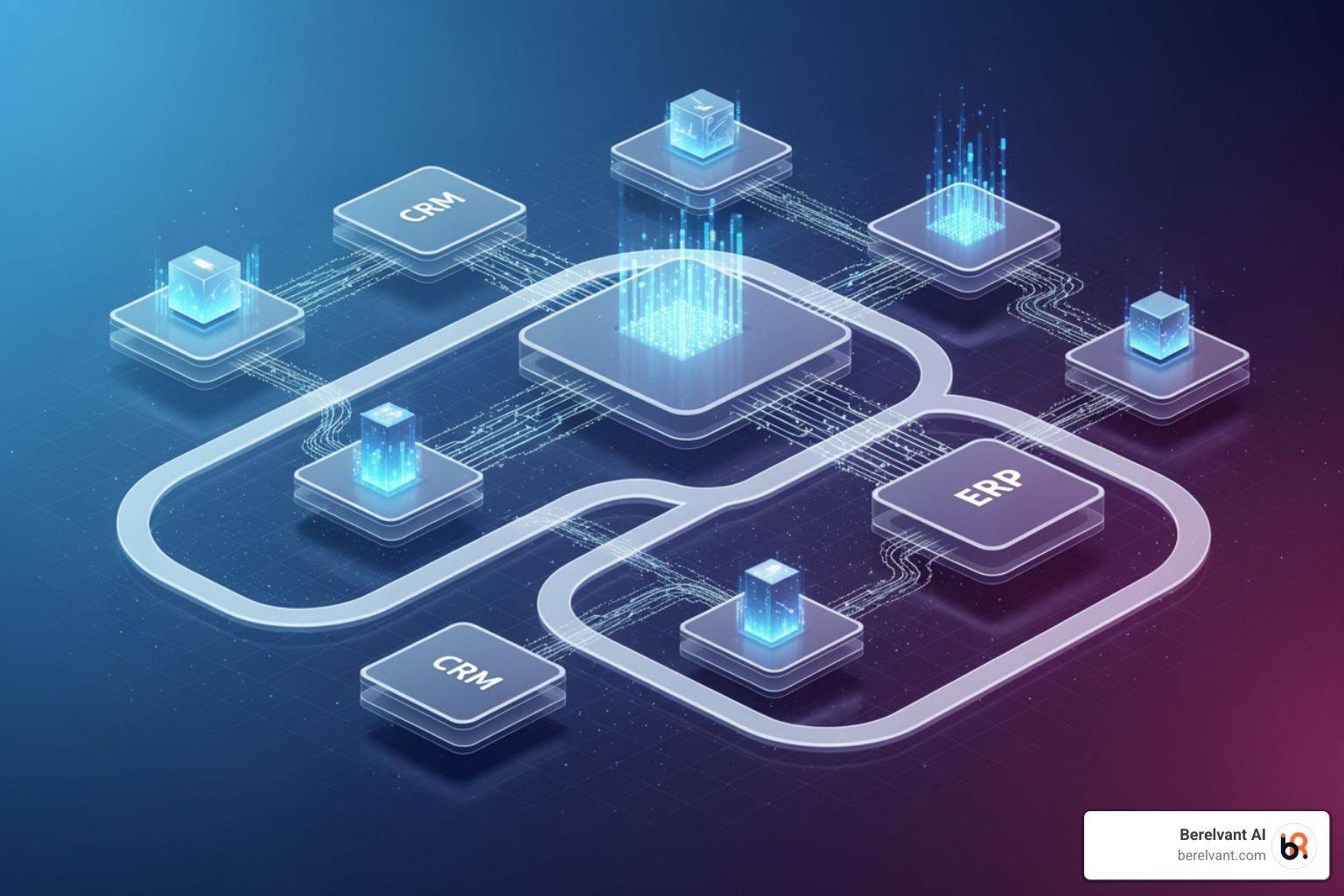
- CRM Integration: AI solutions integrate deeply with Customer Relationship Management (CRM) systems to gather and unify fragmented customer data. This allows us to collect, process, and analyze easily searchable information like names, purchase histories, and website interactions, as well as unstructured data such as images and social media posts.
- Predictive Modeling: With this rich data foundation, AI builds sophisticated predictive models that anticipate customer preferences based on behavior. This allows us to customize marketing to individual needs, crafting experiences that make customers feel seen and valued. AI-powered churn prediction, for instance, helps us identify and re-engage at-risk customers proactively.
- Customer-Centered Choices: AI enables us to shift from product-centric to customer-centric marketing. By understanding customer needs and preferences at a granular level, we can provide personalized user experiences, ensuring that every interaction is relevant and impactful. This allows our teams to focus on strategic goals and create effective AI-powered campaigns, rather than getting bogged down in manual data analysis.
- Multichannel Orchestration: AI enables the delivery of personalized, custom emails to every consumer and orchestrates consistent messaging across all customer touchpoints: website, social media, email, and advertising. Tools like Optimove specialize in data-powered multichannel marketing and personalization. This holistic approach is key to an AI Digital Agency like ours, demonstrating how AI can scale personalization beyond human capacity.
Navigating Ethical Constraints and Organizational Readiness
While the opportunities presented by AI in online marketing are immense, responsible adoption is paramount, especially for enterprises operating in regulated industries. We must proactively address ethical considerations and ensure organizational readiness.
- Data Privacy: AI’s reliance on vast amounts of data raises significant privacy concerns. High-profile privacy violations, such as the Facebook Cambridge Analytica scandal, serve as stark reminders of the risks. For us, maintaining strict adherence to current regulations like GDPR and CCPA is non-negotiable. We implement robust data governance protocols, ensuring transparency in how user data is collected, stored, and used.
- Algorithmic Bias: AI systems can unintentionally learn and perpetuate biases present in their training data, leading to skewed marketing strategies or unfair outcomes. For instance, Amazon’s AI recruiting tool unfairly favored male candidates. To mitigate this, we demand transparency in AI models, audit systems regularly, and ensure the use of representative, unbiased datasets. Human oversight remains crucial to identify and correct any algorithmic biases.
- Organizational Readiness: The 2024 State of Marketing AI Report indicates accelerating AI adoption among marketing professionals, with many saying they could not live without AI. However, there is often a significant gap between individual enthusiasm and organizational readiness. To bridge this, we advise:
- Workforce Preparation: Invest in educating your marketing teams on AI fundamentals, capabilities, and ethical best practices. Marketers need to build their AI expertise to stay relevant.
- Policy Development: Establish clear internal policies and guidelines for responsible AI use in marketing campaigns, including content generation, data handling, and customer interactions.
- Implementation Roadmap: Develop a strategic roadmap for AI integration, starting with pilot projects and gradually scaling up, while continuously monitoring performance and refining strategies. This includes assessing your current data infrastructure and technical capabilities.
Responsible AI implementation is not just about avoiding pitfalls; it is about building trust with our customers and ensuring sustainable, ethical growth.
Frequently Asked Questions about AI in Online Marketing
How does AI improve ROI in enterprise marketing?
AI in online marketing significantly boosts ROI for enterprises by enhancing efficiency, enabling hyper-personalization, and optimizing resource allocation. It automates repetitive tasks, freeing human teams to focus on strategic initiatives, which directly translates to cost savings. AI’s advanced analytics capabilities lead to more accurate targeting and predictive insights, allowing us to optimize ad spend and campaign performance. This results in higher conversion rates, reduced customer acquisition costs, and increased customer lifetime value. For example, AI can help businesses prioritize potential customers based on the likelihood they will make a sale, ensuring marketing efforts are directed at the most promising leads.
What are the primary risks of AI adoption in regulated industries?
In regulated industries (like financial services or healthcare, common in our operating regions including Connecticut), the primary risks of AI in online marketing adoption center on compliance, data privacy, and ethical implications. These include:
- Data Privacy Violations: Strict regulations like GDPR and CCPA necessitate meticulous handling of customer data. AI systems, which thrive on vast datasets, increase the risk of breaches or non-compliance if not managed with robust security measures and transparent data practices.
- Algorithmic Bias: Biased AI models can lead to discriminatory targeting or unfair customer experiences, resulting in reputational damage and legal repercussions. This is particularly sensitive in industries with strict anti-discrimination laws.
- Lack of Transparency: The black box nature of some AI algorithms can make it difficult to explain decisions to regulators or customers, posing challenges in accountability.
- Legal Liability: Determining liability when an AI system makes an error or causes harm can be complex, especially in highly regulated sectors.
- Need for Human Oversight: Despite AI’s capabilities, human oversight is critical to ensure compliance, ethical decision-making, and to intervene when AI outputs are inappropriate or inaccurate.
How should organizations assess their AI readiness and workforce reskilling needs?
Assessing AI readiness and workforce reskilling is a multi-faceted process for enterprises. We recommend a comprehensive approach:
- Evaluate Data Infrastructure: Determine the quality, accessibility, and integration of your current data. Is it clean, well-governed, and sufficient to train AI models effectively?
- Technical Capability Assessment: Review your existing technology stack and IT infrastructure. Can it support AI tools and scale with their demands? Do you have the internal expertise to implement and maintain AI systems?
- Leadership Buy-in and Strategy: Ensure executive leadership understands the strategic imperative of AI and champions its adoption. Develop a clear AI in online marketing strategy aligned with overall business objectives.
- Workforce AI Literacy: Gauge your team’s current understanding of AI. Are they familiar with core concepts, tools, and best practices? The 2024 State of Marketing AI Report highlights the accelerating adoption, so individual marketers are increasingly aware.
- Identify Skill Gaps: Pinpoint specific skills needed for AI integration, such as data science, prompt engineering, AI ethics, and advanced analytics.
- Develop a Reskilling Roadmap: Create a structured plan for training and upskilling your workforce. This can involve internal training programs, external certifications, and fostering collaboration between marketing, IT, and data science teams.
- Pilot Programs: Start with manageable AI pilot projects to gain experience, demonstrate ROI, and build internal champions before a full-scale rollout.
- Ethical Frameworks: Establish clear ethical guidelines and responsible AI use policies from the outset.
Conclusion: The Future of AI-Driven Acquisition
The landscape of AI in online marketing is not just evolving; it is undergoing a fundamental change. For enterprise leaders, this is not a trend to observe from the sidelines, but a critical infrastructure to build and master. At Berelvant AI, we understand that success in this new era means moving beyond fragmented tools to a unified engine that integrates performance media, multilingual creative, automation, and analytics.
Our approach is designed for the complexities of regulated industries, compliance-heavy environments, multi-country execution, and multicultural audiences across the Americas. We see AI not as a magic bullet, but as the speed and scale layer that accelerates delivery, removes bottlenecks, and multiplies the impact of every campaign. It is about empowering your teams to focus on strategy and innovation, while AI handles the execution at a precision and velocity that drives measurable revenue growth.
The future of acquisition is intelligent, personalized, and automated. Are you ready to build it? Explore how we can partner to optimize your AI Marketing Strategies for predictable, compounding growth.