Why E-commerce SEO Matters for Your Online Store
SEO for e-commerce is the process of optimizing your online store so it ranks higher in search engine results when potential customers search for products you sell. Here’s what it involves:
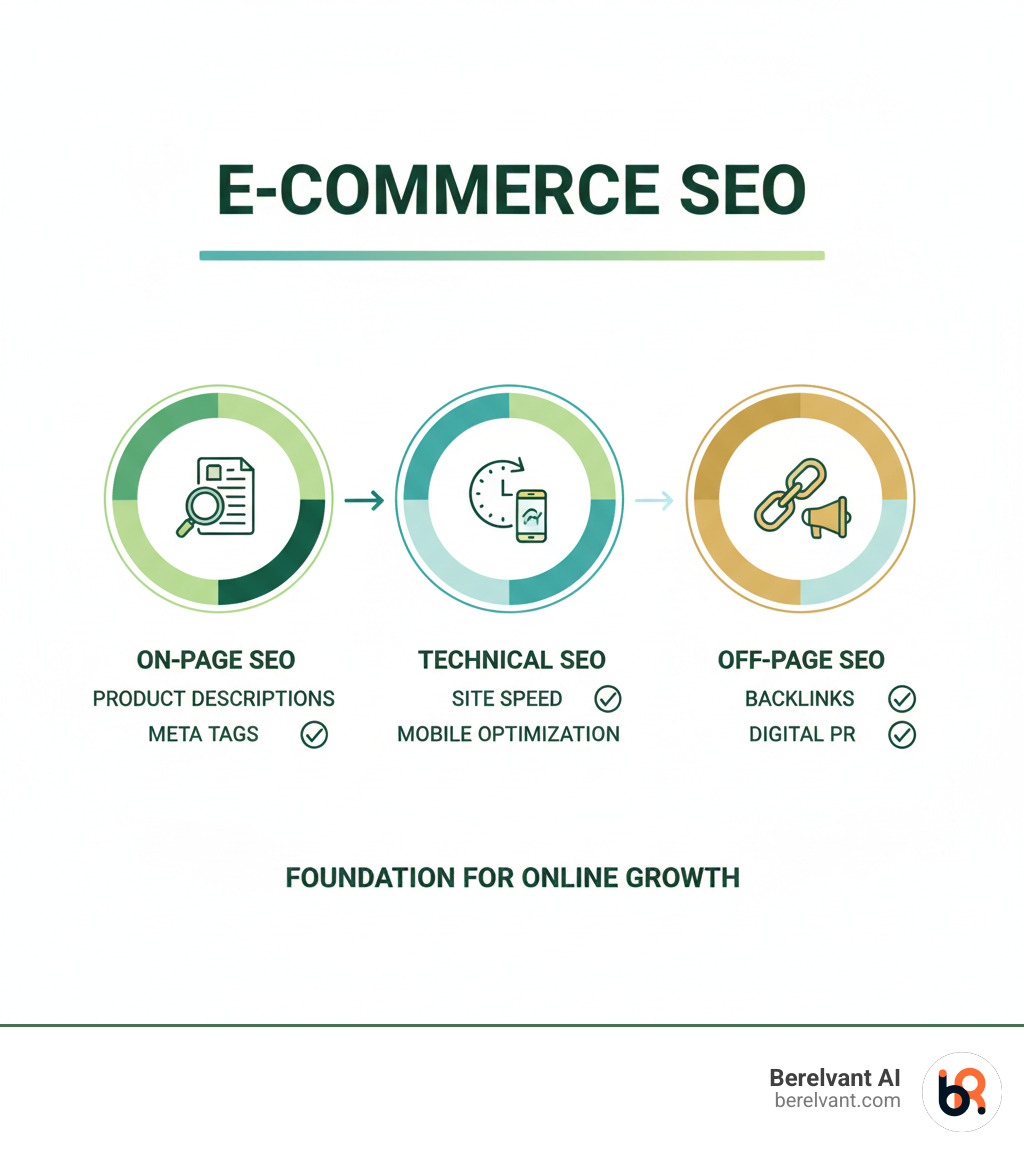
- Technical SEO: Ensuring your site is fast, mobile-friendly, and easy for search engines to crawl
- On-Page SEO: Optimizing product pages, category pages, and content with relevant keywords
- Off-Page SEO: Building authority through backlinks and third-party mentions
- Content Strategy: Creating helpful content that answers customer questions throughout their buying journey
If you run an online store, you already know that getting found by the right customers is everything. The e-commerce industry is projected to reach $8 trillion by 2027, but that growth means more competition for visibility. Here’s the challenge: 75% of people never look past the first page of search results. If your products don’t show up when someone searches, you might as well not exist.
Most e-commerce brands rely heavily on paid ads to drive traffic. But ads stop working the moment you stop paying. SEO is different. It builds a sustainable foundation that brings qualified buyers to your store month after month, without requiring continuous ad spend. The difference between ranking on page one versus page two can mean the difference between a thriving business and one that struggles to break even.
E-commerce SEO isn’t just about keywords. It’s about understanding buyer intent, building a site structure that scales, optimizing for both speed and conversion, and establishing authority in your market. It’s technical, strategic, and deeply tied to how your customers actually search for and evaluate products online.
I’m Renzo Proano, founder of Berelvant AI, and I’ve managed over $300 million in digital ad spend while building acquisition systems for e-commerce brands featured in major publications like ELLE, Refinery29, and Vogue. My work combines performance marketing discipline with technical infrastructure, and SEO for e-commerce is a core component of every sustainable growth system I build.
The Core Components of a Winning SEO for E-commerce Strategy
Building a successful SEO for e-commerce strategy isn’t about doing one thing perfectly. It’s about getting multiple elements working together—finding the right customers through smart keyword research, creating content that serves them, building a technical foundation that won’t crumble under scale, and establishing authority that makes search engines trust you.
Let’s break down each pillar and how they work in practice.
Tailoring Keyword Research for E-commerce
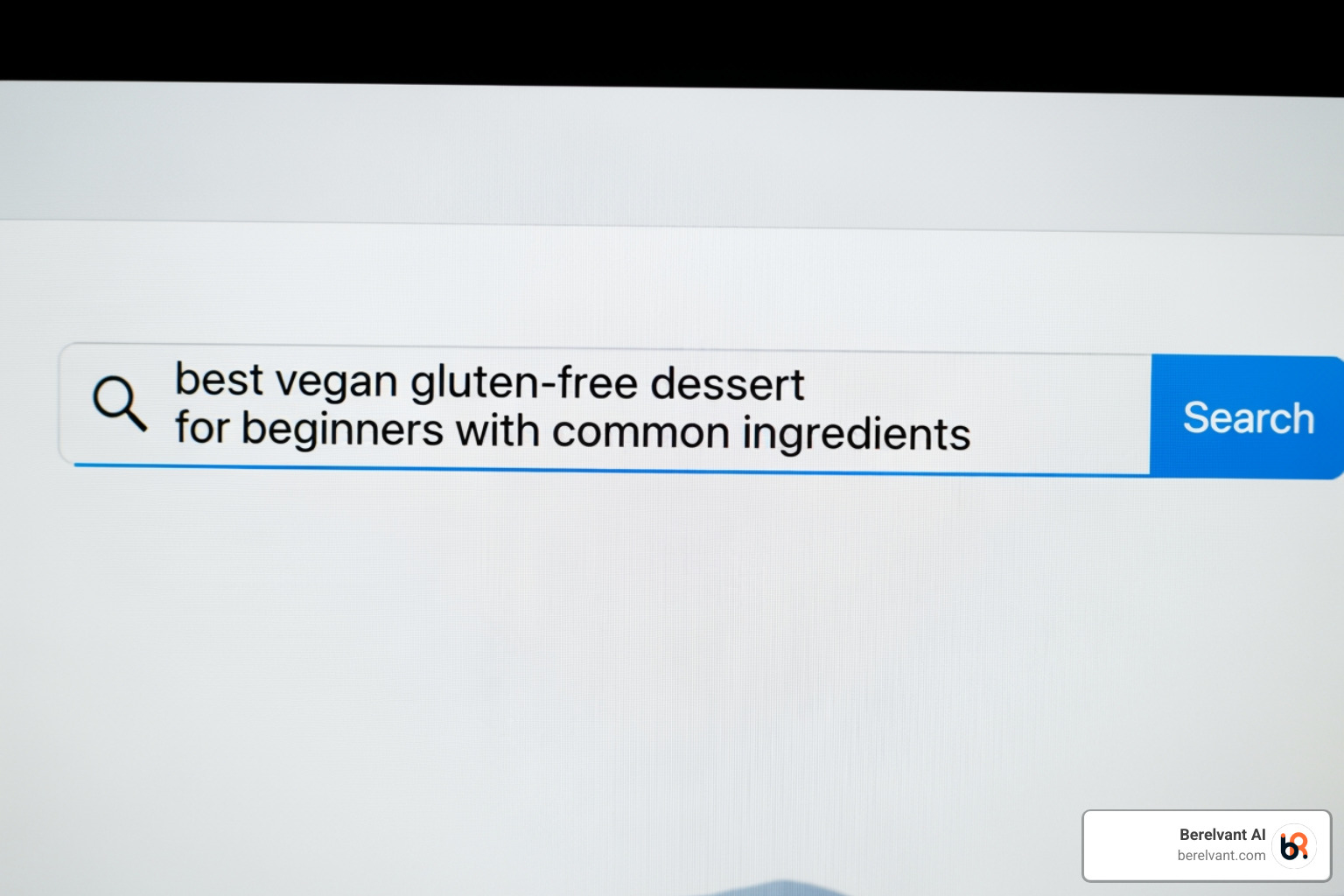
Keyword research for e-commerce is different because it focuses on finding buyers, not just traffic. The goal is to understand buyer intent—what people search for when they are ready to make a purchase.
Commercial intent keywords are high-value targets that include terms like “buy,” “deal,” or specific product names (e.g., “buy waterproof hiking boots for women”). In contrast, informational intent keywords like “how to choose hiking boots” attract users earlier in their journey. A comprehensive SEO for e-commerce strategy needs both to build brand awareness and drive sales.
Specificity is also key. Broad head terms like “shoes” are highly competitive and vague. Long-tail keywords like “men’s leather dress shoes for wedding” are more specific, attract highly qualified visitors, and often have better conversion rates.
Finding these keywords involves a methodical approach. Competitor analysis provides a roadmap of proven opportunities by showing what keywords similar stores rank for. We also use a suite of keyword research tools to find opportunities. Tools like Ahrefs and Ubersuggest help analyze competitors, while Google Keyword Planner provides search volume estimates. Google Search Console is invaluable for identifying keywords you already rank for that can be improved.
Simple methods are also effective. Google’s autocomplete and “People also ask” sections reveal what real users are searching for, including trending queries, locations, and freshness. Tools like AnswerThePublic can surface common questions, and even search suggestions on Amazon provide insight into buyer behavior.
When we perform keyword research for clients across New York, New Hampshire, Westport, or Lima, we always consider local nuances to ensure we match our offerings with what the audience is actively seeking.
Mastering On-Page SEO and Content
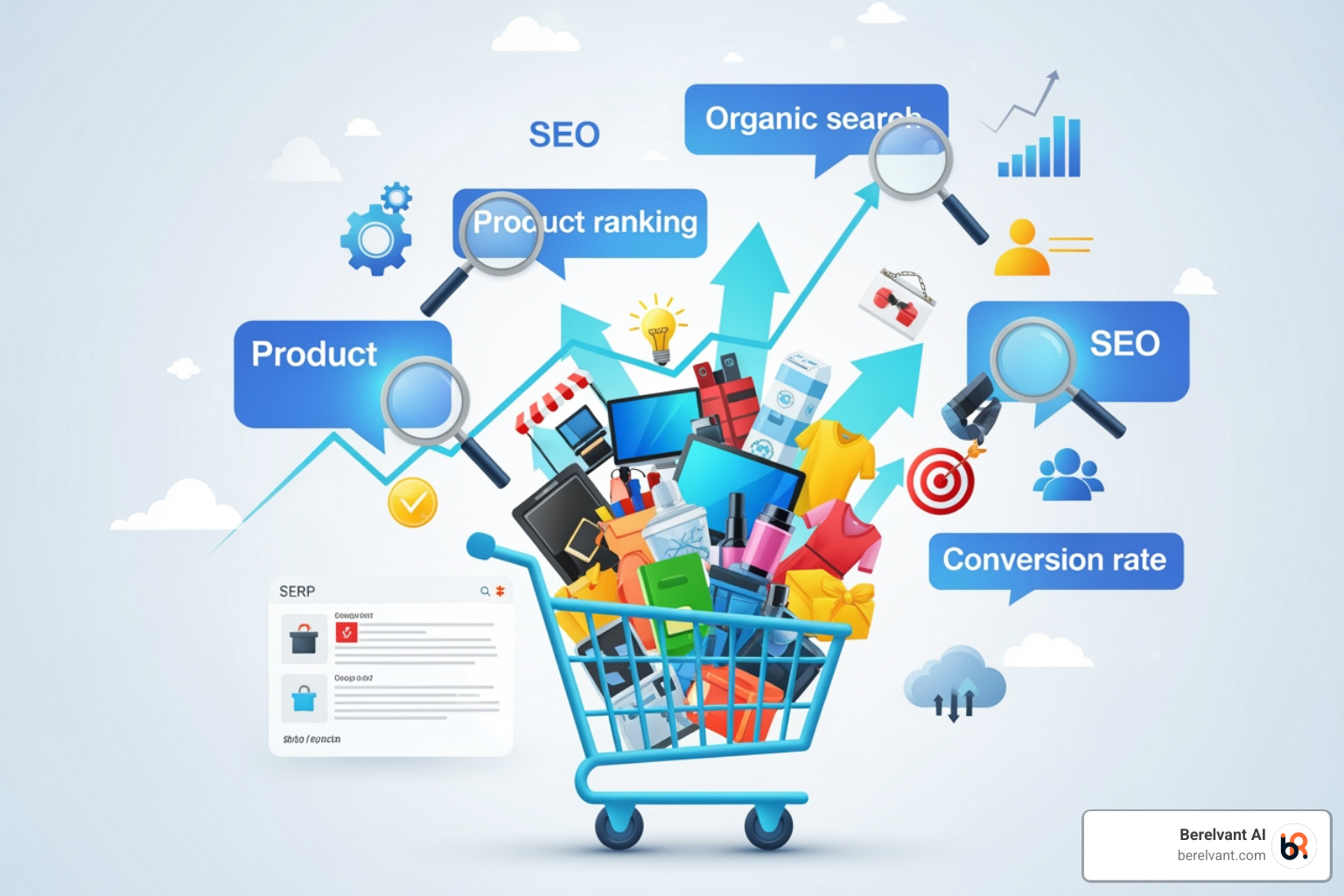
Once you have your keywords, on-page SEO for e-commerce ensures your pages rank for them. This involves optimizing everything visible to users and search engines.
Product and category pages are the core of your store. Avoid copying manufacturer descriptions, as this creates duplicate content. Instead, write unique product descriptions that are keyword-rich and benefit-focused, like Huel does. Optimize category pages with unique descriptions and clear internal linking to distribute authority.
Key on-page elements include:
- High-Quality Images: Use multiple angles, zoom capability, and optimize images with compressed file sizes and descriptive alt text. Tiffany&Co is a great example of clean, high-quality product imagery.
- Title Tags and Meta Descriptions: These are your storefront in search results. Include your primary keyword in the title tag (60-70 characters) and a compelling benefit with a call to action in the meta description.
- Heading Tags (H1, H2, H3): Structure content logically to help search engines understand the page hierarchy. Use the H1 for the main product name and H2s for features.
- User-Generated Content: Customer reviews provide fresh, keyword-rich content and social proof. A Power Reviews survey found 90% of consumers consider reviews when buying.
Beyond core pages, content is a major ranking factor. Create content that engages customers throughout their journey, such as buying guides, product comparisons, and how-to articles. A well-maintained blog can capture informational search traffic that product pages won’t, as seen with Au Lit Fine Linens’ blog, Between the Sheets.
Don’t forget video content. According to Brightcove, 76% of consumers have bought a product after watching a video. Integrating product demos and tutorials adds significant value.
By implementing these content strategies, often accelerated through our AI Marketing Strategies, we help e-commerce stores serve customers throughout their entire decision-making process.
Building a Solid Technical Foundation

Technical SEO for e-commerce is the infrastructure that ensures search engines can crawl your site and users have a seamless experience. Without a solid technical foundation, even the best content won’t deliver results.
Site architecture is the starting point. A logical hierarchy—from homepage to categories to products—helps Google understand your content and allows users to steer easily. Every page should be reachable within a few clicks.
Key technical elements include:
- URL Structure: Use clean, descriptive URLs with keywords. A URL like
example.com/hiking-shoesis better thanexample.com/articles?id=123. Google provides advice on improving URL structure. - Breadcrumb Navigation: These clickable paths (e.g., Home > Category > Product) improve user experience and help search engines understand site hierarchy. They can be implemented with markup tags, JavaScript, or apps like Category Breadcrumbs.
- Site Speed: Slow sites lose customers. Nearly 40% of people abandon a site if it takes more than three seconds to load, and page speed is a confirmed ranking factor. We use tools like GTmetrix and Google’s PageSpeed Insights to test and optimize speed.
- Core Web Vitals: These Google metrics for user experience—covering loading, interactivity, and visual stability—directly impact rankings.
- Mobile-First Indexing: Google primarily uses the mobile version of your site for ranking, so a fully responsive design is non-negotiable.
- HTTPS and SSL: Security is essential for customer trust. HTTPS has been a Google ranking signal since 2014 and is critical for e-commerce.
- XML Sitemaps: These files list all important pages, helping search engines find and crawl your content. You can submit your sitemap to Google Search Console. HTML sitemaps are also helpful for visitors.
- Structured Data (Schema Markup): This code helps search engines understand product information, enabling rich snippets (price, availability, ratings) in search results that boost click-through rates. Free schema markup generators are available to help.
Duplicate content is a common challenge from product variations and faceted navigation. We address this with canonical tags, which tell search engines which version of a page is preferred. We also strategically hide low-value pages from search engines to focus crawl budget on important pages, following Google’s guidelines for optimal performance.
Amplifying Authority with Off-Page SEO
Off-page SEO for e-commerce builds your store’s reputation through external signals that tell search engines your site is trustworthy.
Backlinks—links from other websites—remain one of Google’s top ranking factors. They act as votes of confidence, signaling that your site is authoritative. However, quality matters far more than quantity. We prioritize acquiring links from reputable, relevant websites and strictly avoid paid links that violate Google’s guidelines.
Effective link-building strategies include:
- Natural Link Acquisition: Creating valuable content (research, blog posts, infographics) that others want to reference and link to organically.
- Guest Posting: Writing informative articles for relevant, high-authority industry blogs. This provides contextual links back to your store, driving referral traffic and SEO authority.
- Digital PR: Earning press mentions and backlinks from news sites and publications. Services like HARO (Help a Reporter Out) can connect you with journalists seeking expert sources.
Product reviews on third-party sites like Trustpilot or Yelp build brand trust and contribute to your online authority. While social media signals don’t directly impact rankings, they amplify content reach, improve brand recognition, and increase opportunities for natural backlinks.
We also explore emerging channels like Connected TV Advertising to amplify brand reach, creating more touchpoints that can lead to organic mentions and links.
Measuring Success and Navigating Challenges
Understanding what’s working and overcoming common obstacles is key to long-term growth.
Key Performance Indicators (KPIs) to Track

For SEO for e-commerce, if you’re not measuring it, you can’t manage it. We use concrete data to track growth and ensure our efforts are effective. The most important KPIs include:
- Organic Traffic: The number of visitors finding your store through unpaid search results. We track this in Google Analytics for month-over-month growth.
- Conversion Rate from Organic Search: The percentage of search visitors who make a purchase. This metric connects SEO directly to revenue.
- Keyword Rankings: Your position in search results for target terms. Moving from page two to page one can transform a business, as the top results capture the vast majority of clicks.
- Click-Through Rate (CTR): The percentage of people who click on your listing after seeing it in search results. A low CTR may indicate that your title tags and meta descriptions need improvement.
- Bounce Rate: The percentage of visitors who leave after viewing only one page. A high bounce rate can signal a mismatch between keywords and page content.
- Average Session Duration: How long visitors stay on your site. Longer sessions are a positive signal of user engagement.
- Revenue from Organic Traffic: The ultimate bottom line—the actual dollars generated by your SEO efforts. This shows the true return on investment.
For our clients across New York, New Hampshire, Westport, and Lima, these metrics form the dashboard we use to track progress, spot opportunities, and make data-driven decisions.
Common E-commerce SEO Problems
Every e-commerce store faces SEO obstacles, but they are all solvable. It’s also worth noting that B2B and B2C e-commerce sites have different challenges, from buying cycles to keyword types, which require custom strategies.
Here are some of the most common problems we solve:
- Thin Content: Product pages with minimal text and just a manufacturer’s specs struggle to rank. They offer little value to search engines or customers.
- Duplicate Content: This is a major issue caused by product variations, faceted navigation, and syndicated manufacturer descriptions. Without proper canonical tags to indicate the preferred URL, ranking potential is diluted.
- Poor Site Architecture: A confusing or deep site structure makes it difficult for search engines to crawl your inventory and frustrates users. A clear, logical hierarchy is essential.
- Slow Page Load Times: Speed is a ranking factor that directly impacts conversions. Nearly 40% of people abandon sites that take more than three seconds to load, often due to large images and bloated code.
- Neglecting Link Building: Many stores focus on on-page fixes but ignore building authority through backlinks. Without external validation from reputable sites, it’s difficult to rank for competitive keywords.
- Indexing Low-Quality Pages: Allowing search engines to index filtered results or empty category pages wastes “crawl budget.” We use noindex tags to focus crawlers on high-value pages.
- Missing Schema Markup: Without structured data, you miss out on rich snippets (price, ratings, availability) in search results, which significantly improve click-through rates.
- Keyword Stuffing: This outdated tactic of unnaturally cramming keywords into content hurts readability and can lead to penalties. We follow Google’s guidelines for natural language.
We tackle these challenges systematically for businesses across the Americas, building a solid foundation for sustainable growth.
Frequently Asked Questions about E-commerce SEO
How is e-commerce SEO different from regular SEO?
While the fundamentals of SEO are the same, SEO for e-commerce has several key differences:
- Focus on Transactional Keywords: E-commerce SEO targets high-intent, “ready-to-buy” keywords (e.g., “buy men’s silk tie”) rather than purely informational queries.
- Scale of Optimization: Instead of a few dozen pages, e-commerce sites require optimizing hundreds or thousands of product and category pages, each needing unique content.
- Critical Site Architecture: With large inventories, a logical site structure is essential for both user navigation and search engine crawling. A messy structure can prevent products from being indexed and ranked.
- Technical Complexity: E-commerce SEO relies heavily on technical elements like schema markup for product rich snippets and careful management of duplicate content using canonical tags and noindex directives.
- Direct Impact of User Experience: For e-commerce, a poor user experience—like a slow-loading page or confusing checkout—directly translates to lost sales, a factor that search engines consider in rankings. Following Google’s guidelines is crucial.
What is the most overlooked aspect of SEO for e-commerce brands?
I’ll tell you what I see all the time: link building is the forgotten stepchild of e-commerce SEO.
Most online store owners obsess over product descriptions, title tags, site speed, and mobile optimization. All of that matters. But then they stop there, assuming that if their site is technically perfect and their content is optimized, the rankings will come. They won’t.
Here’s why link building gets neglected. First, it’s harder than on-page work. You can’t just log into your CMS and fix it. It requires outreach, relationship-building, and creating content valuable enough that other sites actually want to reference it. Second, there’s ethical confusion. Years of sketchy “buy 1,000 backlinks for $99” schemes have made people wary of the whole practice. And third, there’s an immediate gratification problem. You can optimize a title tag and see a change in a week. Link building takes months to show impact.
But here’s the reality: building high-quality backlinks is crucial for establishing authority and ranking for competitive product keywords. Backlinks are still one of Google’s top ranking factors. They’re votes of confidence from other sites, signaling that your store is trustworthy and authoritative in your niche. Without them, even perfectly optimized pages will plateau in the rankings.
The right approach combines guest posting on relevant industry blogs, digital PR that gets your brand mentioned in publications, and earning product reviews on reputable third-party sites. These aren’t shortcuts—they’re legitimate strategies that build real authority. When we manage SEO for e-commerce clients, link building is always part of the foundation, not an afterthought.
How long does it take to see results from e-commerce SEO?
I wish I could tell you “six weeks” and call it a day. But SEO for e-commerce doesn’t work like paid ads. You can’t flip a switch and watch the traffic pour in. It’s a long-term investment that builds momentum over time.
You might see minor improvements within a few weeks—a slight uptick in rankings for less competitive keywords, or technical fixes taking effect. But significant, revenue-driving results? Those typically take 4 to 6 months of consistent effort. We’re talking substantial increases in organic traffic, better rankings for your target keywords, and most importantly, more sales from search.
Several factors determine how fast you’ll see movement. Competition is the big one—if you’re selling running shoes, you’re going up against brands with massive budgets and years of SEO history. Website age and authority matter too. A brand-new site with no backlinks will need more time to build trust with search engines than an established store. The current state of your SEO plays a role as well. If your site has major technical issues, slow load times, or thin content, we need to fix the foundation before we can build on it.
The amount of resources you invest—time, budget, expertise—directly impacts the speed of results. And finally, search engine algorithms are constantly evolving, which means we’re always adjusting our approach based on what’s working now, not what worked last year.
Unlike paid advertising, which stops delivering the moment you stop paying, e-commerce SEO builds sustainable, compounding growth. The traffic you earn is yours. The rankings you achieve keep working for you month after month. It requires patience and consistency, but the long-term return on investment is substantially higher than any paid channel.
Conclusion
We’ve covered a lot of ground together. From understanding SEO for e-commerce as a sustainable alternative to paid advertising, to mastering keyword research that captures buyer intent, to optimizing every product page and building the technical foundation that makes everything work smoothly—these aren’t just tactics. They’re the building blocks of long-term growth.
The truth is, SEO for e-commerce isn’t something you check off a list and forget about. It’s an ongoing process that evolves with your business and the digital landscape. Visual search is becoming increasingly important—the visual recognition market is projected to hit nearly $40 billion by 2025, with 62% of Millennials and Gen Z preferring visual search over text. Google’s AI-powered Search Generative Experience is changing how people find products online, making it even more critical to optimize individual product pages with rich, detailed information that answers questions before they’re even asked.
Here’s what matters most: SEO for e-commerce builds momentum. Unlike paid ads that stop the moment your budget runs out, organic search creates a compounding effect. The work you put in today continues to deliver results months and years down the line, bringing qualified buyers to your store without requiring constant ad spend.
At Berelvant AI, we’ve built our reputation on creating acquisition systems that actually work—systems that integrate performance media, multilingual creative, automation, and analytics into one unified engine. We specialize in the complex stuff: regulated industries, compliance-heavy environments, multi-country execution, and multicultural audiences across the Americas. Whether you’re based in New York, New Hampshire, Westport, or Lima, we understand the unique challenges you face. AI serves as our speed and scale layer, accelerating delivery and multiplying the impact of every campaign we run.
If you’re ready to move beyond the guesswork and build a real, sustainable growth channel for your online store, we’d love to help. Find what’s possible with a Free Digital Marketing Analysis. We’ll show you exactly where the opportunities are and how to capture them. Then, when you’re ready, let’s start building your acquisition system together. Your future customers are searching right now—let’s make sure they find you.