
Why Enterprise-Level PPC Management Near Me Requires a Different Framework
PPC management near me means more than finding an agency within driving distance. For mid-market and enterprise organizations, it means securing a growth partner who can execute across multiple markets, steer compliance constraints, and integrate performance media with multilingual creative infrastructure at scale.
What enterprise leaders need when searching for PPC management:
- Multi-market execution capability – Not just local campaigns, but coordinated paid media across the Americas
- Compliance-ready operations – Experience with regulated industries and complex approval workflows
- Unified acquisition systems – Integration of media, creative, automation, and analytics into one engine
- AI-accelerated delivery – Speed and scale layers that reduce time-to-market and multiply impact
- Strategic partnership depth – Technical capacity to solve operational bottlenecks, not just run ads
The shift from tactical campaign management to strategic growth partnership is critical. While 65% of high-intent searches result in an ad click and local PPC clients average $4 for every $1 spent, these metrics only matter when your partner can translate them into sustained market share expansion across your target regions.
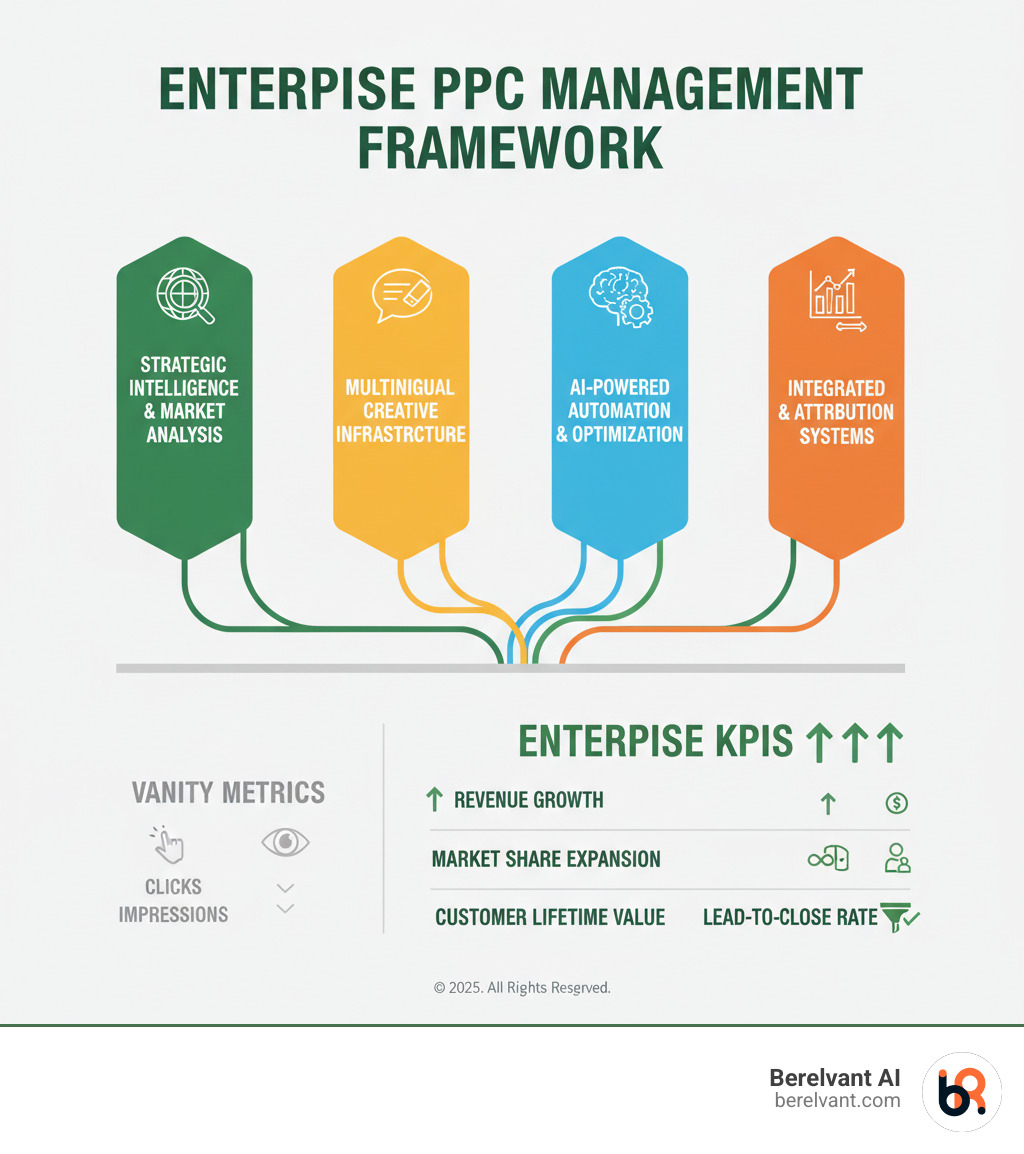
Most agencies optimize for vanity metrics like clicks and impressions. Enterprise organizations need partners who architect systems that drive revenue growth, improve lead quality scoring, and integrate directly with CRM and attribution platforms. The difference is between someone who manages Google Ads accounts and someone who builds end-to-end acquisition engines that operate under regulatory constraints while executing multilingual campaigns at speed.
I’m Renzo Proano, and I’ve managed over $300 million in digital ad spend across financial services, SaaS, GovTech, and e-commerce, building PPC management systems for enterprise clients who require compliance-ready execution across the Americas. Through Berelvant, I design unified acquisition engines that integrate performance media, creative infrastructure, and AI automation to deliver market-proximate expertise at scale.
Aligning PPC Systems with Enterprise KPIs
For enterprise organizations, PPC management near me isn’t about running ads—it’s about building acquisition systems that drive measurable business outcomes across markets. While 78% of people searching locally for products and services visit a business within a day, and “near me” searches have grown over 900% in recent years, the real opportunity lies in capturing these high-intent signals within a scalable, unified framework that delivers revenue growth.
The distinction matters. Most agencies optimize for clicks and impressions. Enterprise leaders need partners who architect systems around Customer Lifetime Value (LTV), market share expansion, and lead quality scoring. This means integrating PPC data directly with CRM systems, applying AI Marketing Strategies to predict conversion quality, and building campaigns that function as strategic growth engines—not just traffic sources.
PPC vs. SEO for Market Penetration
The PPC versus SEO debate misses a fundamental truth: for enterprise market penetration, they’re complementary forces, not competing tactics.
PPC delivers speed-to-market advantage. Your campaigns appear at the top of search results the moment you launch, capturing demand immediately. This matters when you’re entering new markets, launching products, or defending against aggressive competitors. While your SEO efforts build long-term organic authority, PPC fills the visibility gap and generates critical market intelligence about audience behavior, keyword performance, and conversion patterns.
The strategic role of PPC in a unified marketing engine becomes clear when you view it as both an offensive and defensive tool. It protects your brand visibility when competitors bid on your keywords, captures demand in markets where your organic presence hasn’t yet developed, and provides immediate feedback loops that accelerate optimization across all channels.
Defining Success Beyond ROAS
While local PPC clients average $4 for every $1 spent, Return on Ad Spend (ROAS) alone doesn’t tell the enterprise story. A 4:1 ROAS means nothing if those customers churn in 60 days or if you’re capturing low-quality leads that clog your sales pipeline.
We focus on metrics that impact your bottom line: conversions, sales, and profit. This requires understanding the full Customer Lifetime Value (LTV) of acquired customers, tracking lead-to-close rates through CRM integration, and measuring market share expansion across target regions.
Lead quality scoring becomes the operational bridge between ad spend and revenue growth. By integrating PPC data with CRM systems, we track how leads progress through your sales funnel, which campaigns generate qualified opportunities, and which markets deliver the highest-value customers. This granular analysis allows us to optimize budget allocation not for clicks, but for revenue impact.
AI Marketing Strategies accelerate this process by predicting lead quality in real-time, automatically adjusting bids based on conversion probability, and identifying high-value audience segments that traditional analysis would miss. The result is a system that attracts your ideal client profile with precision, not just volume.
The Difference Between Tactical Execution and Strategic Partnership
Most agencies offer campaign management. Enterprise organizations need partners who solve complex operational challenges.
The difference shows up immediately when you’re operating in regulated industries like financial services, healthcare, or government technology. Every ad creative, landing page, and targeting parameter must comply with industry-specific regulations. A strategic partner builds systems that embed compliance into the workflow—not as an afterthought, but as core infrastructure.
Compliance-heavy environments demand more than regulatory knowledge. They require operational frameworks that manage internal approval processes, legal reviews, and brand guidelines without creating bottlenecks. When you’re launching campaigns across multiple markets simultaneously, a single compliance failure can derail months of planning. Your partner needs the technical capacity to steer these constraints while maintaining speed of execution.
Multi-country execution across the Americas introduces another layer of complexity. Market dynamics shift from Connecticut to Chile. Consumer behavior varies by region. Competitive landscapes require different strategies. Understanding these unique business challenges means architecting campaigns that perform efficiently across borders while resonating culturally within each market.
Multicultural audience engagement goes beyond translation. It requires multilingual creative infrastructure that adapts messaging, tone, and positioning to cultural nuances. A campaign that converts in Miami won’t necessarily work in Mexico City, even if the language is technically correct. Strategic partners build systems that account for these differences at scale.
This is the shift from tactical execution to strategic partnership. You’re not hiring someone to manage Google Ads accounts. You’re engaging a growth partner with the operational depth to build end-to-end acquisition systems that function under real-world constraints.
Key Performance Indicators (KPIs) for the C-Suite
Executive reporting requires a different framework than standard PPC dashboards. The C-suite doesn’t need click-through rates—they need visibility into how paid media drives business growth.
Cost Per Acquisition (CPA) answers the fundamental question: what does it actually cost to acquire a new customer? This includes all ad spend, management fees, and operational overhead. When you’re evaluating PPC management near me partners, CPA transparency separates strategic operators from tactical vendors.
Return on Ad Spend (ROAS) provides baseline efficiency metrics, but only becomes meaningful when analyzed alongside LTV and market context. A 3:1 ROAS in a high-LTV market might outperform a 5:1 ROAS in a low-value segment.
Customer Lifetime Value (LTV) transforms how you evaluate acquisition costs. By measuring the long-term value of PPC-acquired customers, you can make informed decisions about scaling investment and expanding into new markets. This metric alone justifies the shift from tactical campaign management to strategic system building.
Lead-to-Close Rate reveals lead quality through CRM integration. How many PPC-generated leads convert into actual sales? Which campaigns produce qualified opportunities versus tire-kickers? This visibility allows you to optimize for pipeline quality, not just volume.
Revenue Growth by Market provides the granular intelligence needed for strategic expansion. By tracking revenue attributed to PPC campaigns across specific geographic markets within the Americas, you can identify high-potential regions, allocate resources efficiently, and measure market penetration progress.
Impression Share vs. Competitors indicates your visibility within target markets relative to competition. This KPI highlights opportunities for market dominance and reveals where competitors are gaining ground.
Conversion Rate measures the percentage of ad clicks that result in desired actions—but optimized for quality and efficiency, not just volume. A 2% conversion rate of high-value leads beats a 10% conversion rate of unqualified traffic.
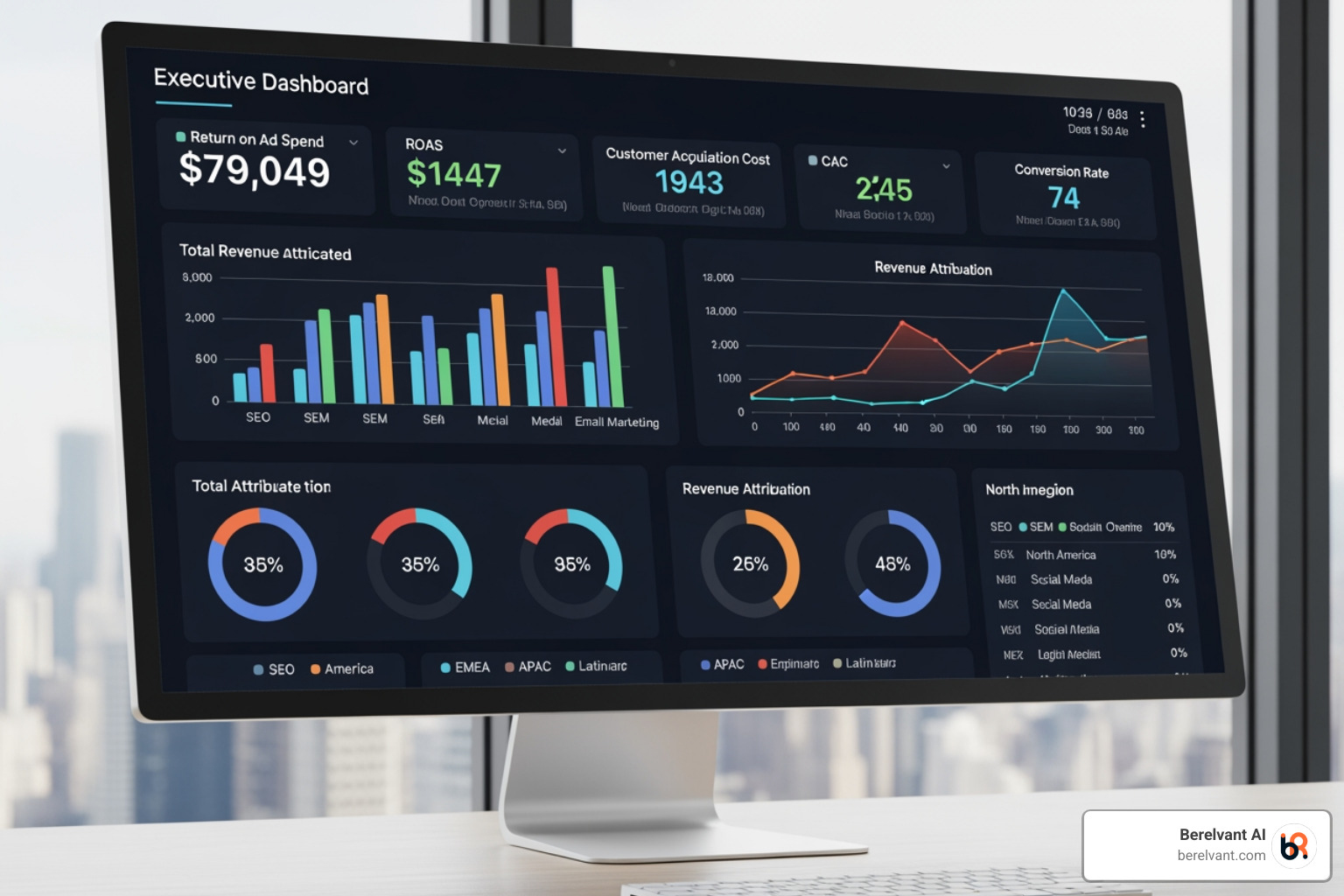
We provide comprehensive, transparent reporting that gives you full visibility into campaign performance—not just clicks, but the metrics that directly impact conversions, sales, and profit. This is what enterprise-level accountability looks like when you’re building acquisition systems, not just running ads.
The Core Components of a Scalable PPC Acquisition System
Building a system that can handle enterprise complexity isn’t about stitching together different tools and hoping they work. It’s about creating a unified acquisition engine where performance media, multilingual creative infrastructure, automation, and analytics function as one integrated system.
This is where most agencies fall short. They manage campaigns in silos—creative teams disconnected from media buyers, analytics separated from optimization, automation treated as an afterthought. For organizations operating across the Americas, this fragmented approach creates bottlenecks that slow execution and limit scale.

Our approach integrates all four components into one system. Performance media integration ensures campaigns run efficiently across Google Ads, Microsoft Ads, and programmatic platforms. Multilingual creative infrastructure enables rapid deployment of culturally resonant messaging across markets without sacrificing brand consistency. Automation and analytics engines remove operational friction, allowing campaigns to scale without proportionally increasing management overhead.
AI serves as the speed and scale layer throughout this system. It accelerates creative production, optimizes bid management in real time, and surfaces insights that would take human analysts weeks to uncover. This isn’t AI for the sake of technology—it’s AI deployed strategically to remove bottlenecks and multiply impact across every market you operate in.
When you’re searching for ppc management near me, you’re really looking for this kind of operational capacity. The ability to execute complex, multi-country campaigns while maintaining compliance standards and delivering consistent results. That requires infrastructure, not just expertise.
Foundational Strategy: Intelligence and Architecture
Before launching a single campaign, we build the strategic foundation that determines whether your acquisition system will scale or stall. This begins with in-depth keyword and audience intelligence that goes beyond basic search volume data.
We analyze buyer intent patterns across markets. The importance of keyword research is about understanding the complete customer journey and mapping keywords to each stage, not just finding high-volume terms.
Competitor analysis across the Americas reveals market gaps and opportunities. We examine how competitors position themselves in Connecticut versus California versus Chile, identifying where your messaging can differentiate and where their weaknesses create openings for market share expansion.
Campaign architecture determines scalability. We structure campaigns to accommodate growth without requiring complete rebuilds when you enter new markets or launch new products. This means thoughtful platform selection from the start—knowing when Google Ads serves your goals, when Microsoft Ads captures underserved audiences, and when programmatic advertising extends your reach beyond traditional search.
For unified brand and direct response goals, we integrate Connected TV Advertising into the acquisition system, reaching audiences across search, display, and streaming with consistent messaging.
The architecture phase also addresses compliance requirements specific to regulated industries. We build approval workflows, creative guidelines, and tracking protocols directly into the campaign structure, ensuring every market launch meets legal and brand standards without slowing execution.
Ongoing Optimization: The Iterative Growth Loop
Launch is just the beginning. What separates enterprise-level ppc management near me partners from tactical executors is the rigor of the optimization process. We operate an iterative growth loop where every campaign continuously evolves based on performance data.
Data-driven bid management uses machine learning to adjust bids in real time, responding to competition, time of day, device, and audience signals faster than manual optimization could ever achieve.
We run continuous A/B testing for creative and landing pages to identify which messaging resonates in different markets.
Negative keyword refinement is an ongoing discipline. As campaigns run, we identify search terms that generate clicks but not conversions, systematically excluding them to improve efficiency.
Audience segmentation and expansion evolves as we gather more conversion data. We identify which customer segments deliver the highest lifetime value and expand targeting to similar audiences across markets.
Strategic budget allocation and pacing across markets ensures resources flow to the highest-performing regions while maintaining presence in developing markets.
Performance monitoring and reporting dashboards provide real-time visibility into campaign health across all markets. These aren’t vanity metric dashboards showing clicks and impressions. They track revenue attribution, lead quality scores, market share indicators, and other enterprise KPIs that inform strategic decisions.
When performance dips, we pivot quickly. This responsiveness comes from having systems in place that surface problems immediately and the operational capacity to implement solutions without waiting for approval chains. It’s the difference between managing campaigns and managing growth.
Vetting Your Next Growth Partner: A C-Suite Checklist for PPC Management Near Me
Finding the right PPC management near me partner isn’t about proximity—it’s about precision. For enterprise organizations, this decision carries strategic weight. You’re not hiring someone to run ads. You’re selecting a growth partner who will architect systems that drive revenue across multiple markets, steer regulatory constraints, and operate at a scale most agencies can’t comprehend.

The challenge is that most agencies speak the same language. They promise “data-driven strategies” and “transparent reporting” and “customized solutions.” But when you’re managing a $2M annual ad spend across six countries, generic promises don’t cut it. You need operational proof. You need technical depth. You need someone who understands that data ownership isn’t a nice-to-have—it’s foundational to enterprise decision-making.
Your vetting process should focus on what an agency has actually built, not what they claim they can build. Look for evidence of scalable infrastructure—the systems, processes, and technical architecture that allow campaigns to expand without breaking. Ask about their experience with compliance-heavy industries, because navigating FDA regulations or financial services constraints requires operational maturity that most agencies simply don’t possess.
Critical Questions for a Potential PPC Partner
The right questions reveal capability gaps quickly. When evaluating a potential partner, these six questions will separate strategic growth partners from tactical executors:
- How do you handle multi-country execution and multilingual creative development? You’re testing for operational complexity here. Can they manage campaigns in São Paulo and Santiago simultaneously while maintaining cultural relevance and brand consistency?
- What is your process for navigating regulated or compliance-heavy industries? This reveals whether they’ve actually worked in environments where a single compliance error can trigger regulatory penalties. Experience with understanding unique business challenges in regulated sectors is non-negotiable.
- How is AI integrated into your workflow to accelerate delivery and improve outcomes? AI should be a speed and scale layer, not a buzzword. You want specifics: How does it remove bottlenecks? Where does it multiply impact? What’s the measurable difference in time-to-market?
- Can you demonstrate a track record of building and managing end-to-end acquisition systems? Ask for case studies showing full-funnel integration—from media buying through creative deployment to CRM integration and revenue attribution. Isolated campaign management isn’t enough.
- What level of transparency and data access will we have into our campaigns and performance analytics? Full data ownership means you can pull your campaign data, audience insights, and conversion tracking into your own systems at any time. If they hesitate on this question, walk away.
- Are you a Premier Google Certified Partner? This certification signals technical expertise and direct access to Google’s latest tools, beta features, and support resources. It’s a baseline credential for enterprise-level work.
What to Expect from a High-Performance PPC Management Near Me Partner
A high-performance partner operates differently from day one. The distinction shows up in how they approach strategy, how they communicate, and what they optimize for.
Proactive strategy, not reactive adjustments. You shouldn’t be the one flagging performance issues. Your partner should anticipate market shifts, identify competitor moves before they impact your impression share, and evolve your strategy ahead of seasonal trends. This requires continuous market intelligence and the operational capacity to pivot quickly across multiple markets.
A focus on attracting your ideal client profile. Not all leads are created equal. Enterprise organizations need partners who understand lead quality scoring, who can integrate with your CRM to track lead-to-close rates, and who optimize campaigns for lifetime value rather than volume. Your partner should know your ideal customer as well as your sales team does.
Custom, goal-oriented strategies mean avoiding cookie-cutter approaches. Whether your objective is market share expansion in specific regions, revenue growth from high-value segments, or lead generation with strict compliance requirements, your strategy should be architected specifically for those outcomes. One-size-fits-all packages don’t work at enterprise scale.
Clear communication and dedicated support sounds basic, but it’s rare at the execution level you need. You should have direct access to the strategists managing your campaigns, regular performance reviews that focus on business outcomes rather than platform metrics, and transparent reporting that connects ad spend to revenue growth.
A profit-focused approach shifts the conversation from vanity metrics to business impact. We don’t celebrate impression increases or click-through rate improvements unless they translate to measurable revenue growth. Every optimization decision should be evaluated against its impact on your bottom line, not against platform benchmarks.
If you’re ready to assess whether your current PPC infrastructure can scale with your growth ambitions, we offer a Free Digital Marketing Analysis that examines your acquisition system from an enterprise perspective—identifying gaps in multi-market execution, compliance readiness, and revenue attribution.
Frequently Asked Questions for Enterprise PPC Stakeholders
How are enterprise-level PPC management costs structured?
Understanding cost structure matters because it directly impacts your ability to forecast ROI and secure executive buy-in for sustained investment. The financial architecture of enterprise PPC management near me partnerships differs fundamentally from small-business arrangements.
Your total investment breaks into two distinct components: ad spend and management fees. Ad spend is what you pay directly to platforms like Google, Microsoft, or programmatic DSPs. While local businesses might allocate $500 to $3,000 monthly, enterprise operations across multiple markets typically invest six to seven figures monthly in media spend alone.
Management fees compensate your partner for strategy, execution, optimization, and system architecture. You’ll encounter three primary models: percentage of ad spend (typically 10-20%), flat-rate retainers that provide budget predictability, or performance-based fees where compensation ties directly to KPI achievement.
We advocate for transparent, retainer-based pricing because it ensures predictable costs and aligns our objectives squarely with your growth goals. This model avoids the limitations of one-size-fits-all packages that rarely accommodate enterprise complexity. The management fee should function as an investment that yields substantial returns, not an administrative expense that drains budget without clear attribution to revenue growth.
How quickly can we expect to see measurable system-level results?
Initial data and traffic typically surface within 10 to 20 days of campaign launch. However, achieving consistent, optimized revenue growth and market penetration takes 3 to 6 months. This timeline isn’t arbitrary—it reflects the operational reality of building acquisition systems that perform reliably across diverse markets.
Data aggregation requires time. We need sufficient volume to make statistically significant optimizations across multiple audience segments, geographic markets, and compliance frameworks. Premature optimization based on limited data often creates more problems than it solves.
System calibration is the technical work of refining AI models, testing multilingual creative variations, and integrating performance feedback loops with your CRM and attribution systems. This phase transforms isolated campaigns into a unified acquisition engine that operates with increasing efficiency.
Strategic refinement happens through continuous A/B testing, negative keyword refinement, audience expansion, and budget reallocation based on market-specific performance data. This period establishes the foundation for sustainable, scalable growth rather than temporary traffic spikes that don’t translate to revenue.
We focus on building and capitalizing on an audience at all stages of the buying cycle. The goal is long-term market penetration and predictable revenue growth, not quick wins that evaporate when market conditions shift.
How do we ensure maximum ROI from our PPC management near me investment?
Success in enterprise PPC requires a true partnership, not a vendor relationship. Your role matters as much as ours in determining outcomes.
Provide clear business objectives and access to sales data. We need to understand your overarching business goals beyond marketing metrics. Integrating with your CRM and sales systems allows us to optimize for actual revenue and lead quality, not superficial engagement metrics. Up to 76% of unmanaged PPC ad spend fails to produce a single conversion—expert optimization built on real business data changes that equation dramatically.
Trust the iterative process of testing and optimization. PPC systems are dynamic. Our expertise lies in continuous refinement through data-driven testing. This requires patience, especially in the initial months when we’re gathering sufficient data for meaningful optimization. Premature judgment based on incomplete information undermines the strategic work that drives long-term performance.
Ensure your partner has a deep understanding of your business model. A true growth partner invests time understanding your unique business challenges, customer lifetime value, and ideal client profile. This understanding informs every strategic decision, from platform selection to creative messaging to budget allocation across markets. Without it, even technically proficient campaign management produces mediocre results.
Maintain responsive collaboration to align campaigns with evolving market dynamics. Markets shift, competitive landscapes change, and business priorities evolve. Regular communication ensures our strategy adapts in real time rather than operating on outdated assumptions. Your responsiveness directly impacts our ability to capitalize on opportunities and mitigate emerging challenges before they impact performance.
Conclusion: Build Your Acquisition Engine, Don’t Just Run Ads
When you search for PPC management near me, you’re not just looking for someone down the street who knows how to set up Google Ads. You’re looking for a partner who understands the unique pressures of scaling across markets—someone who can build systems that work whether you’re expanding from Connecticut to California or from Miami to Mexico City.
Geographic proximity might make meetings easier, but what truly matters is market-proximate expertise: a partner who understands how to execute in your target regions, steer your compliance requirements, and speak to your multicultural audiences in ways that actually resonate.
The difference between running ads and building an acquisition engine is the difference between hoping for results and engineering them. An acquisition engine integrates performance media, multilingual creative infrastructure, automation, and analytics into one unified system. It’s designed to handle the complexity that comes with regulated industries, compliance-heavy environments, and multi-country execution. It’s built to scale with you, not break under pressure.
AI serves as the speed and scale layer in this engine. It accelerates delivery, removes operational bottlenecks, and multiplies the impact of every campaign. This isn’t about replacing human strategy—it’s about amplifying it, so your team can move faster and achieve more across every market you serve.
At Berelvant, we architect these systems for enterprise leaders who need more than campaign management. We solve the challenges that keep VP and Director-level leaders up at night: How do we scale without sacrificing quality? How do we maintain compliance across different regulatory environments? How do we execute campaigns that work in both English and Spanish, in both urban and emerging markets?
We don’t just run ads. We build the infrastructure that turns paid media into a predictable, scalable revenue engine across the Americas.
If you’re ready to move beyond fragmented campaigns and build something that actually scales, Book a Meeting with us. Let’s architect your growth together and transform your PPC management near me search into a strategic partnership that delivers measurable results across every market that matters to your business.