
Why PPC Campaign Management Makes or Breaks Your Ad Budget
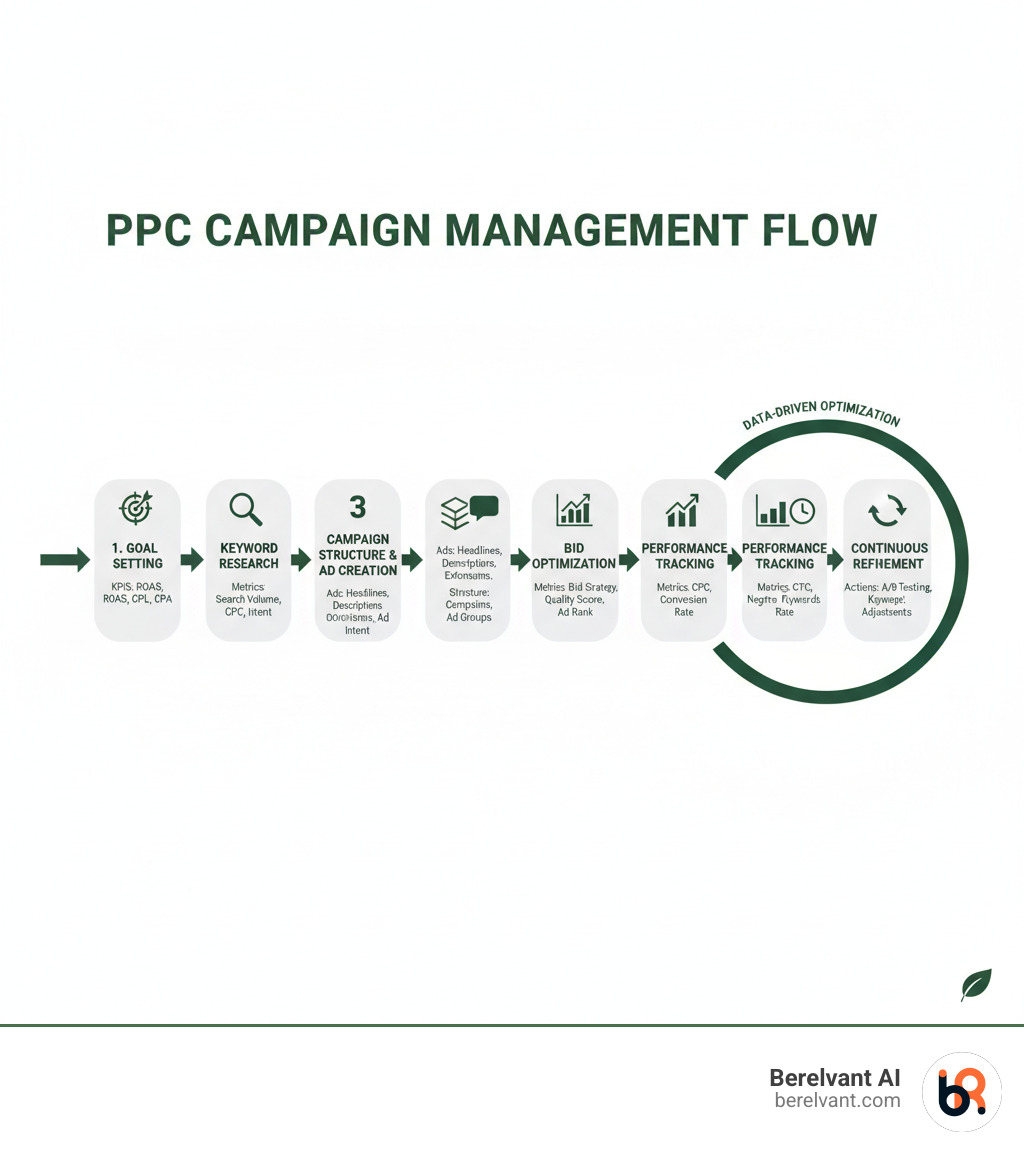
PPC campaign management is the ongoing process of planning, executing, and optimizing pay-per-click campaigns to maximize ROI. It covers everything from keyword research and ad creation to bid management and performance tracking across platforms like Google Ads.
Effective PPC management includes:
- Strategy & Structure – Setting goals, organizing campaigns, and allocating budgets.
- Keyword Research – Finding high-intent search terms and using negative keywords to filter irrelevant traffic.
- Ad Creation & Testing – Writing compelling copy and A/B testing variations.
- Landing Page Optimization – Creating relevant, fast, and conversion-focused pages.
- Bid Management – Adjusting bids based on performance and Quality Score.
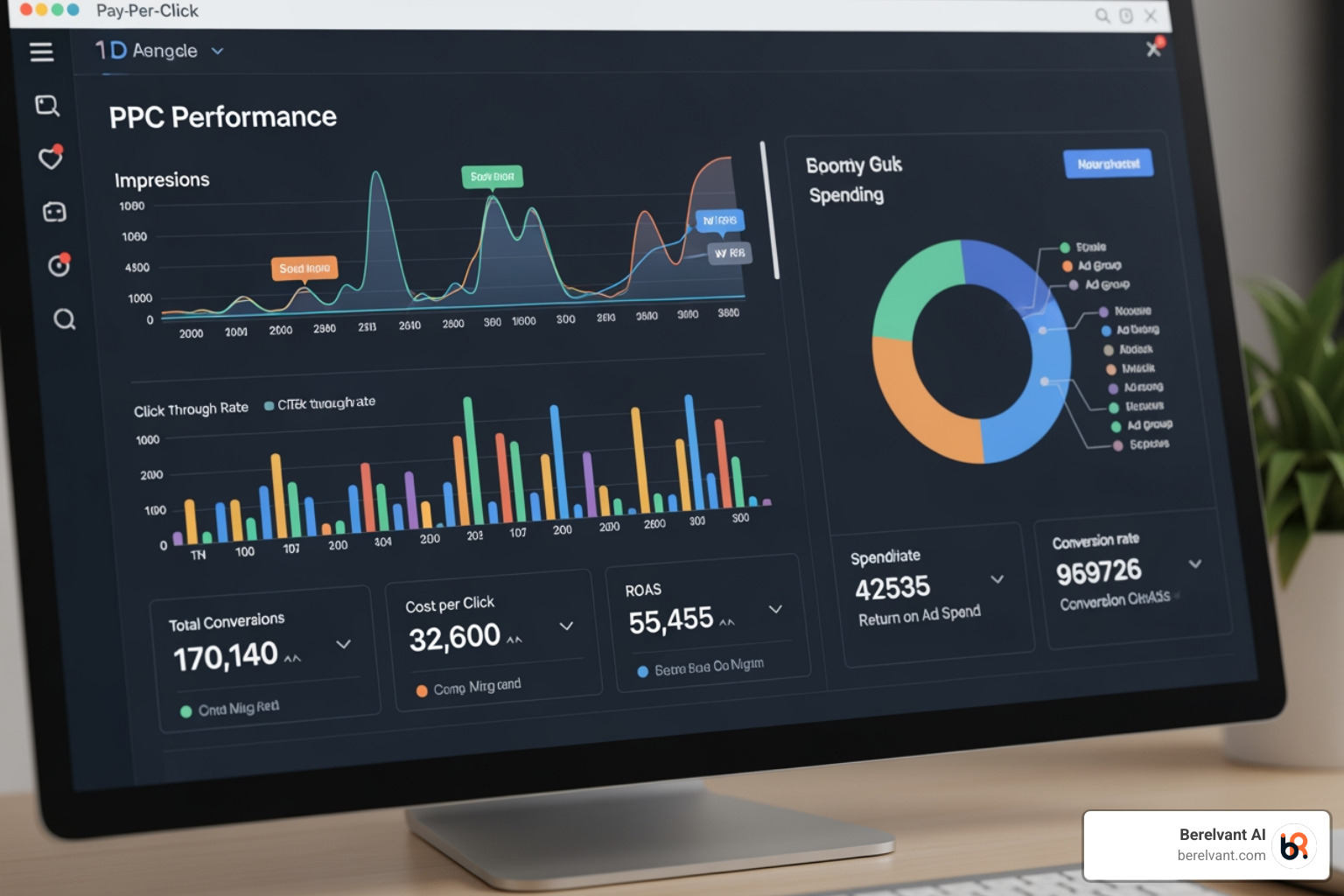
- Performance Tracking – Monitoring key metrics like CTR, CPC, conversion rate, and ROAS.
- Continuous Optimization – Refining targeting and scaling what works.
The stakes are high. Properly managed, Google Ads can earn $8 for every $1 spent. Without it, businesses quickly burn through budgets on irrelevant clicks.
PPC is not a set-it-and-forget-it channel; it requires constant, data-driven optimization. Campaigns typically need 2-4 weeks to optimize, with meaningful results appearing within 2-3 months of continuous management.
Complexity grows when managing campaigns across multiple regions, languages, or regulated industries where precision is non-negotiable. Fragmented teams and inconsistent attribution make scaling even harder.
I’m Renzo Proano, and I’ve managed over $300 million in digital ad spend, building performance marketing systems that deliver compliance-ready, multilingual campaigns. Effective PPC campaign management at scale demands this level of expertise. Let me show you how to build campaigns that convert.
How PPC Advertising Works: The Engine Behind the Clicks
Behind every Google search is a lightning-fast auction that determines which ads appear. This isn’t a simple “highest bidder wins” system; it’s based on Ad Rank, which balances your bid with your ad’s quality.
Your Ad Rank is calculated using your maximum CPC bid and your Quality Score. A higher Ad Rank means a better ad position, and you can outrank higher bidders if your ad is more relevant. Your Quality Score (1-10) is based on three factors: ad relevance, expected Click-Through Rate (CTR), and landing page experience. Improving your Quality Score lowers your costs and improves your position. You can dive deeper into an explanation of Ad Rank for technical details.
Average CPCs on the Search Network are $1-$2, but transactional keywords can cost $3-$10 or more, with competitive industries in cities like New York or Lima exceeding $50. The Display Network is more affordable, often under $1 per click, making it ideal for brand awareness.
Campaign Types and Platforms
PPC offers a diverse ecosystem of ad options:
- Search ads: Text ads at the top of Google search results, perfect for capturing active searchers. Google Ads dominates this space.
- Display ads: Visual banners across millions of websites on the Google Display Network, great for brand awareness and retargeting.
- Video ads: Highly engaging ads on platforms like YouTube, which has over 2.4 billion monthly users. They are especially effective for reaching younger audiences (77% of users are 15-35).
- Shopping campaigns: Product-focused ads for e-commerce, showing images and prices directly in search results to attract high-intent buyers.
- Social media PPC: Ads on platforms like Facebook and X (formerly Twitter) that offer precise demographic and interest-based targeting.
Google offers a guide to different campaign types to help you choose the right fit for your goals.
Understanding Keywords and Match Types
Keywords are the foundation of PPC campaign management. Understanding keyword intent is the first step. Transactional keywords (e.g., “buy running shoes New York”) signal a readiness to buy, while informational keywords (e.g., “best running shoes for beginners”) indicate research.
We favor long-tail keywords-specific, three-to-four-word phrases. They have lower search volume but are less competitive, more affordable, and attract highly qualified traffic.
Match types control how your ads appear:
- Broad match: Casts the widest net, showing for synonyms and related searches.
- Phrase match: Shows for searches that include the meaning of your keyword.
- Exact match: The most restrictive, showing only for searches with the same meaning.
Testing different match types is key. Explore more on keyword match types to refine your strategy.
Finally, use negative keywords to prevent your ads from showing for irrelevant terms (e.g., adding “free” if you offer a paid service). This simple step is one of the fastest ways to improve campaign efficiency.
Building Your Campaign: A Step-by-Step Blueprint
Building a successful PPC campaign requires a solid blueprint. A well-organized structure simplifies optimization, improves Quality Scores, and prevents budget waste from day one.

1. Define Your Campaign Structure and Budget
First, define clear campaign objectives: are you generating leads, driving sales, or building awareness? Your goal shapes your entire strategy.
Google Ads uses a hierarchy: Campaigns (with their own budgets and targeting) contain Ad Groups. Each ad group should have a tight theme, containing a small set of related keywords (5-10) and the ads that show for them. This structure boosts relevance, which raises Quality Score and lowers costs.
For budget, Google suggests $10-$50 daily for new campaigns. However, for meaningful data, we recommend a minimum monthly budget of $300 to $500. This provides enough data to make informed optimization decisions.
Common PPC campaign goals include:
- Lead generation
- Direct e-commerce sales
- Brand awareness
- App downloads
- Local store visits and calls
We start with a testing budget to gather data, identify what works, and then scale investment strategically to maximize ROI.
2. Conduct In-Depth Keyword Research
Effective PPC campaign management starts here. Bidding on the wrong keywords wastes money. Use tools like Google Keyword Planner to validate search volume and estimate costs.
Start with seed keywords and expand, but focus on search intent. A search for “what is PPC” is informational, while “PPC management services New York” is transactional and signals buying intent. Also, analyze competitor ads to find gaps and opportunities.
Don’t forget negative keywords. If you sell premium products, add terms like “cheap” and “DIY” as negatives to prevent irrelevant clicks and protect your budget.
3. Create High-Converting Landing Pages
A great ad leading to a poor landing page is a waste of money. Never send PPC traffic to a generic homepage. Create dedicated landing pages that match your ad’s message and offer.
Your landing page must be:
- Relevant: The message must match the ad.
- Mobile-friendly: A huge portion of searches are on mobile.
- Fast: Slow pages kill conversions and hurt your Quality Score.
- Clear CTA: Have a prominent call-to-action like “Get Your Free Quote.”
- Trustworthy: Use social proof and keep forms short.
Always be A/B testing headlines, CTAs, and layouts to continuously improve conversion rates.
4. Write Compelling Ad Copy
Your ad copy must grab attention and earn the click. Lead with your Unique Selling Proposition (USP). Instead of “quality service,” say “same-day installation with a 10-year warranty.”
Include a clear call-to-action like “Shop the Sale” or “Request a Demo.” Use ad extensions to make your ad bigger and more informative. Sitelinks, call extensions, and location extensions (crucial for local businesses in New York, New Hampshire, Westport, or Lima) improve your Ad Rank and CTR.
Structured snippets can highlight specific offerings. Remember the character limits (30 for headlines, 90 for descriptions) and ensure your display URL matches your landing page domain to build trust.
Strategies for Effective PPC Campaign Management and Optimization
PPC campaign management is never finished; it’s an ongoing process of optimization. Successful campaigns continuously evolve to adapt to market changes, competitor moves, and customer behavior. This relentless focus on improvement is what separates campaigns that merely run from those that thrive. You can explore more on how to manage PPC campaigns to understand this iterative work.
Key Tasks in Ongoing PPC Campaign Management
Once a campaign is live, the daily work of optimization begins. This is where we see the most dramatic performance improvements.
- Bid adjustments: We constantly monitor which keywords convert and adjust bids to invest in winners and cut losses.
- Pruning underperforming keywords: We regularly remove keywords with low Quality Scores or high costs per conversion to free up budget.
- Search term report analysis: This report reveals the exact phrases users search for, helping us find new keywords and identify negative keyword opportunities.
- Device and geo-targeting: We analyze performance by device and location, adjusting bids to focus budget where it performs best. This is crucial for businesses in New York, New Hampshire, Westport, or Lima.
- Ad scheduling: We show ads when customers are most likely to convert, adjusting bids by time of day and day of week to maximize efficiency.
New campaigns require daily monitoring, which shifts to weekly optimization as they mature.
The Role of A/B Testing in PPC Campaign Management
If you’re not testing, you’re guessing. A/B testing turns assumptions into data-driven decisions. We test everything that matters: ad copy variations, landing page layouts and headlines, and different ad extensions. This scientific approach consistently improves Click-Through Rates, lowers costs, and increases conversions. Over time, these incremental gains compound into dramatically better performance. An introduction to A/B testing explains the fundamentals.
Measuring Success: Key Metrics to Track
In PPC campaign management, the right metrics tell the story of your campaign’s health. We track these indicators to find opportunities for improvement.
- Conversion Rate: The percentage of clicks that turn into results (leads, sales). A low conversion rate often points to landing page issues.
- Cost Per Conversion: The true measure of campaign efficiency. We always work to lower this number.
- Return on Ad Spend (ROAS): The ultimate measure of success. The average is 200% ROI, but we aim higher.
- Click-Through Rate (CTR): Indicates how compelling your ads are. A high CTR improves your Quality Score.
- Quality Score: Impacts your ad position and costs. We continuously work to improve it.
- Customer Acquisition Cost (CAC): The total cost to acquire a new customer, providing a big-picture view of your PPC investment.
Proper conversion tracking is non-negotiable. It allows us to see what’s driving real business results and optimize accordingly.
In-House vs. Partnered PPC: Who Should Steer the Ship?
Deciding who manages your PPC campaign management is a strategic choice based on your team’s bandwidth and expertise.
Going it alone involves a steep learning curve. It can take weeks to grasp the basics of platforms like Google Ads, often leading to costly mistakes and wasted ad spend. For small firms, adding PPC management to an already stretched team can be overwhelming.
The hidden costs include not just salaries and software, but the expertise gap. PPC requires specialized knowledge that takes years to develop. Scalability is another concern; can your internal team handle expansion into new markets or seasonal ramps?
Businesses facing complex challenges-such as regulated industries, multi-country campaigns in the Americas, or targeting multicultural audiences-benefit most from partnering with specialists. These scenarios demand deep expertise in performance media, automation, and analytics.
At Berelvant AI, we provide an integrated system that acts as an extension of your team. We bring advanced strategies and technology that most companies can’t build internally. Our Free Digital Marketing Analysis can help you determine the right approach for your business.
In-House vs. Partnered PPC Management
| Feature | In-House Management | Partnered with Berelvant AI |
|---|---|---|
| Control | Full control over strategy | Collaborative control |
| Cost | Salaries, benefits, software | Transparent partnership fees, ad spend |
| Expertise | Limited to team’s knowledge | Access to Berelvant AI specialists |
| Resources | Requires dedicated staff | Leverages Berelvant AI team & technology |
| Scalability | Can be slow to scale | Rapid scalability with Berelvant AI |
The Future is Now: Emerging Trends in PPC
The world of PPC campaign management is constantly evolving. Staying ahead of the curve is essential for sustained success.
Automation and Smart Bidding have revolutionized bid management. AI algorithms analyze vast amounts of data to make real-time optimization decisions at a scale impossible for humans. Strategies like Target CPA and Target ROAS use historical data and user signals to set the perfect bid for every auction, accelerating delivery and multiplying impact.
Voice search optimization is adapting keyword strategies to conversational, natural language queries. We now target longer, more specific phrases that reflect how people speak to devices like Alexa or Siri, not just how they type.
Privacy changes and first-party data are rewriting the rules of targeting. With the phase-out of third-party cookies, the focus has shifted to leveraging your own first-party data-information collected directly from your audience. This data is more compliant, accurate, and valuable for creating personalized campaigns.
Video advertising growth continues on platforms like YouTube, which reaches over 2.4 billion monthly users. Innovations like interactive and shoppable video ads offer powerful engagement opportunities, especially with the 15-35 demographic that makes up 77% of YouTube’s audience.
These trends show that PPC is becoming more sophisticated and automated. This increasing complexity is why specialized expertise and advanced AI Marketing Strategies are no longer optional for growth-focused businesses.
Frequently Asked Questions about PPC Management
How long does it take to see results from a PPC campaign?
You’ll see initial activity like clicks and impressions within days. However, the real optimization phase, where we fine-tune bids and targeting, takes about 2-4 weeks. With consistent PPC campaign management, you can expect to see measurable ROI and significant results within 2-3 months as we scale what works.
How much should I budget for a PPC campaign?
Your budget depends on your goals, industry, and competition. While Google suggests starting with $10-$50 per day, we recommend a minimum of $300-$500 per month for meaningful testing and data collection. Highly competitive industries or markets like New York may require a larger budget, but our focus is always on spending smart to maximize ROI.
Is PPC better than SEO?
Neither is better; they serve different purposes and work best together. PPC delivers immediate, controllable results, making it ideal for time-sensitive promotions or lead generation. SEO is a long-term strategy that builds sustainable, organic traffic over 3-6 months. A smart strategy uses PPC for immediate impact while building a strong SEO foundation for long-term growth.
Conclusion
Successful PPC campaign management is not a one-time task but an ongoing process of optimization. It requires understanding your audience, building tightly themed campaigns, writing compelling copy, and creating high-converting landing pages. The real success, however, comes from continuous refinement-analyzing data, pruning underperforming elements, and A/B testing to find what truly resonates.
For businesses in complex environments-like regulated industries or multi-country campaigns across the Americas-the margin for error is slim. This is where specialized expertise and integrated systems are essential.
Our approach at Berelvant AI is built for these challenges. We integrate performance media, multilingual creative, automation, and analytics into a unified engine. Our AI-powered systems accelerate delivery and multiply the impact of every campaign, turning PPC campaign management into a powerful growth engine.
Most businesses fail at PPC not from a lack of ambition, but from a lack of time, tools, or specialized teams. If you’re ready to move beyond guesswork and build an acquisition system that drives measurable revenue, let’s talk.
Book a Meeting to discuss your goals, or explore our Blog for more digital marketing insights.