
Why Most Websites Fail to Convert (And What Actually Works)
High-converting websites are engineered to turn visitors into customers through strategic design, clear messaging, and data-driven optimization. Here’s what defines them:
- Average conversion rates across industries hover around 2.35% to 2.9%
- Top performers achieve 5.31% or higher, with best-in-class reaching 10%+
- Key elements include fast load times, mobile optimization, clear CTAs, trust signals, and persuasive copy
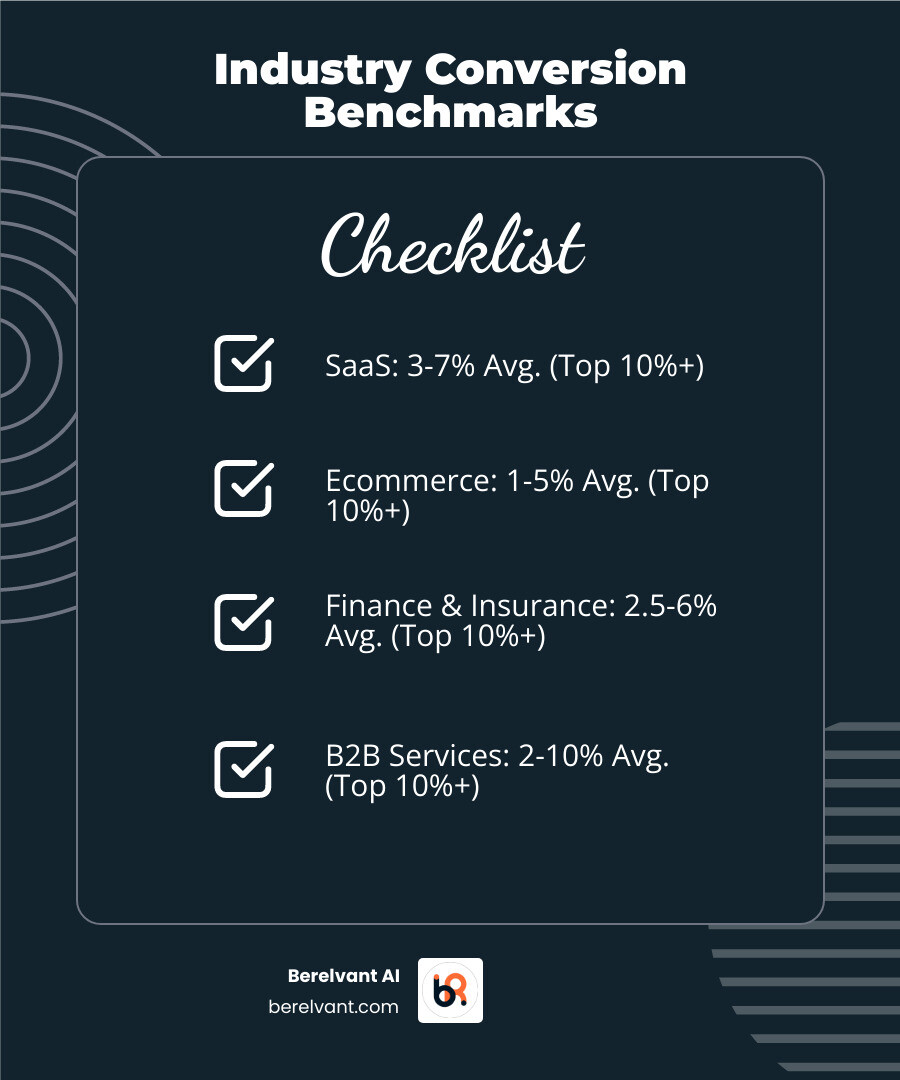
- Industry benchmarks vary: SaaS (3-7%), Ecommerce (1-5%), Finance (2.5-6%), B2B Services (2-10%)
Most companies treat their website as a digital brochure, ignoring the system that drives conversions. This leads to wasted ad spend and lost revenue. While the average landing page converts at just 2.35%, the top 25% achieve 5.31% or more. The difference isn’t luck; it’s architecture.
Conversion-focused sites are built on systems, not creative opinions. They prioritize user flow, performance infrastructure, and psychological triggers over visual polish, using data to optimize the entire customer journey. For enterprise teams managing multi-region campaigns and regulatory constraints, this system-level approach is the only path to sustainable growth.
I’m Renzo Proano. With over a decade of experience managing $300M+ in ad spend for brands like Microsoft and Cartier, I build high-converting website architectures for enterprise-scale acquisition, specializing in multilingual campaigns and compliance-heavy industries across the Americas.
The Core Architecture of a High-Conversion System
Most enterprise websites are built backward, starting with design and retrofitting conversion logic. The right build starts with architecture—the infrastructure that ensures scalability, compliance, and consistent results across markets and traffic volumes.
At the enterprise level, this demands system-level thinking. You’re not building a single page but a conversion engine for multiple countries, languages, and regulatory environments. Every decision, from navigation to mobile responsiveness, impacts your ability to convert high-value prospects at scale.
The foundation is a User Experience (UX) that prioritizes scalability and cross-market consistency. Your site must deliver a frictionless experience from São Paulo to Toronto, on any device, in any language. This is about building infrastructure that supports website performance and removes friction. According to a Digital.com survey, 53% of shoppers expect e-commerce pages to load in three seconds or less, and 50% will abandon carts if pages are too slow. For enterprise teams, slow load times create systemic revenue loss.
More info about our SEO and Internet Marketing Firm services.
Designing for the Enterprise User Journey
Enterprise buyers have complex, non-linear journeys. Your job is to anticipate their needs and remove obstacles. This starts with intuitive navigation and a clean information architecture that makes finding information effortless. To handle complex product catalogs or service offerings, we use user flow mapping to chart common paths and ensure each leads to a clear next step.
Reducing friction means eliminating unnecessary form fields, clarifying CTAs, and ensuring every page answers, “What’s next?” For regulated industries, this includes accessibility (WCAG standards), which improves usability for everyone and signals your commitment to compliance. When you simplify the journey, conversions follow.

The Non-Negotiable of Performance and Mobile-First Execution
Speed is the price of entry. If your site is slow, nothing else matters. Core Web Vitals, Google’s user experience metrics, directly impact search rankings and conversion rates. Your infrastructure must perform consistently from New York to Buenos Aires.
This makes mobile-first design non-negotiable. Most web traffic is mobile, and the 2024 Conversion Benchmark Report found that 83% of landing page visits are on mobile. Designing for desktop first means you’ve already lost the majority of your audience. True mobile-first execution prioritizes clarity, touch-friendly elements, and speed on cellular networks from the start.
To deliver this, you need a robust CDN and server infrastructure. A Content Delivery Network, combined with smart caching strategies, ensures your site scales without slowing down. Page load speed is where most enterprise sites fail, adding scripts and heavy media that kill conversions. Every second of delay costs revenue. The only durable path is performance infrastructure that works at scale.
Engineering Persuasion: The Tactical Layer of High-Converting Websites
A solid technical foundation gets visitors to your site, but persuasion converts them. The best enterprise sites don’t just present information; they guide decision-making through strategic messaging, visual cues, and psychological principles that resonate with enterprise buyers.
This tactical layer is where we translate performance into revenue. It’s the difference between a site that informs and one that compels action.
Crafting Compelling Messaging and CTAs
Enterprise buyers need value, fast. We use benefit-driven copy that speaks directly to the pain points of decision-makers, answering, “Why does this matter to my business?” The CTA is the moment of truth. We obsess over its text, color, and placement, using action-oriented language like “Get Your Analysis” over passive phrases.
But intuition isn’t enough. We A/B test everything—CTA text, button colors, and positioning. As HubSpot notes, strategically positioning your CTA button can dramatically impact conversion rates, and continuous testing reveals what truly drives action.
Building Trust and Credibility at Scale
Enterprise transactions require immense trust. We systematically build credibility with reinforcing signals. Customer testimonials with specific metrics, case studies detailing ROI, and logos of recognizable clients all lift perceived credibility. For regulated industries, trust badges like SOC 2 or ISO certifications are critical. Third-party validation, such as an Editor’s Choice by PCMag award or media mentions, cuts through skepticism. These elements work together to create a pattern of excellence that enterprise buyers trust.
Leveraging Psychological Triggers for Action
Enterprise decisions are influenced by human factors. We apply psychological triggers strategically to accelerate action.
- Urgency and Scarcity: Authentic time pressure, like early-bird pricing for annual contracts or limited availability for a premium service tier, prompts decisions.
- Reciprocity: Offering high-value free resources (e.g., a technical audit or strategic roadmap) builds goodwill and positions you as a partner.
- Authority: Expert endorsements, published research, and industry certifications establish specialized expertise.
- Consistency: Multi-step forms with clear progress indicators reduce abandonment, as people who start a process are more likely to finish it.
These principles aren’t manipulation; they’re alignment. They help enterprise buyers steer complex decisions by reducing uncertainty.
Differentiating Conversion Strategies: Landing Pages vs. Product Pages
At enterprise scale, understanding the difference between landing pages and product pages is operational. Landing pages are for lead generation and campaign-specific actions, while product pages are for ecommerce sales and detailed product presentation. Conflating them undermines performance, as each requires different design, messaging, and optimization.
Here’s how they compare:
| Feature | Landing Page | Product Page |
|---|---|---|
| Primary Goal | Lead generation, event registration, content download, specific campaign action. | Direct sale, product inquiry, adding to cart. |
| Objective | Capture visitor information or initiate a specific, often singular, action related to a campaign. | Provide comprehensive details about a specific product/service to facilitate a purchase decision. |
| Key Elements | Single, clear CTA; Minimal navigation; Message matching with ad; Compelling headline and offer; Optimized lead capture form; Social proof. | High-quality visuals (360-degree, video); Detailed specifications; Pricing and promotional strategy; Customer reviews/ratings; Cross-selling/upselling; Clear CTA to purchase/inquire. |
| Metrics | Conversion rate (form submissions, downloads); Bounce rate; Time on page. | Conversion rate (add-to-cart, purchase); Average Order Value (AOV); Product return rate; Time on page. |
| Complexity | Often minimalist, highly focused on one action. | Can be more detailed, providing extensive information to support a complex purchase decision. |
| Context | Campaign-specific, driven by external traffic (ads, email). | Integral part of the website’s product catalog, often accessed via internal search or category pages. |
Essential Elements of High-Converting Landing Pages
Enterprise landing pages succeed on focus. We build them around a single conversion goal, stripping away standard navigation to remove exit points. The visitor has two choices: convert or leave.
Message matching is critical. If an ad promises “AI-powered creative automation,” the landing page headline must echo it. Any disconnect kills trust. The compelling offer, such as a compliance framework or ROI calculator, must be valuable enough to justify the information exchange. We optimize lead capture forms ruthlessly, asking only for essential information upfront and using progressive profiling to gather more data later. Finally, including video on your landing page can boost conversions by up to 80%, as it efficiently demonstrates complex solutions.
Anatomy of High-Converting Product Pages
Product pages are where prospects actively evaluate solutions. High-quality visuals (professional photos, 360-degree views, demo videos) are non-negotiable for showing the solution in action. Detailed specifications—API capabilities, security certifications, compliance standards—must be comprehensive but scannable.
Pricing and promotions require transparency. For B2B, Buy Now, Pay Later (BNPL) options can increase conversion rates by 20-30%. Strategic cross-selling and upselling, like “complete your solution” bundles, increase Average Order Value without creating friction. A 2022 survey of over 3,000 stores found that while average product page conversion is 1.3%, the top 10% exceed 4.8%. This gap is closed by systematic optimization of these elements. Top-performing sites treat product pages as conversion engines, not just information repositories.
System-Level Optimization: Scaling Conversions with AI and Analytics
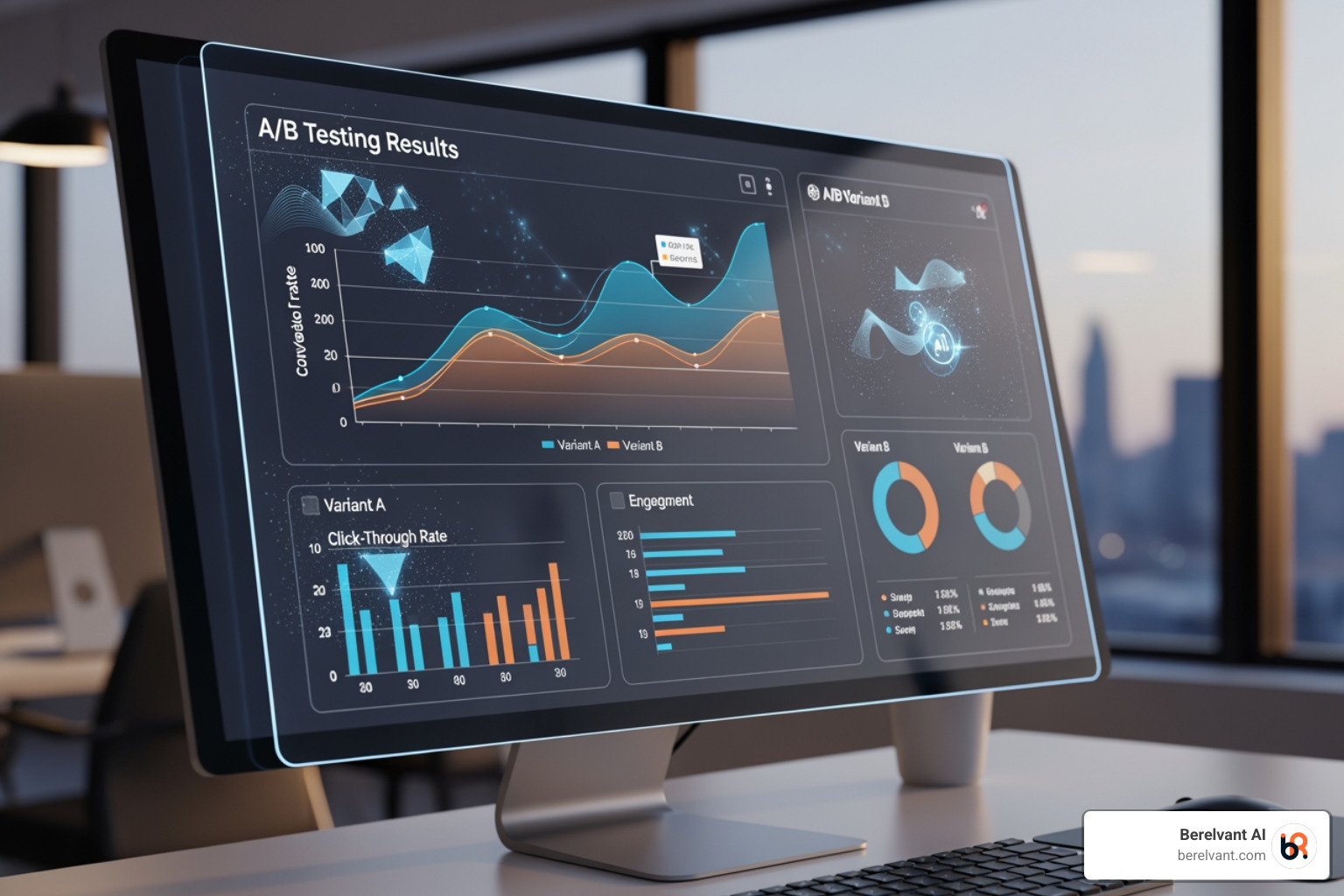
Building enterprise-grade conversion is an ongoing process of refinement. For enterprise teams, this requires a systematic approach to optimization that scales across markets. This is where a Conversion Rate Optimization (CRO) framework becomes essential—a continuous system integrating data-driven decisions with AI-powered automation. For organizations operating across the Americas, this system-level thinking separates incremental gains from exponential growth.
More info about our AI Marketing Strategies.
Using Analytics and A/B Testing to Drive Performance
High-performing systems start with visibility. We implement comprehensive conversion tracking and funnel analysis to identify critical bottlenecks. We then use qualitative tools like heatmaps and session recordings to understand the why behind user behavior, uncovering friction points that quantitative data misses.
Optimization happens through systematic testing. A/B testing isolates variables to measure impact with statistical confidence, while multivariate testing finds winning combinations faster. This isn’t guesswork; it’s rigorous experimentation. As Formassembly points out, you must leverage analytics for continuous improvement. Each test generates learning that informs the next iteration, compounding to double or triple conversion rates without increasing ad spend.
The Role of AI in Personalization and Targeting
AI acts as an acceleration layer, enabling personalization at a scale impossible to achieve manually. For enterprise sites serving diverse markets, AI enables dynamic content that adapts in real-time based on company size, industry, location, and behavior. A prospect from a Fortune 500 company sees different messaging and case studies than a mid-market buyer.
AI allows for sophisticated audience segmentation and predictive personalization, anticipating visitor needs and surfacing the most relevant content. AI-driven recommendations and automated messaging via chatbots can qualify leads, answer technical questions, and route high-value prospects to the right team. This is especially critical for multilingual operations, where AI can generate, test, and optimize localized content at speed, removing traditional production bottlenecks and allowing enterprise teams to move faster.
Real-World Examples of High-Conversion Architecture
The best way to understand what works at scale is to examine how leading enterprise brands engineer their digital presence. These aren’t just beautiful websites—they’re sophisticated conversion systems designed to handle massive traffic, complex user journeys, and diverse audience segments across multiple markets.
Let’s break down three examples that demonstrate different approaches to enterprise-level conversion architecture.
Example 1: Salesforce (SaaS & CRM)
When you land on Salesforce, you’re experiencing one of the most refined conversion-led experiences in the SaaS industry. What makes it work isn’t flashy design—it’s intelligent routing and strategic messaging.
- Creating custom user paths: The site adapts to show relevant solutions for sales, service, marketing, or IT personas.
- Focusing the value proposition: The message is always centered on enterprise outcomes, like “Grow your business with the #1 AI CRM.”
- Offering multiple CTAs: “Start Free Trial” is primary, but options like “Watch Demos” and “Get Pricing” cater to different funnel stages, respecting long enterprise sales cycles.
- Using strong social proof: Customer logos, success stories, and industry recognition build market-leader credibility.
Example 2: Stripe (Fintech & Payments)
Stripe is built for its technical audience of developers and decision-makers. Their site is based on clarity and functionality:
- Developer-first design: A clean, minimalist interface gets technical users to documentation and API references fast.
- Building trust through technical clarity: They present their platform’s capabilities and complexity straightforwardly, with immediate access to code examples.
- Focusing on integration: The messaging constantly reinforces how easily Stripe connects to existing systems, a key concern for enterprise IT.
- Achieving trust through simplicity: In a compliance-heavy industry, Stripe’s plain language makes a complex product feel accessible, accelerating decisions.
Example 3: New Balance (Global Ecommerce)
For a global e-commerce operation, New Balance demonstrates how to optimize product pages for high-volume conversions across diverse markets:
- High-quality product imagery: Multiple angles and zoom functionality reduce uncertainty and build purchase confidence.
- Strategic cross-selling: The “Complete the look” feature suggests relevant complementary items, increasing Average Order Value without being aggressive.
- Prominent user reviews: Social proof from real customers addresses objections and builds trust.
- Clear sizing and fit guides: This solves a major pain point, reducing hesitation at checkout and minimizing returns.
Frequently Asked Questions about High-Converting Websites
What constitutes a ‘good’ enterprise conversion rate?
This is one of the most common questions we hear, and the answer is always: it depends. While the average conversion rate is around 2.9% and top performers hit 5-10% or higher, raw percentages are misleading for enterprise. A 3% conversion rate on a demo request form can be worth millions, while a 15% newsletter signup rate may yield no revenue. Quality beats quantity every time.
To define “good,” we analyze:
- Industry benchmarks: A baseline, but just a starting point.
- Funnel stage dependency: Top-of-funnel actions will always convert higher than bottom-funnel requests.
- Lead quality versus quantity: A few high-intent leads are better than many low-quality ones.
- Traffic source impact: Paid search visitors behave differently than organic or direct traffic.
According to Ruler Analytics, averages range from 2.9% across all industries, but for complex B2B services, a 3-5% conversion rate on high-value actions can represent millions in pipeline.
What are the most common mistakes that kill conversion rates?
We’ve audited hundreds of enterprise websites, and the same preventable conversion killers appear again and again:
- Slow page speed: A Digital.com survey found that 50% of shoppers abandon carts if pages take too long. Performance is existential.
- Poor mobile experience: With 83% of all landing page visits on mobile (2024 Conversion Benchmark Report), a clunky mobile interface immediately disqualifies you.
- Unclear value proposition: Enterprise buyers are time-constrained. If they can’t immediately understand what you do and why it matters, they’re gone.
- Too much friction: Long forms, confusing navigation, and unclear next steps cause abandonment. We’ve seen conversion rates double simply by reducing form fields from 12 to 5.
- Lack of trust signals: Enterprise buyers need proof: customer logos, case studies with real ROI data, and security certifications.
- Inconsistent messaging across the user journey: If your ad promises one thing and your landing page says another, you break trust and kill the “conversion scent.”
What is the typical investment and ROI for building a high-conversion system?
The investment required to build a true conversion system for an enterprise varies significantly. Cost factors include your current infrastructure complexity, integrations, and multilingual requirements. While a DIY approach is possible, partnering with a specialized agency accelerates results and reduces risk.
But here’s what matters most: focus on ROI, not just cost. We’ve seen clients realize that a 1% conversion lift translates to millions in additional annual revenue—without increasing ad spend. For an enterprise spending $2 million annually on paid media with a 2.5% conversion rate, improving that to 3.5% means 40% more conversions from the same budget. The question isn’t whether you can afford to invest in a high-conversion system. It’s whether you can afford not to.
We offer a Free Digital Marketing Analysis to assess your current conversion performance and identify the highest-impact optimization opportunities.
Conclusion: Build a Conversion Engine, Not Just a Website
Most enterprise websites are built backwards. They start with design, then hope conversions follow. But conversion-driven sites are engineered from the ground up as systems—where every element exists to drive measurable business outcomes.
The difference between a 2% conversion rate and a 7% conversion rate isn’t luck; it’s architecture. It’s understanding that speed, mobile-first design, and trust signals carry more weight than clever headlines. For leaders managing multi-region campaigns, the challenge is scaling performance across markets, languages, and regulatory environments. This requires system-level thinking.
At Berelvant AI, we build these systems for enterprise clients who can’t afford to treat their website as a digital brochure. We specialize in regulated industries, multi-country execution, and multicultural audiences across the Americas, using AI as a speed and scale layer to multiply campaign impact. We don’t just optimize pages. We build end-to-end acquisition systems that drive revenue growth.
Your website isn’t just a marketing asset. It’s your most critical revenue engine. The question is: are you treating it like one?