Why Creative Teams Are Losing Time to Manual Work
Creative workflow automation is a system-level approach to eliminating repetitive tasks, accelerating approvals, and scaling asset production. It transforms fragmented, manual processes into structured, measurable operations that reduce cycle times, lower costs, and improve creative quality.
The administrative burden on creative teams is severe. Recent surveys show that less than a third of creative professionals dedicate the majority of their day to actual creative work. The rest is consumed by chasing feedback, organizing files, and managing manual handoffs. This isn’t a productivity problem; it’s a systems problem.
Without automation, execution slows, bottlenecks multiply, and quality becomes inconsistent. For leaders managing teams across multiple regions or brands, this operational friction directly impacts time-to-market, cost-per-asset, and campaign performance. The challenge isn’t talent; it’s infrastructure.
Creative workflow automation solves this by replacing manual coordination with structured systems. It connects intake, production, review, and delivery into a single operational engine, embedding compliance and version control into every step. The result is faster execution, lower costs, and higher-quality output at scale. Companies implementing this approach report efficiency gains of 40% or more and project delivery acceleration of over 75%.
I’m Renzo Proano, founder of Berelvant AI. I architect and deploy creative workflow automation systems for enterprise clients, replacing slow, fragmented workflows with fast, predictable automation that allows leadership to scale execution without expanding headcount.
The Strategic Imperative: Why Automate Your Creative Workflow?
For enterprise organizations operating across the Americas, creative workflow automation is the foundation for faster execution, lower costs, and consistent brand compliance. When managing operations across regulated industries and diverse audiences, manual processes become a liability. They introduce errors, slow you down, and make compliance a constant worry.
The data is clear: organizations with structured automation report 40% improvements in operational throughput and 75% acceleration in project delivery. This is the direct result of removing operational friction so your team can focus on high-value creative work.
Opening Speed and Scale in Production
Traditional creative workflows are full of bottlenecks like manual handoffs and scattered feedback. Creative workflow automation eliminates these chokepoints, allowing assets to flow from briefing to delivery without getting stuck. Projects move through parallel processing, with multiple stages advancing simultaneously.
This is critical for delivering multilingual creative across the Americas. Automation supports rapid asset variation and market-specific messaging without requiring you to hire proportionally to your output. You can expand creative capacity and market reach without the linear cost increases of manual scaling.
Mitigating Risk and Ensuring Compliance
In regulated industries like financial services and healthcare, compliance is non-negotiable. Creative workflow automation builds controls directly into your process.
- Centralized audit trails track every edit, comment, and approval automatically.
- Automated approval chains route assets to the right stakeholders—legal, brand, regional specialists—in the correct sequence.
- Version control prevents outdated or unapproved assets from being used.
- Secure asset management with granular access controls protects sensitive creative materials.
Driving Measurable Performance and ROI
Automation makes creative operations measurable, providing clear visibility into costs and bottlenecks.
With optimized resource allocation, you can see team capacity in real time and track project velocity. Performance analytics reveal time-to-first-draft, revision cycles, and approval times, allowing you to connect creative output to revenue impact. By maximizing asset utilization and reducing revision cycles, you significantly lower your cost-per-asset, proving the ROI of your creative operations with hard numbers.
Architecting Your End-to-End Creative Automation System
Building an enterprise-grade creative workflow automation system means designing the operational backbone for your creative output across markets, languages, and compliance frameworks. This requires system-level architecture that maps dependencies, standardizes handoffs, and embeds governance into every stage. As Peter Drucker’s management theory highlights, clear goals have a significant impact on employee motivation, and the same principle applies to making creative operations faster and more predictable.

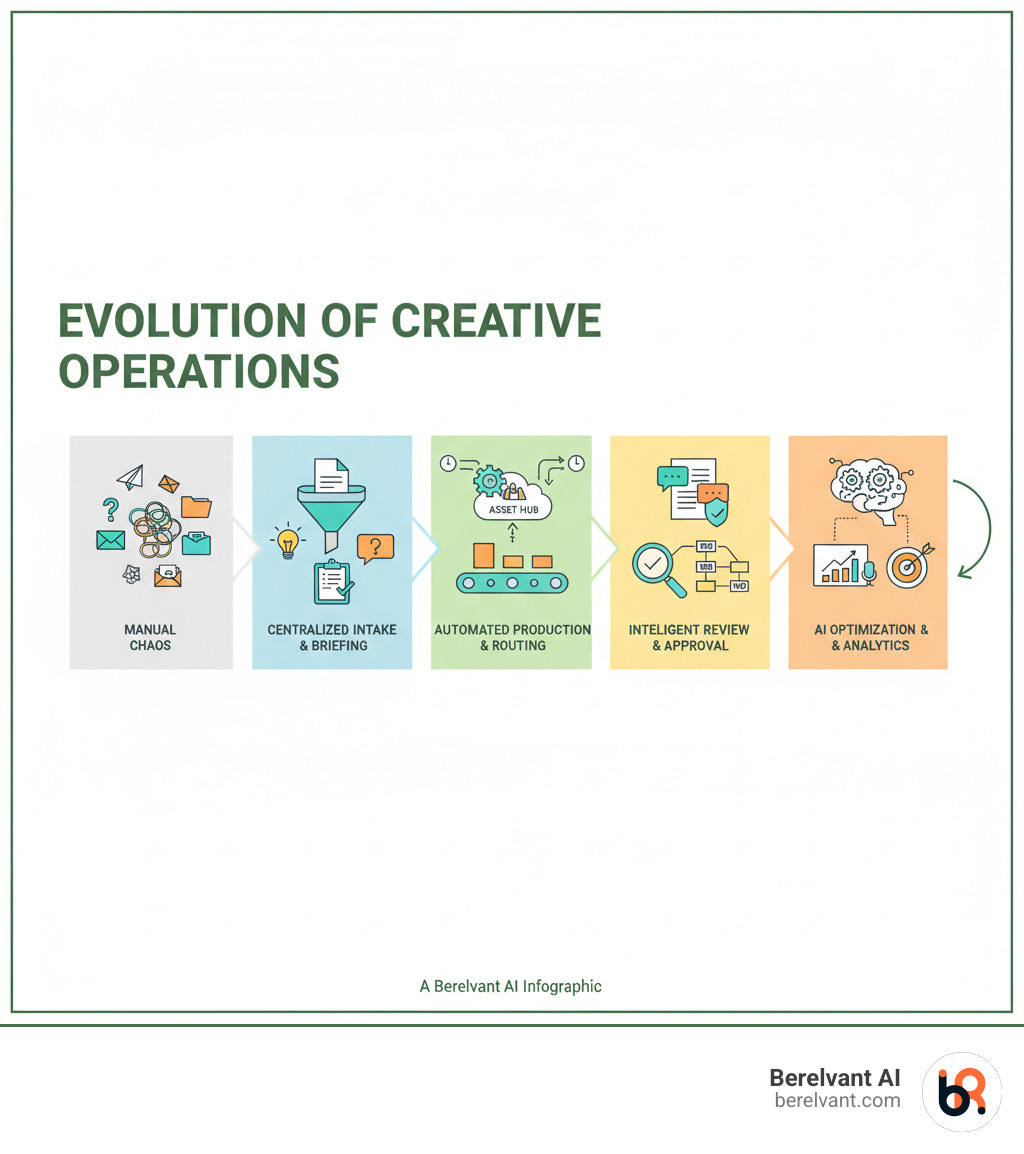
We architect systems around a 5-stage pipeline: Intake, Production, Review, Delivery, and Analysis. Each stage is supported by governance and SOPs to ensure consistency, allowing a team in São Paulo to collaborate seamlessly with legal in New York.
Stage 1: Standardizing Intake and Briefing
Chaos often begins with project requests arriving via email, Slack, or hallway conversations. Creative workflow automation solves this with dynamic request forms that capture project type, audience, messaging, budget, deadlines, and regulatory requirements upfront.
These forms automatically trigger project creation, route work to the right team, and validate resources. This replaces ambiguity with clarity, ensuring every project kicks off with a complete, validated brief. For multi-country teams, this standardization is essential for forecasting capacity and scaling execution.
Stage 2: Streamlining Production and Asset Management
Once a project is briefed, automated task assignment routes work based on skills, availability, and priority. Dependency mapping provides a visual roadmap, identifying potential bottlenecks before they cause delays.
At the center is a centralized Digital Asset Management (DAM) system—a single source of truth for all creative files. This eliminates scattered folders and version confusion. Automated file naming conventions ensure every asset is organized and findable. Integrated collaboration tools enable real-time commenting and communication, allowing creative, legal, and brand teams to work within the same system, regardless of location.
Stage 3: Accelerating Reviews and Approvals with Creative Workflow Automation
The review and approval stage is a common bottleneck. Creative workflow automation transforms this with automated routing that sends assets to designated approvers based on predefined rules. The system manages who needs to review what, in what order, and by when, using both parallel and sequential review options.
In-asset annotation tools allow stakeholders to provide feedback directly on the creative, eliminating confusing email chains. Version comparison features let approvers see what changed between iterations. For compliance-heavy environments, built-in checklists and centralized audit trails document every change and approval, ensuring nothing is published without the required sign-offs. This approach reduces turnaround times, minimizes errors, and ensures compliance across all markets.
The Enterprise Toolkit: Core Components of a Creative Automation Platform
Choosing a creative workflow automation platform for an enterprise is about selecting mission-critical infrastructure. It must handle complex workflows, integrate with your existing tech stack, and meet rigorous security and compliance standards.
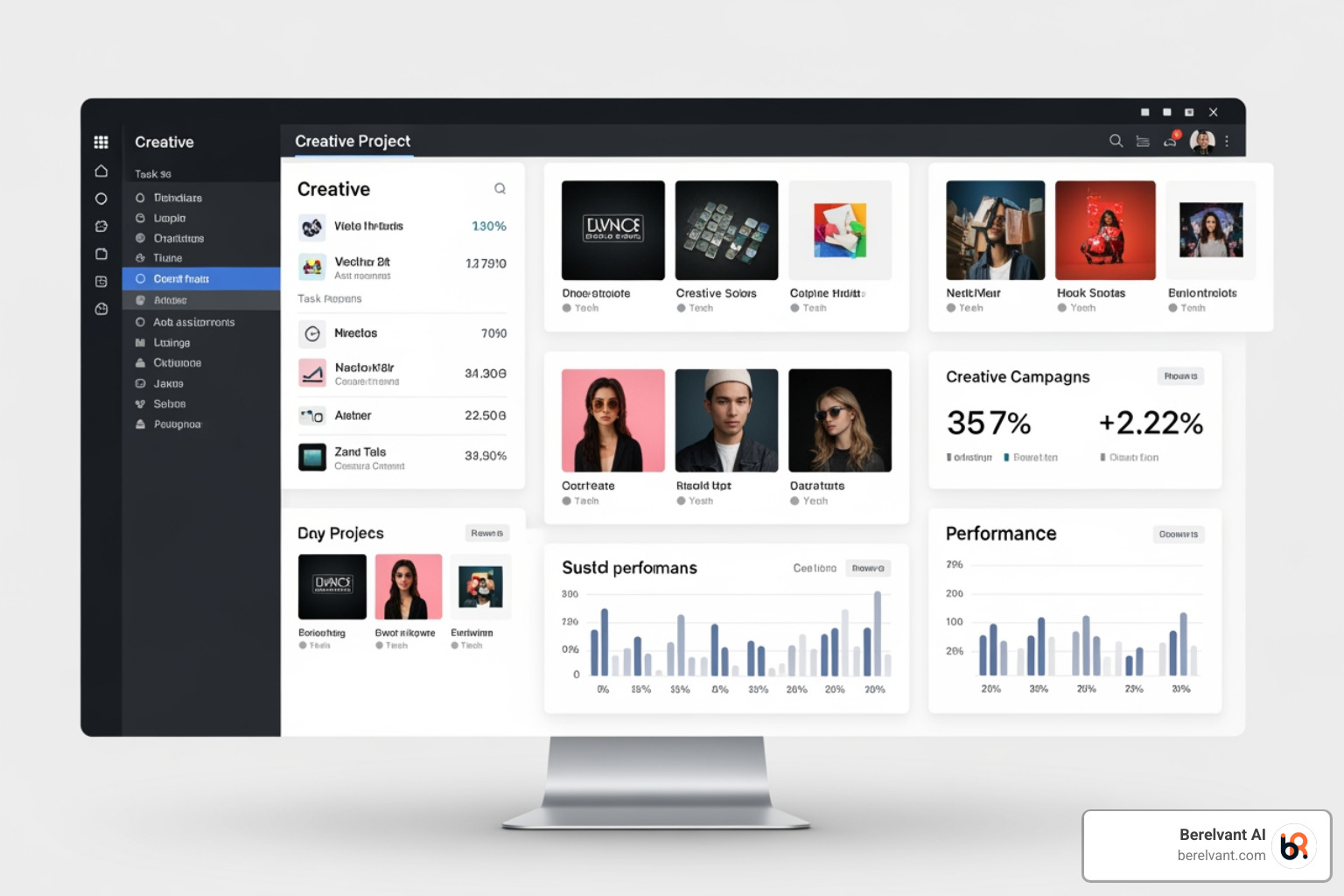
The right platform becomes the operational backbone for global teams, offering extensive API connectivity, enterprise scalability, and granular user permissions. It’s about architecting a system that connects the entire creative lifecycle into a single, scalable engine.
Essential Features for Creative Workflow Automation Software
When evaluating platforms, we look for capabilities that solve real operational challenges:
- Centralized asset proofing allows global stakeholders to review, annotate, and approve assets (video, design, web) directly within the platform.
- Robust version control provides a complete history of every asset iteration with side-by-side comparisons and a clear audit trail.
- A customizable workflow builder lets you design approval chains that match your specific compliance and organizational needs.
- Advanced reporting and analytics offer visibility into approval times, revision counts, and resource utilization to identify bottlenecks.
- Seamless integration with your MarTech stack (DAM, CRM, analytics) through APIs eliminates manual data entry and creates a single source of truth.
Enterprise-Grade Differentiators in Creative Automation
True enterprise platforms are distinguished by several key features:
An asset-centric architecture is designed around the unique requirements of creative files, unlike generic project management tools that treat them as attachments.
Native support for creative file types allows teams to proof video, interactive media, and multilingual assets in-browser without special software. A legal reviewer can leave timestamped comments on a video, accelerating the review process.
Built-in compliance and review features are essential for regulated industries. This includes configurable compliance checklists, dedicated legal review stages, and automated documentation of all approval decisions.
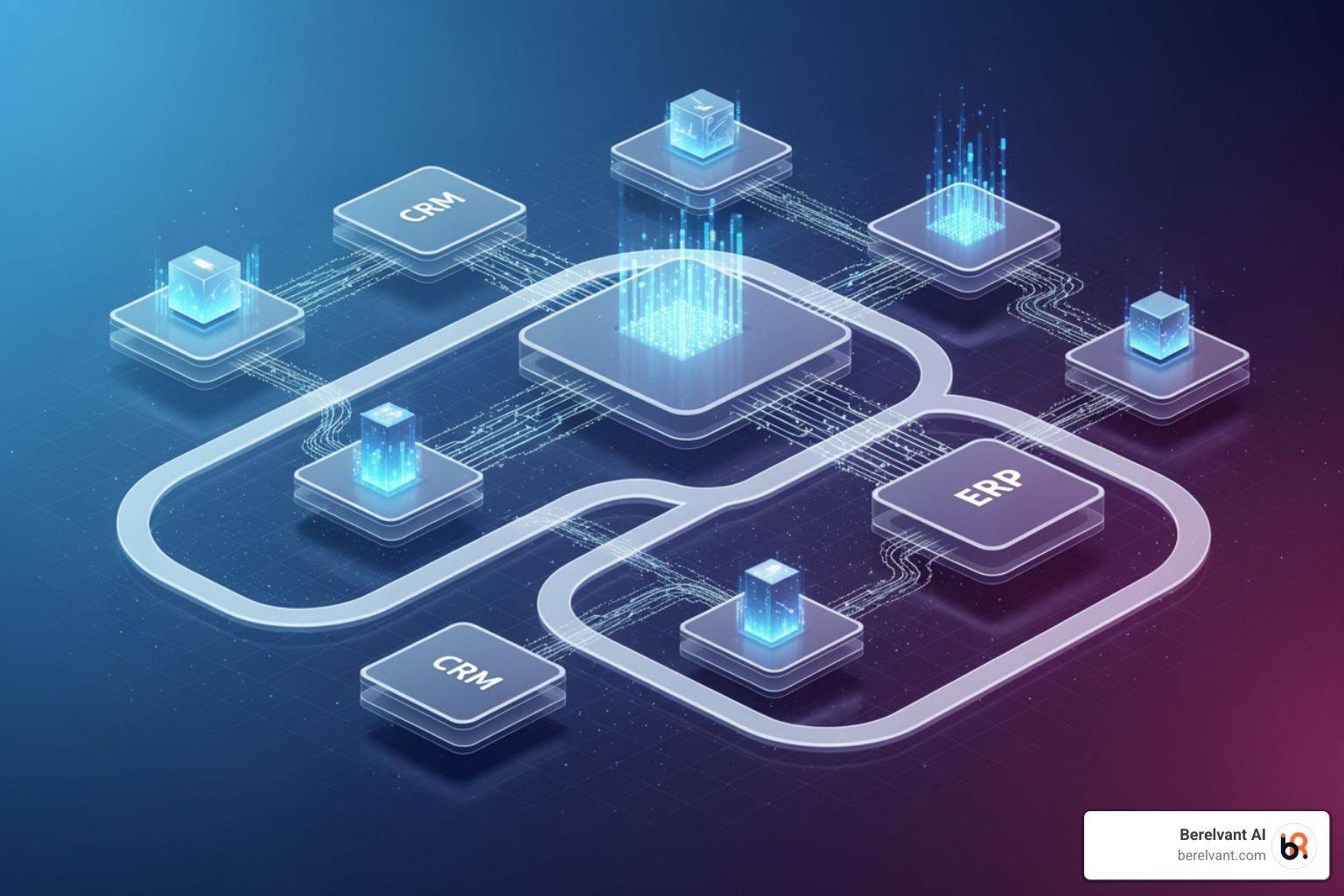
Deep integration with enterprise systems like ERP and CRM ensures creative operations align with broader business objectives and comply with data governance policies, which is critical for managing PII.
The Role of AI in Modern Creative Operations
AI is the speed and scale layer that accelerates delivery and multiplies campaign impact. For enterprise creative teams, AI represents a fundamental shift in content creation, localization, and optimization. With estimates suggesting that up to 30% of the hours currently worked across the U.S. could be automated by 2030 this is an opportunity to reclaim time for strategic thinking.
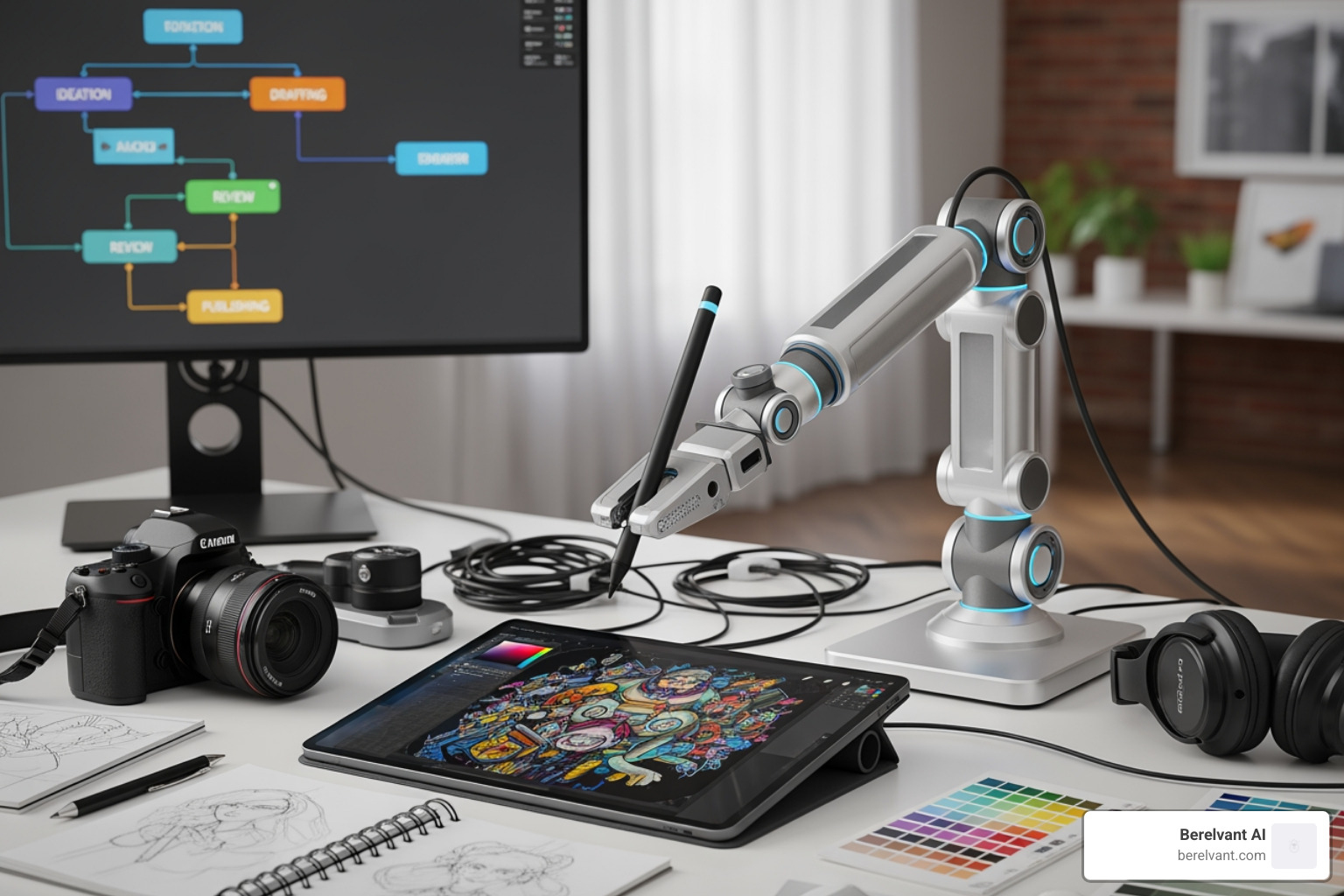
We leverage AI as a strategic partner within our creative workflow automation systems. AI excels at repetitive, data-intensive tasks, freeing creative professionals to focus on strategy and concept development. Key applications include generative AI, predictive analytics, agentic workflows, and intelligent task routing.
AI for Content Generation and Localization
Generative AI is changing how we create and adapt content at scale. From a single master creative, AI can generate hundreds of ad copy and visual variations for different platforms and audiences. This is transformative for multilingual campaigns across the Americas.
- Automated ad copy and creative variations eliminate the manual grind of A/B testing.
- Image and video generation accelerates prototyping and routine production work like resizing assets.
- For AI-powered translation and transcreation, we combine machine speed with human expertise, ensuring cultural nuances and brand voice resonate in every market. More info about multilingual creative services.
- Style and tone adaptation uses AI to analyze market-specific data to maximize resonance in each region.
AI for Process Optimization and Analysis
Beyond content creation, AI acts as an intelligent optimization layer within your workflow.
- Intelligent task routing analyzes project needs and team availability to suggest optimal assignments.
- Predictive deadline analysis uses historical data to provide accurate completion forecasts and flag potential delays.
- Automated content tagging and metadata makes assets instantly searchable, improving reuse and brand consistency.
- Performance forecasting uses predictive analytics to estimate how creative variations will perform before deployment.
- Workflow anomaly detection monitors for unusual patterns like approval spikes or bottlenecks, allowing leaders to address inefficiencies systematically.
Overcoming Implementation Challenges in Complex Environments
Implementing creative workflow automation in a large organization presents real challenges, which are rarely technical at their core. As McKinsey notes, companies could be dismissing up to 70% of potential creative ideas due to inefficient processes that bury good ideas under administrative chaos. The main problems are change management, stakeholder buy-in, technical integration, and data security.
Our approach is methodical, starting with phased implementation to target high-impact areas first. This builds momentum and gives teams early wins. For technical integration, we prioritize platforms with robust APIs to connect with your existing CRM, ERP, and DAM systems, creating a unified engine, not another silo. Data security and compliance are foundational, with strict protocols for encryption, access controls, and audit trails from day one.
Navigating Regulated Industries and Data Privacy
In regulated industries, data privacy and security are paramount. Our approach is built with these constraints as core design principles.
We offer flexible deployment options (on-premise and secure cloud) to meet varying compliance needs. For AI, we prioritize solutions that support local AI model execution, meaning your sensitive data is processed within your secure environment. We implement robust data encryption and build compliant approval workflows with integrated legal review stages. We also have protocols for managing Personally Identifiable Information (PII) within creative assets, adhering to regional data privacy laws across the Americas.
Ensuring Team Adoption and System Mastery
Technology is the easy part; getting your team to use it is where most implementations stumble. Successful adoption of creative workflow automation requires a strategic approach.
- Executive sponsorship signals that this is a strategic initiative, not just an IT project.
- Establishing a center of excellence creates internal champions to define best practices and provide support.
- Role-specific training programs ensure each team member understands how the new system benefits their specific role.
- Communicating the strategic value—the “why” behind the change—is crucial for buy-in.
- Celebrating early wins, like a project completed 50% faster, builds momentum and encourages broader adoption.
- Continuous feedback and optimization loops ensure the system evolves with your team’s needs.
Frequently Asked Questions about Creative Workflow Automation
When we talk to VP and Director-level leaders about creative workflow automation, these strategic concerns consistently arise.
How does creative workflow automation differ from standard project management?
The distinction is critical. Creative workflow automation is asset-centric, built around the creative file itself. It includes purpose-built tools for in-asset proofing, robust versioning of design files, and complex approval flows for creative review.
Standard project management is task-centric, excelling at schedules and resource allocation but lacking specialized tools for creative work. A robust enterprise system unifies both approaches, integrating the organizational power of project management with the specialized features of creative automation.
What is the first step to implementing automation in a large creative team?
For large enterprise teams, the first step is to map and audit your existing workflows. Document current processes to identify your most significant bottlenecks, repetitive tasks, and compliance risks—not where you think they are, but where the data shows they are.
Once you have this baseline, launch a pilot project. Choose a high-impact, low-complexity workflow to automate first, such as the approval process for social media assets. The goal is to demonstrate tangible value quickly to build organizational momentum for a full-scale rollout.
How do you measure the ROI of creative workflow automation?
Leadership needs clear evidence that creative workflow automation drives business growth. We measure ROI through both quantitative and qualitative metrics.
Quantitatively, we track concrete metrics: reductions in project cycle times, lower cost-per-asset, fewer revision rounds per asset, and administrative hours saved. These numbers demonstrate improved speed-to-market and operational efficiency.
Qualitatively, we assess improvements in team morale, creative output quality, brand consistency, and compliance. These factors impact long-term organizational health, talent retention, and the ability to respond to market opportunities. Together, these metrics prove how automation transforms creative operations from a cost center into a strategic growth engine.
Conclusion: Building Your Engine for Growth
The path forward is clear: creative workflow automation is the foundation for how modern enterprises compete. When creative teams operate within structured, automated systems, they shift from reactive services to a proactive, scalable creative engine. This changes how fast you enter new markets, how efficiently you serve multilingual audiences, and how confidently you operate in regulated environments.
The infrastructure you build today determines your capacity tomorrow. Organizations that invest in system-level thinking position themselves to handle future growth. Creative workflow automation breaks the model of linear headcount growth, allowing teams to multiply output without multiplying costs. It enables brand consistency across markets and proves ROI through measurable improvements in cycle time and cost-per-asset.
At Berelvant AI, we architect these systems for enterprise clients facing complex operational challenges. We integrate performance media, multilingual creative, automation, and analytics into one unified engine for industries like financial services, SaaS, and GovTech, where compliance and speed are non-negotiable.
We understand that technology without adoption is just expensive software. Our implementations focus on change management, training, and continuous optimization to build not just the system, but the organizational capacity to use it effectively. The creative teams we work with don’t just move faster; they work with less friction, more clarity, and greater strategic impact.
If you’re ready to transform your creative operations from a cost center into a growth engine, we should talk. Our team specializes in building the technical and strategic frameworks that deliver measurable outcomes.