
Why Enterprise Leaders Are Turning to AI Onboarding Automation
AI onboarding automation is changing how mid-market and enterprise organizations integrate new employees at scale. Here’s what it delivers:
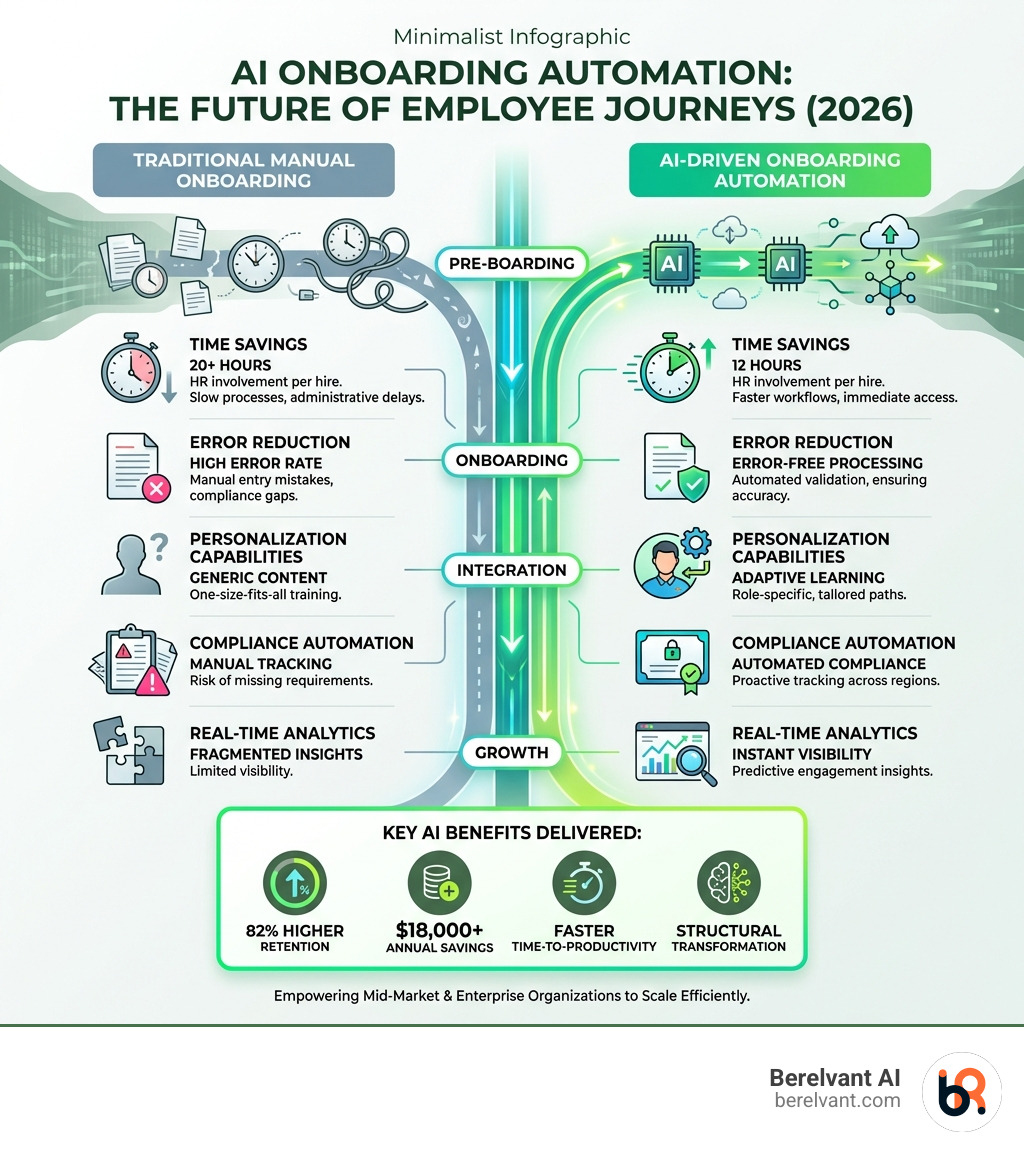
- 82% higher new hire retention when AI is used in onboarding solutions
- Reduction in HR involvement from 20 to 12 hours per new hire
- $18,000+ in annual savings through automated workflows
- Faster time-to-productivity via personalized, role-specific training
- Error-free compliance and document processing across regulated industries
Traditional onboarding relies on manual document collection, generic training materials, and fragmented communication between HR, IT, and hiring managers. This creates delays, compliance gaps, and inconsistent experiences across regions and departments. For enterprise teams operating across the Americas, these inefficiencies compound quickly, especially when onboarding must support multilingual execution, regulatory requirements, and distributed workforces.
AI onboarding automation replaces these bottlenecks with intelligent systems that handle administrative tasks, personalize learning paths, and provide real-time insights into new hire engagement. The technology stack includes Robotic Process Automation (RPA) for document processing and IT provisioning, Machine Learning (ML) for adaptive training recommendations, and Natural Language Processing (NLP) for chatbot-driven support. Together, these tools compress onboarding timelines, improve compliance, and give leadership the visibility needed to predict and prevent early-stage attrition.
The shift from manual to AI-driven onboarding is not incremental—it’s structural. Organizations that implement these systems report measurable improvements in retention, productivity, and cost efficiency. For VP and Director-level leaders managing growth at scale, the question is no longer whether to automate, but how to design systems that align with operational reality, integrate with existing HRIS platforms, and deliver consistent results across markets.
I’m Renzo Proano, founder of Berelvant AI, and I’ve built performance marketing systems and AI automation infrastructure for brands managing growth across financial services, SaaS, GovTech, and e-commerce. My work includes deploying voice agents, WhatsApp onboarding systems, and analytics tooling that reduce execution time and increase operational control—experience that directly applies to AI onboarding automation at enterprise scale.
The Strategic Imperative: Why AI Onboarding Automation Drives Enterprise Growth
For enterprise leaders, investing in AI onboarding automation is a strategic move to boost administrative efficiency, improve retention, ensure compliance, and enable scalability across vast operations like the Americas. In complex environments, every inefficiency is magnified, making every strategic advantage critical.
AI revolutionizes onboarding by making it more efficient and effective, which improves employee satisfaction and boosts retention. In fact, organizations using AI in onboarding solutions retain 82% more new hires and save over $18,000 annually. This builds a loyal, engaged, and productive workforce from day one.
Traditional onboarding’s administrative burden is immense, with manual processes consuming valuable HR time. AI automates these repetitive tasks, streamlines workflows, and handles all necessary documents efficiently. This frees HR teams to focus on higher-value work, creating a more meaningful new hire experience.
Beyond efficiency, AI provides critical control and insight. For leaders in regulated industries or managing multicultural teams, standardizing processes while personalizing experiences is invaluable. This dual capability ensures administrative tasks are handled with precision, while the human element of integrating new talent is improved.
Compressing Time-to-Value and Boosting Retention
One of the most critical metrics for any enterprise is time-to-value: how quickly a new hire becomes a fully productive member of the team. AI onboarding automation dramatically accelerates this. By providing faster ramp-up through adaptive learning paths and immediate access to necessary resources, AI ensures new employees are equipped to contribute much sooner.
AI-powered systems personalize onboarding to match a new hire’s skills and learning preferences. A sales rep might get interactive product training, while an engineer receives specific dev environment instructions. This targeted approach increases engagement and reduces early attrition. By analyzing interaction data, AI can identify disengagement risks, enabling proactive interventions.
The impact on HR teams is profound. AI onboarding has cut HR involvement from 20 to 12 hours per new hire. This frees up capacity for strategic initiatives like talent development and culture building. The time savings translate into operational efficiency, allowing HR professionals to become strategic partners instead of administrative processors.
Ensuring Compliance and Accuracy at Scale
For enterprises, especially those operating across multiple regions like the Americas or in highly regulated sectors, compliance is non-negotiable. Traditional, manual onboarding processes are prone to human error, leading to potential compliance breaches and significant risk. AI onboarding automation fundamentally changes this by embedding compliance into the automated workflow.
AI agents automate document collection, validation, and submission, sending reminders and updates to ensure timely completion of forms like I-9s and regional tax documents. AI-powered standardized workflows guarantee consistency for all new hires, which is crucial for multi-country execution. This reduces paperwork errors, provides comprehensive audit trails, and ensures secure handling of sensitive data to mitigate breach risks.
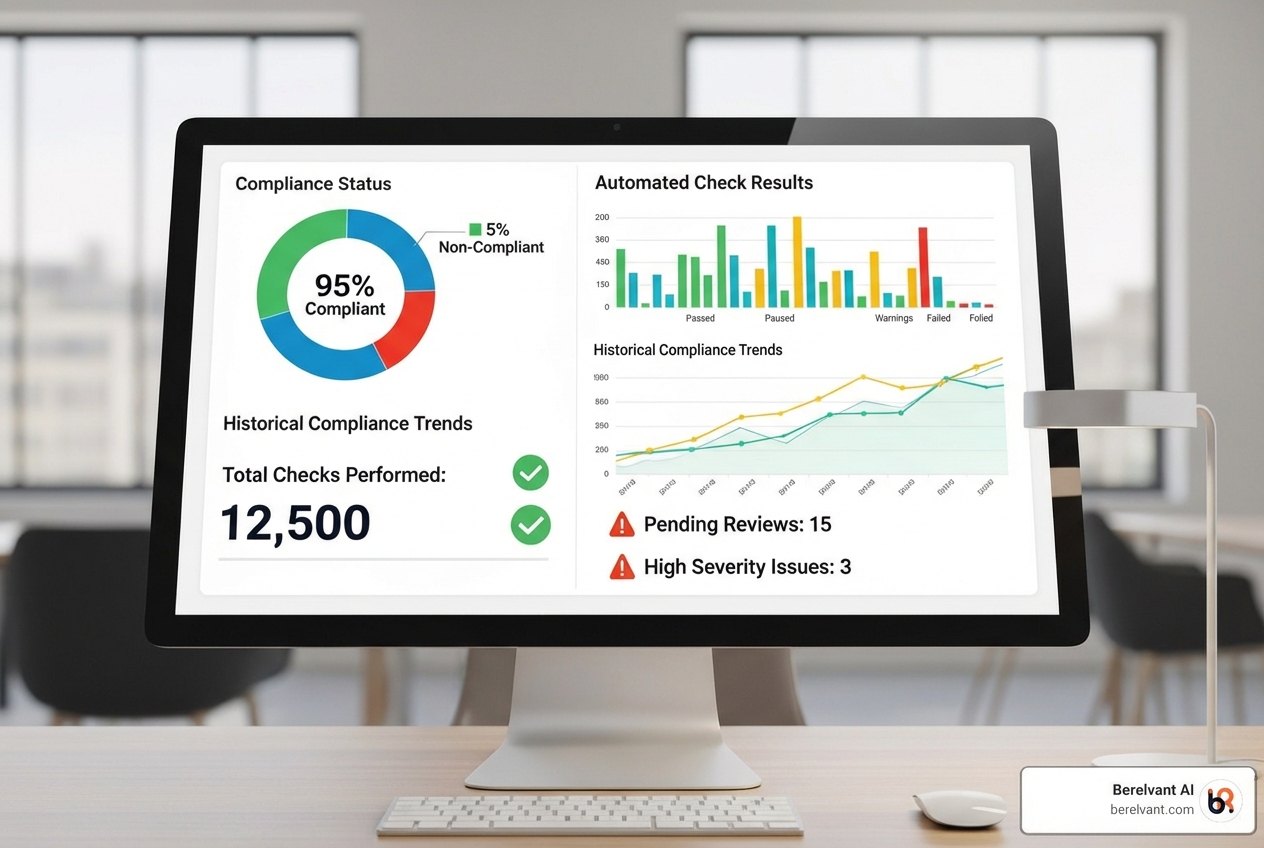
This level of automated compliance not only protects our organization from penalties but also builds trust with our employees, assuring them that their personal and professional data is managed responsibly.
Calculating the ROI of AI Onboarding Automation
AI onboarding automation delivers more than improved processes; it provides a tangible return on investment with substantial financial implications for enterprise organizations.
The most immediate benefit is the reduced administrative overhead. By automating tasks that once required significant human effort—like paperwork processing, benefits enrollment, and IT provisioning—we drastically cut down on labor costs. This reduction in HR involvement directly contributes to a lower cost-per-hire.
Beyond direct cost savings, AI onboarding leads to increased productivity metrics. Faster time-to-productivity means new hires become revenue-generating or value-adding assets sooner. The data-driven insights provided by AI allow us to optimize onboarding paths in real-time, further enhancing this productivity.
The most significant long-term value is higher retention. As mentioned, AI helps retain 82% more new hires. Early-stage employee loss is expensive, covering recruitment costs, lost productivity, and morale impact. Retaining talent preserves institutional knowledge, reduces recruitment cycles, and fosters a stable workforce, strengthening the bottom line and organizational resilience.
Consider the contrast between manual and AI-automated onboarding tasks:
- Manual: Hours spent on data entry, chasing signatures, answering repetitive questions, generic training, and inconsistent follow-ups. High error rate, slow ramp-up, significant HR time investment.
- AI-Automated: Instant document processing, e-signatures, 24/7 chatbot support, personalized adaptive learning, automated check-ins. Near-zero error rate, rapid ramp-up, HR time redirected to strategic engagement.
The cumulative effect of these efficiencies and retention improvements demonstrates a clear, compelling ROI for AI onboarding automation at the enterprise level.
Core Technologies & Applications in Onboarding Systems
Behind every successful AI onboarding automation system lies a sophisticated interplay of core technologies. We leverage these advanced tools to build robust, scalable, and intelligent onboarding solutions that meet the demands of enterprise-level operations.
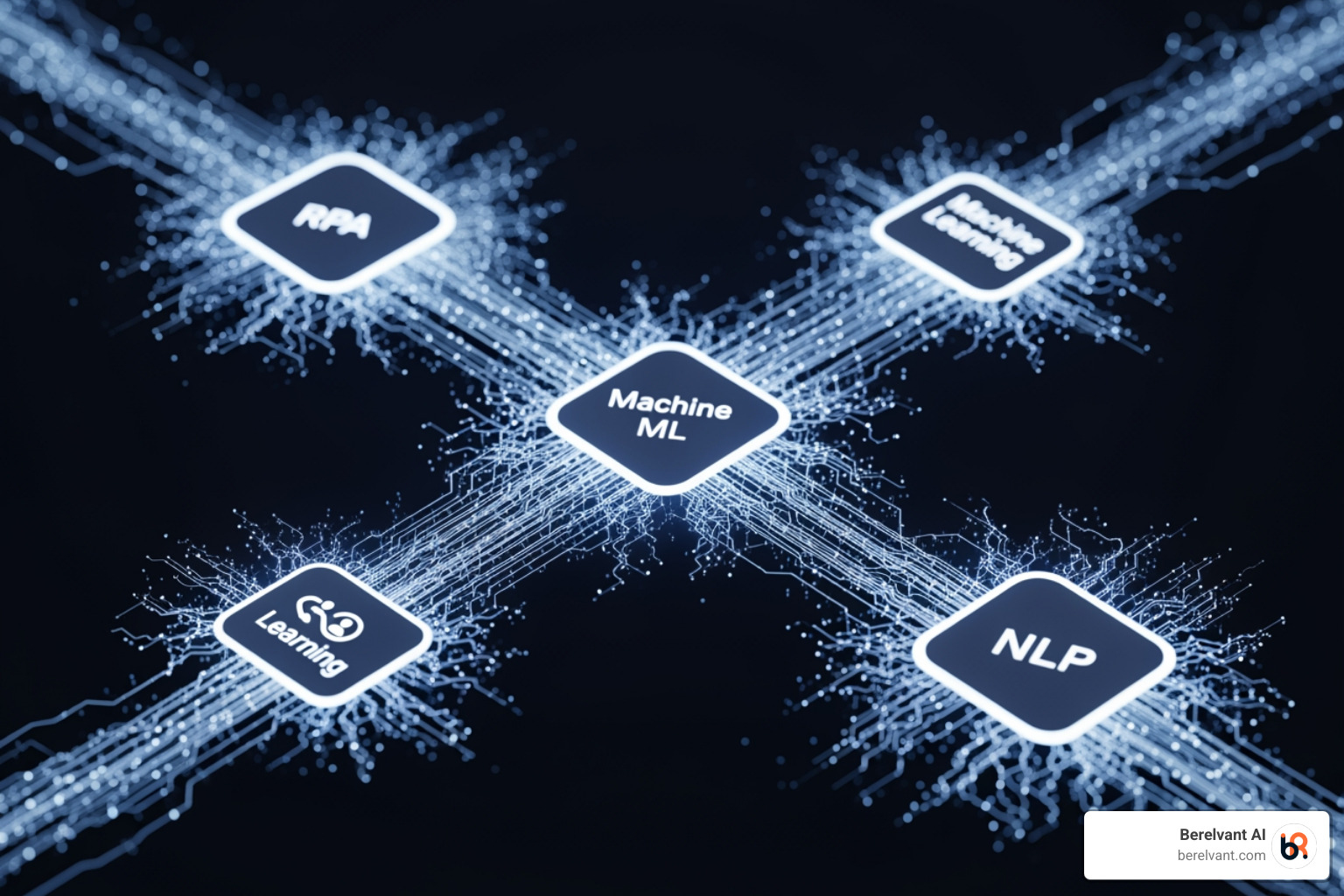
Robotic Process Automation (RPA)
RPA is the workhorse of our automation systems. It excels at automating high-volume, repetitive, rule-based tasks. In onboarding, RPA handles the grunt work: extracting information from resumes and cover letters, populating forms, initiating background checks, and triggering cross-departmental notifications to IT for equipment setup or to finance for payroll enrollment. This ensures precision and speed in administrative processes, especially critical when dealing with thousands of employees.
Machine Learning (ML)
ML is the brain that brings intelligence to the process. It enables adaptive learning paths, personalizes content delivery, and predicts engagement levels. By analyzing data from employee profiles, performance, and interaction patterns, ML algorithms can recommend specific training modules, identify skill gaps, and even flag new hires who might be at risk of disengaging. This allows for truly dynamic and responsive onboarding journeys.
Natural Language Processing (NLP)
NLP powers the conversational aspects of AI onboarding. It allows chatbots and virtual assistants to understand and respond to new hires’ questions in natural language, providing instant support and guidance. NLP also helps in analyzing feedback from surveys, extracting key sentiments, and summarizing complex topics, turning raw text into actionable insights.
Generative AI
Generative AI, a rapidly evolving field, is adding a new dimension to onboarding. It can create personalized welcome messages, draft role-specific training content, or even generate entire curricula based on a new hire’s profile. This capability allows for unprecedented levels of customization and content creation at scale, ensuring every new hire receives uniquely relevant information. You can Explore AI Digital Marketing to see how generative AI is changing content creation across various domains.
Together, these technologies form a powerful ecosystem, changing onboarding from a series of manual problems into a seamless, intelligent, and engaging experience.
Automating High-Volume Administrative and IT Provisioning Tasks
For enterprises, the volume of administrative and IT provisioning tasks during onboarding is overwhelming. AI onboarding automation excels here, executing high-volume, repetitive tasks with speed and precision.
AI-powered RPA agents handle the administrative checklist: automating paperwork, managing e-signatures, initiating background checks, and enrolling new hires in payroll and benefits. They pre-fill forms, route documents, and ensure all steps are completed without manual intervention. This saves HR time, reduces human error, and ensures compliance from day one.
Coordinating with IT is a classic bottleneck, especially for distributed workforces across the Americas. AI automates system access and hardware provisioning by triggering role-based IT requests for email accounts, software access, and laptop configuration, including shipping for remote staff. Automated notifications to Finance, Facilities, and managers ensure everyone is prepared. The system can even manage offboarding logistics like equipment returns, demonstrating its full lifecycle value.
This comprehensive automation of administrative and IT tasks ensures that new hires have everything they need from day one, allowing them to focus on their roles rather than chasing down equipment or battling with system access.
Delivering Hyper-Personalized Onboarding and Training Journeys
AI onboarding automation delivers hyper-personalized onboarding and training journeys, moving beyond the ineffective one-size-fits-all approach. This is critical for diverse enterprise workforces with varied roles and cultural backgrounds across the Americas.
AI, particularly through machine learning, enables us to create adaptive learning paths. Instead of generic modules, new hires receive content custom to their specific role, existing skillset, and identified knowledge gaps. For a technical employee, this might mean hands-on coding challenges; for a new manager, leadership development programs. This ensures relevance and maximizes engagement, accelerating their mastery of essential skills.
Role-specific content delivery goes hand-in-hand with adaptive learning. AI systems can automatically curate and deliver training materials, documentation, and resources directly relevant to a new hire’s function. This prevents information overload and ensures they receive precisely what they need to succeed.
For our multinational operations, multilingual training modules are a game-changer. AI can translate and localize onboarding materials with precision, ensuring consistency and clarity across different languages and cultural contexts. This is crucial for seamless integration of multicultural audiences.
Beyond skills, cultural assimilation content helps new hires understand our company values, norms, and social dynamics. AI can facilitate buddy and mentor matching based on compatibility and shared interests, fostering connections and a sense of belonging. It can also curate a ‘Day 1 digest’ with company values and the new hire’s first-day schedule, making them feel welcome and informed.
This level of personalization, driven by AI, was once an incredibly time-consuming task. Now, it’s scalable, efficient, and profoundly impactful. To explore how similar AI-driven personalization can transform your outreach, you can Learn about AI Marketing Strategies.
Enhancing New Hire Engagement with Intelligent Tools
Engagement is the cornerstone of successful onboarding. AI onboarding automation provides tools to keep new hires connected, informed, and motivated, creating a supportive and responsive experience at enterprise scale.
Deploying 24/7 AI-powered chatbots for FAQs is highly effective. New hires get instant answers to questions about benefits or IT, reducing frustration and wait times. For example, IBM’s Watson Assistant has been shown to cut time spent on common HR tasks by 75%, freeing up human experts for more complex issues.
Automated check-ins and pulse surveys are another key feature. AI systems can schedule regular touchpoints, gathering feedback on the onboarding experience, identifying potential issues, and gauging sentiment. This proactive approach allows us to address concerns before they escalate, showing new hires that their experience matters.
Personalized welcome messages, often generated by AI, can make a new hire feel valued from the moment they sign their offer. These aren’t generic emails; they can incorporate details about their role, team, and even personal interests, creating a warm and inviting first impression. Additionally, AI can assist in scheduling automated introductions, connecting new hires with key team members, mentors, or cross-functional colleagues, fostering early network building.
These intelligent tools ensure that new hires feel supported and integrated, changing what could be an overwhelming experience into an engaging and positive journey.
A Framework for Implementing Scalable AI Onboarding Systems
Implementing AI onboarding automation at an enterprise level requires more than just picking a tool; it demands a strategic framework. We approach this as a systems-level challenge, focusing on seamless integration, robust data governance, clear performance metrics, and a well-managed phased rollout. This ensures that the technology serves our strategic objectives across all our operations, including those in Westport, CT, and Fairfield, CT.
Selecting the Right Technology Stack for Your Enterprise
Choosing the right technology stack is paramount for a successful AI onboarding automation implementation. For enterprise organizations, this means looking beyond basic features to ensure the solution integrates seamlessly with our existing infrastructure and can grow with us.
First, integration with existing HRIS (Human Resources Information Systems) like Workday or BambooHR is non-negotiable. Our chosen AI solution must be able to pull and push data efficiently, acting as an extension of our core HR operations rather than a standalone silo. This ensures data consistency and avoids manual data entry, which defeats the purpose of automation.
Scalability and customization capabilities are equally critical. As a growth partner across the Americas, our solutions must handle fluctuating employee volumes and adapt to diverse departmental needs, regional regulations, and cultural nuances. The ability to customize workflows, content, and user interfaces is essential for delivering truly personalized and effective experiences.
Security and data privacy compliance are foundational. Especially in regulated industries, we must ensure that any AI onboarding tool adheres to the highest standards of data protection, aligning with global and local privacy laws. API accessibility is also key, allowing for flexible integration with other enterprise systems and future technologies.
Finally, vendor support for multilingual execution is vital for our operations across the Americas. The ability of the vendor to provide and support features for multiple languages ensures a consistent and inclusive experience for all new hires. This holistic approach to technology selection ensures our investment in AI onboarding systems yields long-term strategic value. If you’re wondering how an agency like ours steers these complex integrations, you can Discover our AI Digital Agency services.
Integrating AI into Existing Onboarding Workflows
Integrating AI onboarding automation successfully is a meticulous process. It requires a deep understanding of current operations to thoughtfully weave AI into existing HR processes, not just drop it in.
First, we map current onboarding processes, identifying every touchpoint, task, and stakeholder. This audit reveals delays, repetitive manual tasks, and frequent information requests, pinpointing bottlenecks where AI can deliver the most impact.
Next, we design hybrid human-AI workflows. The goal is not to replace human interaction entirely but to augment it. AI handles the administrative heavy lifting, freeing up our HR teams and hiring managers to focus on high-value, human-centric activities like mentorship, cultural integration, and personalized guidance. For example, AI can automate the scheduling of an introductory meeting, but the quality of that meeting remains a human responsibility.
We then pilot the new AI-powered workflow with a specific department or region. This controlled rollout allows us to gather feedback, identify unforeseen challenges, and iterate quickly before scaling. For our operations in Connecticut, we might pilot with a smaller team in Westport, CT, before rolling it out across all departments. This phased approach minimizes disruption and ensures a smooth transition. For insights into how we manage such strategic deployments, you can See how we manage AI Campaigns.
Overcoming Implementation Challenges and Limitations
While the benefits of AI onboarding automation are clear, enterprise-level implementation has challenges. We address these head-on, understanding that success requires careful planning and continuous optimization.
One significant hurdle is data quality and availability. AI systems are only as good as the data they’re trained on. Ensuring clean, accurate, and comprehensive data from various HR systems is crucial. This often requires significant upfront work in data cleansing and integration.
Managing employee and stakeholder expectations is also vital. It’s important to communicate clearly that AI is an improvement tool, designed to make processes more efficient and personalized, not to eliminate human roles. We emphasize that the human touch is not lost; rather, it’s liftd, allowing our teams to focus on empathy and strategic engagement.
Technical debt from legacy systems can also pose a limitation. Many large enterprises operate with a patchwork of older HRIS and IT systems that may not easily integrate with modern AI platforms. This requires careful architectural planning, potentially involving API layers or middleware solutions to bridge the gap.
Despite these challenges, the momentum for AI adoption in HR is undeniable. A recent survey shows 70% of senior-level HR executives are scaling programs using generative AI to improve administrative functions. This underscores a collective understanding that the benefits far outweigh the complexities and that strategic AI investment is a necessity for future-proofing our workforce.
The Future of Onboarding: Predictive Analytics and Hyper-Automation
The evolution of AI onboarding automation is not static; it’s a dynamic journey towards increasingly intelligent and autonomous systems. For enterprise leaders, this future holds the promise of predictive analytics and hyper-automation, changing onboarding into a strategic talent management function.
From Reactive to Predictive: Anticipating New Hire Needs
The next frontier in AI onboarding automation is the shift from reactive to predictive capabilities, powered by advanced machine learning. This moves beyond task automation to anticipating new hire needs.
By analyzing pre-hire data like interview performance and assessments, AI can predict onboarding success. This helps identify a new hire’s potential challenges and strengths before day one.
Critically, AI can identify at-risk employees before they disengage. By monitoring engagement signals and performance metrics, AI systems flag struggling individuals, enabling HR and managers to proactively offer support and intervene before attrition occurs.
Furthermore, AI will continuously optimize onboarding paths in real-time based on individual performance and progress. If a new hire is mastering certain skills quickly, the system can accelerate their journey; if they’re struggling, it can provide additional resources or alternative learning modules. This dynamic adaptation ensures that every new hire receives the most effective and efficient onboarding experience possible, maximizing their potential contribution.
The Rise of AI Agents in HR and Onboarding
Autonomous AI agents are moving from concept to reality, set to transform HR and onboarding. These intelligent agents manage complex, multi-step processes with minimal human oversight.
Imagine AI agents autonomously managing the entire onboarding process: sending offer letters, provisioning IT equipment, handling benefits enrollment, and scheduling mentor meetings. They can proactively initiate tasks and follow up to ensure timely, compliant completion of every step.
Conversational AI will evolve beyond simple chatbots to handle complex query resolution, acting as a sophisticated virtual HR assistant. These agents will be able to understand nuanced questions, access vast knowledge bases, and even perform actions on behalf of the employee, like submitting a support ticket or updating personal information.
Proactive scheduling and task management capabilities of AI agents will ensure that all stakeholders—new hires, managers, HR, IT—are kept informed and on track. This means automated reminders for training completions, nudges for managers to conduct check-ins, and smart scheduling of team introductions.
Finally, the future will see AI agents simulating job roles for immersive training experiences. New hires could engage with AI-powered scenarios that mimic real-world challenges, allowing them to practice skills and receive immediate, personalized feedback in a safe environment. This level of immersive, hands-on training will significantly accelerate skill development and confidence. To understand the broader implications of AI agents, you might be interested in More on AI Calling Agent Automation.
Conclusion
The shift from manual to sophisticated AI onboarding automation is pivotal for enterprises. This change improves the employee experience, drives retention, ensures compliance, and accelerates growth across complex operational landscapes like the Americas.
The strategic benefits are clear: reduced administrative burden, cost savings, higher retention, and faster time-to-productivity. AI personalizes the journey by adapting to individual needs while ensuring strict compliance. Core technologies like RPA, ML, and NLP create intelligent systems that streamline tasks, deliver custom training, and foster engagement.
Implementing scalable AI onboarding systems requires a systems-thinking approach, careful tech stack selection, and a phased integration strategy. Despite challenges like data quality, the momentum is clear, with 70% of HR executives scaling AI programs, showing a collective commitment to this future.
Looking ahead, predictive analytics and AI agents will further revolutionize onboarding. This will allow us to anticipate needs, intervene proactively, and offer autonomous, immersive experiences for a continuously adaptive and effective process.
At Berelvant, we believe that future-proofing your workforce means embracing intelligent, personalized journeys. As your enterprise growth and performance partner, we build and manage end-to-end acquisition systems that leverage AI as the speed and scale layer, accelerating delivery and multiplying impact. We specialize in solving complex challenges in regulated industries, compliance-heavy environments, and multicultural audiences across the Americas. By integrating performance media, multilingual creative, automation, and analytics, we empower you to achieve measurable revenue growth and ensure your new hires are not just onboarded, but truly integrated for success. Develop your enterprise AI marketing strategies with us and let’s build the future of work, together.