
Why AI Campaign Management Is Reshaping Modern Marketing
AI campaign management uses artificial intelligence to automate, optimize, and scale marketing campaigns. Unlike traditional methods that rely on manual adjustments, AI continuously learns from data, adjusts strategies in real-time, and personalizes content at a scale impossible for human teams alone.
Quick Overview: What AI Campaign Management Does
| Traditional Campaign Management | AI Campaign Management |
|---|---|
| Manual audience segmentation | Automated psychographic analysis |
| Weekly or monthly optimization | Real-time adjustments to bids and creative |
| Channel-by-channel execution | Unified cross-channel orchestration |
| Reactive performance reviews | Predictive forecasting and recommendations |
| Limited personalization | Hyper-personalization at scale |
Modern marketers manage campaigns across 15+ channels simultaneously. Traditional approaches can take weeks to launch a single campaign; AI compresses that timeline to hours while improving performance. The results are clear: The British Council achieved a 70% reduction in content creation costs, and Volkswagen saw a 14% increase in dealership orders using AI recommendations.
This isn’t about replacing marketers. It’s about removing bottlenecks, eliminating manual work, and giving teams the leverage to operate at enterprise scale without the overhead.
I’m Renzo Proano, founder of Berelvant AI. Having managed over $300 million in digital ad spend, I’ve built AI systems for brands like Microsoft and Cartier that replace fragmented workflows with predictable, scalable results.
The AI Engine: Core Technologies Powering Modern Campaigns
Every AI campaign management system runs on a foundation of specific technologies that turn customer data into campaigns that adapt and improve on their own. Traditional marketing automation follows rules you set; AI learns patterns you never programmed.
- Machine Learning (ML) is the engine that finds patterns in campaign data, analyzing thousands of customer interactions to identify what predicts a conversion. It optimizes targeting, bidding, and messaging, becoming more accurate with more data.
- Natural Language Processing (NLP) gives AI the ability to understand text. It analyzes customer reviews and social media comments for sentiment analysis and powers conversational AI tools that respond to customers in real-time.
- Large Language Models (LLMs) like GPT enable AI to write human-like marketing copy. Trained on massive text datasets, they can generate ad headlines, emails, and landing page copy that matches your brand voice in seconds.
- Predictive Analytics uses historical data to forecast what’s likely to happen next, such as which leads will convert or which channels will deliver the best ROI. This shifts marketing from reactive to proactive.
- Deep Learning takes pattern recognition further, identifying micro-segments that share subtle behavioral patterns you’d never find with traditional analysis.
These technologies work together to optimize spend, refine messaging, generate copy, and find hidden opportunities. If you want to see how we integrate these technologies, you can find more info about our AI services.
How AI Assists in Planning and Strategizing
AI-powered planning starts with data, not assumptions. Audience segmentation becomes precise, moving beyond simple demographics to create psychographic insights that reveal why people buy. You end up with segments like “value-conscious switchers” instead of “women 25-34.”
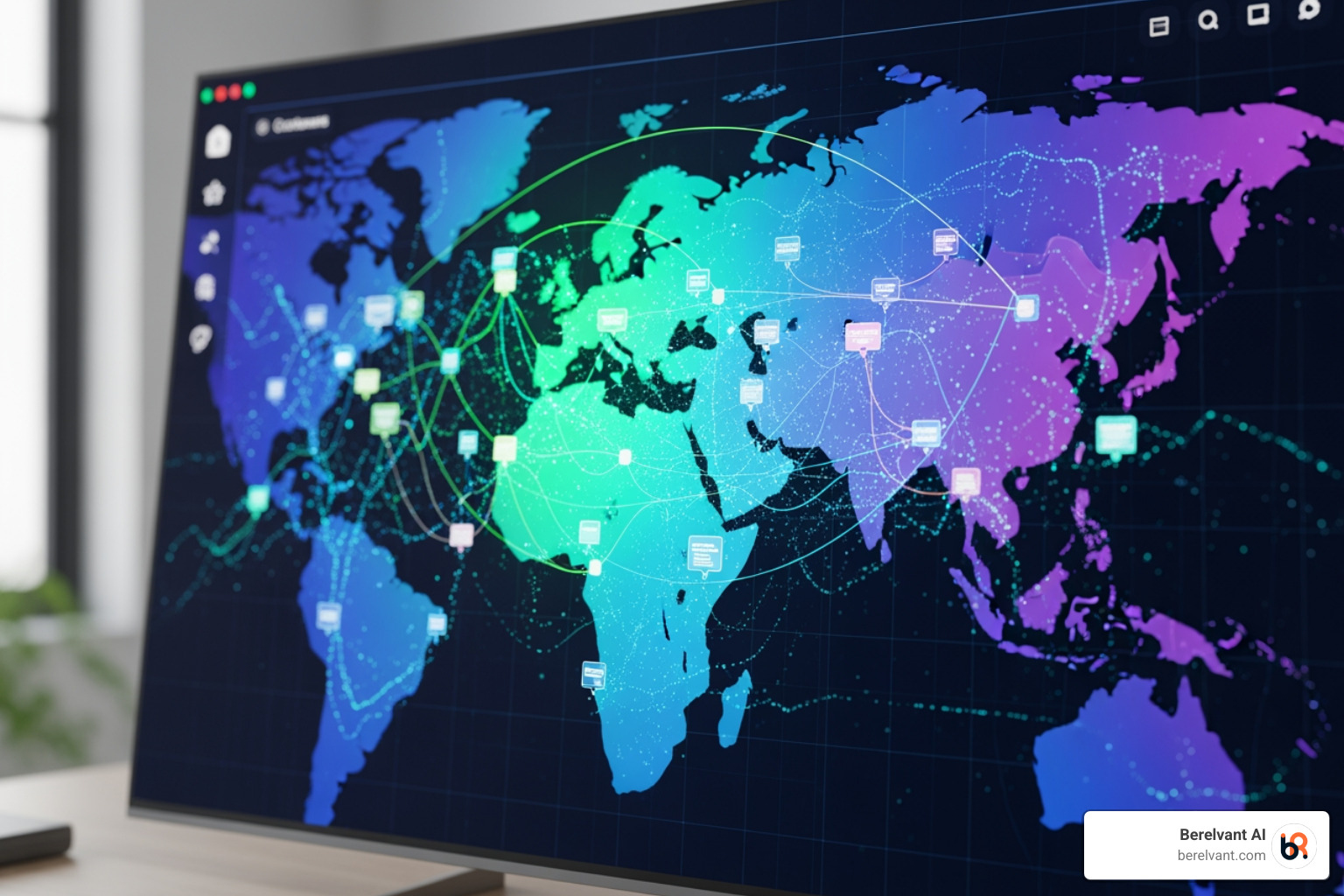
Predictive forecasting analyzes historical and external data to predict campaign performance before you spend a dollar. Market trend analysis and competitor intelligence become continuous, alerting you to shifts in real-time. Finally, budget allocation models dynamically shift spend to the highest-performing channels based on metrics like cost-per-click (CPC), cost-per-acquisition (CPA), and return-on-ad-spend (ROAS), delivering up to 41% greater efficiency than manual methods.
The Role of AI in Content and Personalization
AI campaign management delivers personalized content at a scale previously unimaginable. Hyper-personalization means every customer sees content customized to their interests and behavior. Virgin Voyages used AI for personalized videos, and Nutella created millions of unique labels with AI image generation.
Dynamic creative optimization automatically tests and adjusts ad elements like headlines and images in real-time, serving the best-performing combinations to the right audiences. This approach embodies what Forbes calls data-powered creativity.
AI-generated copy from LLMs accelerates content creation while maintaining brand voice consistency. The British Council used AI to create over 1,000 localized ad variations, achieving a 70% reduction in marketing content creation costs. AI image and video creation tools remove design bottlenecks, as seen when Heinz used AI to generate images that earned over a billion impressions. AI handles the execution, so your team can focus on strategy.
Automating Execution and Real-Time Optimization
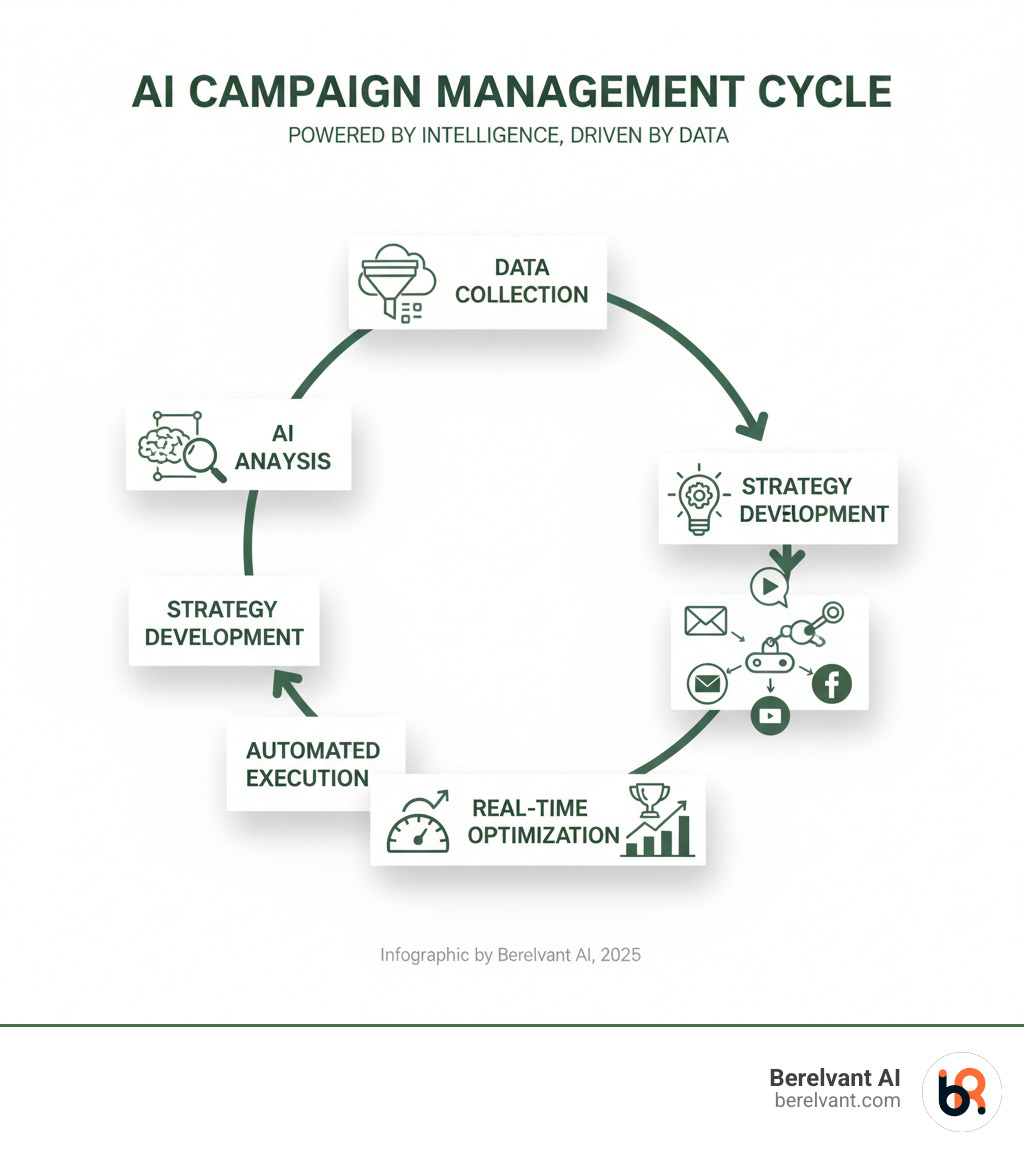
This is where AI campaign management changes the game. Instead of manually adjusting bids or reallocating budgets, AI takes over the heavy lifting. It’s like having a team of experts watching every metric and fine-tuning every detail around the clock. Our systems don’t just follow rules; they learn from every click and conversion, spotting patterns humans would miss.
Programmatic advertising is where AI flexes its muscles. Through real-time bidding, our platforms automatically buy and place ads, making split-second decisions on which impressions to bid on. Volkswagen proved this approach with a 14% increase in dealership orders after letting AI guide their media buying.
Other key automations include:
- Budget optimization: AI continuously monitors metrics like cost-per-click (CPC), CPA, and return-on-ad-spend (ROAS), shifting spend to top performers in minutes.
- A/B testing: AI runs multivariate tests across dozens of variations simultaneously, identifying winning combinations in days, not weeks.
- Anomaly detection: The system constantly scans for irregularities—like a sudden drop in click-through rates—and alerts our team or takes corrective action.
- Channel mix modeling: AI maps the interactions between your 15+ channels, ensuring your strategy is cohesive rather than fragmented.
This level of automation is transformative, especially for clients in regulated industries. Your team can focus on strategy while AI handles execution with a precision humans can’t match at scale. To see how we apply these principles, check out More info about Connected TV Advertising.
How AI Optimizes Ad Placement and Bidding
Managing ad placement and bidding manually is like playing chess on fifty boards at once. AI campaign management brings order to this chaos. Our systems analyze historical data to predict which placements will deliver results, with studies showing AI-driven budget allocation can be up to 41% more efficient.

Dynamic bid management is where AI’s real-time capabilities shine. It continuously monitors market conditions and audience response, automatically increasing bids for high-value traffic and reducing them when performance declines. Through contextual analysis, our systems also ensure your ads appear in relevant, brand-safe environments. Predictive ad delivery takes this further by anticipating the best times and platforms to reach specific audiences, concentrating delivery during high-value windows. All this happens while tracking key metrics like cost-per-click (CPC), CPA, and return-on-ad-spend (ROAS) to refine bidding strategies minute by minute.
Analyzing Performance and Generating Actionable Insights
Many marketing teams are drowning in data but starving for insights. AI campaign management turns raw numbers into clear direction. Our platforms consolidate data from over 120 advertising platforms into a single dashboard, giving you a real-time, unified view.
What matters more is full-funnel attribution that connects ad spend to revenue. Our systems trace the complete customer journey, showing exactly how each dollar spent impacts your bottom line. Conversion funnel diagnostics reveal where potential customers drop off, and the AI suggests specific improvements based on what’s working elsewhere.
This is where AI moves beyond reporting to true intelligence: actionable recommendations. The system analyzes performance by creative, format, and platform, suggesting budget shifts and optimizations. Instead of staring at spreadsheets, you get clear direction on how to improve. This streamlined analysis can boost marketing team productivity by up to 30% and eliminate hours of manual reporting each week, freeing your team for strategic and creative thinking.
Navigating the Shift: Challenges and How to Prepare for AI Campaign Management
Implementing AI campaign management isn’t flipping a switch. It requires thoughtful planning and a willingness to rethink how your marketing team operates. The companies that thrive are those who prepare properly and address challenges head-on.
Preparing Your Data and Teams for AI
Fancy algorithms don’t matter if your data is a mess. The foundation of effective AI is clean, organized data.

- Data Consolidation and Structuring: Start by bringing all your data—from your CRM, ad platforms, analytics, and email tools—into a centralized data warehouse. This requires building ETL (Extract, Transform, Load) pipelines to automatically collect and prepare your data.
- Normalize Data: Standardize naming conventions and metric definitions across all platforms. Your AI needs to compare apples to apples.
- Establish Human Oversight: AI is a powerful assistant, not an autonomous decision-maker. Create clear workflows for your team to review AI recommendations, validate changes, and provide strategic context. This human-AI collaboration is where the magic happens.
- Foster an AI-Ready Culture: Help your team see AI as a tool that makes their jobs better, not a threat. Invest in training to build AI literacy. Companies that accept AI as an augmentation tool see their teams become more productive and valuable. Shopify, for example, has encouraged all employees to use AI tools to this end.
Key Challenges in Implementing AI Campaign Management
Even with preparation, you’ll face specific problems. Understanding them ahead of time is key.
- Data Security and Privacy: Handling customer data requires strict compliance with regulations like GDPR and CCPA. Security and privacy must be built into your AI solution from the ground up, especially in regulated industries like finance or healthcare.
- Algorithmic Bias and the “Black Box” Problem: AI learns from your data, so any existing biases can be amplified. Human oversight is critical to ensure fairness. Furthermore, some AI models can be a “black box,” making recommendations without clear reasoning. We work to build transparent models that explain their logic to build trust.
- Integration Complexity: Your existing marketing stack wasn’t built for AI. Integrating everything smoothly requires technical expertise and custom development. Plan for this process and allocate resources accordingly.
- Team Upskilling and Change Management: The biggest hurdle can be cultural. Address fears about job loss by framing AI as a tool for augmentation. Overcome resistance with clear communication, training, and celebrating early wins. Your team will need new skills, but they will become more strategic and valuable as a result.
- Measuring ROI: Establish clear KPIs from the start. Track not just campaign metrics but also time saved, improvements in efficiency, and overall productivity gains to demonstrate AI’s specific contribution.
For more detailed guidance on building an AI-ready marketing operation, explore our AI Marketing Strategies.
The Future is Autonomous: What’s Next in Marketing?
If you think AI campaign management is impressive now, the next wave will be truly transformative. We’re moving toward a future where campaigns run themselves with a level of intelligence and autonomy that feels like having a brilliant marketing director who never sleeps.
Digital teammates are already here. Imagine an AI agent that doesn’t just wait for instructions but actively monitors your brand, spots emerging trends, suggests content adjustments, and identifies high-value segments. These aren’t hypotheticals—they’re capabilities we’re deploying now. These agents learn your brand voice, understand your goals, and get smarter with every campaign, multiplying what your team can accomplish.
Cross-channel orchestration is becoming seamless. Soon, AI agents will coordinate campaigns across all 15+ platforms simultaneously, ensuring consistent messaging and optimal timing. A customer’s journey will be tracked and acted upon cohesively, from an Instagram ad to a follow-up email to a retargeting campaign.
Proactive optimization is the real game-changer. The next generation of AI will be predictive, not just reactive. These systems will anticipate market shifts, predict audience behavior, and make autonomous adjustments to your campaigns before you even realize there’s an opportunity or a problem.
The end of manual campaign setup is within sight. Our vision is a world where you stop doing marketing busywork and start growing on autopilot. The AI handles planning, content creation, optimization, and reporting, while your team focuses on the strategic and creative decisions that define your brand. Early indicators, like the British Council cutting content costs by 70%, show where this is heading. Companies that adopt this shift early will gain a massive competitive advantage.
Here are the Top 3 AI Marketing Trends to Watch:
- Real-time Optimization: AI makes continuous, autonomous adjustments to campaigns based on live performance data.
- Cross-Channel Orchestration: Campaigns coordinate seamlessly across all digital touchpoints for a unified customer experience.
- AI Agents: Intelligent virtual assistants handle complex marketing tasks end-to-end, freeing your team to focus on strategy.
The future of marketing is autonomous and intelligent. And it’s incredibly exciting to be building it.
Frequently Asked Questions about AI in Campaign Management
As more businesses explore AI, we hear the same thoughtful questions. Here are answers to what our clients in New York, New Hampshire, and Westport ask most often about AI campaign management.
How does AI differ from standard marketing automation?
Think of standard automation as an assembly line: you set the rules (“if this, then that”), and it follows them perfectly. It’s reliable and saves time.
AI campaign management is different. Instead of just following rules, AI learns from campaign performance. It spots patterns, predicts outcomes, and adjusts strategies on its own. For example, standard automation might send the same email to everyone who visits a page. AI analyzes each visitor’s behavior and might personalize the message, timing, or offer to what’s most likely to convert that specific person. Automation executes; AI optimizes.
What is the first step to implementing AI in our marketing campaigns?
Before you buy any tools, get your data house in order. Clean, organized data is the foundation of everything AI does.
Start by consolidating all your marketing and sales data into one centralized, structured location. Then, define a clear problem you’re trying to solve—are you wasting budget, struggling with personalization, or drowning in reporting? Start small with one campaign to test AI, prove its value, and refine your process. From day one, establish human oversight to review AI recommendations and ensure they align with your brand strategy.
Will AI replace marketing jobs?
No. AI doesn’t replace marketers; it replaces the tedious parts of marketing that keep talented people from doing their best work.
AI excels at monitoring data 24/7, optimizing thousands of bids per second, and crunching massive datasets. These are tasks that bog humans down. What AI can’t do is understand brand nuance, manage complex client relationships, or dream up a truly original campaign concept.
We’ve seen marketing teams become 30% more productive after implementing AI because they can stop spending hours on manual reporting and focus on strategy and creative development. The marketers who thrive will be those who learn to use AI as a superpower, letting it handle the grind while they focus on the high-value work only humans can do.
Conclusion: Using AI for Measurable Growth
Adopting AI campaign management is about rethinking how we build, launch, and optimize campaigns to deliver real, measurable results. We’ve seen how AI is reshaping every phase of marketing, from precise audience segmentation to automated, real-time optimization.
The results are not theoretical. The British Council cut content costs by 70%, and Volkswagen saw a 14% jump in dealership orders by letting AI guide their media buying. These outcomes represent the ability to operate at a scale and speed that was previously impossible, turning the complexity of modern marketing into a competitive advantage.
That’s where Berelvant AI comes in. We are an enterprise growth and performance partner who builds and manages complete acquisition systems. We integrate performance media, multilingual creative, automation, and analytics into a unified engine designed for measurable revenue growth. For companies operating across the Americas and facing complex challenges, we use AI as the speed and scale layer that makes it all work.
AI should do more than automate tasks—it should open up growth. It should open doors to new levels of performance in a way that’s transparent, ethical, and aligned with your business goals.
Ready to see what AI campaign management can do for your business? Let’s build your future together. Book a Meeting with our AI experts.